
CHILDREN HAVE A FUNDAMENTAL RIGHT TO INTERNET ACCESS: SUPREME COURT
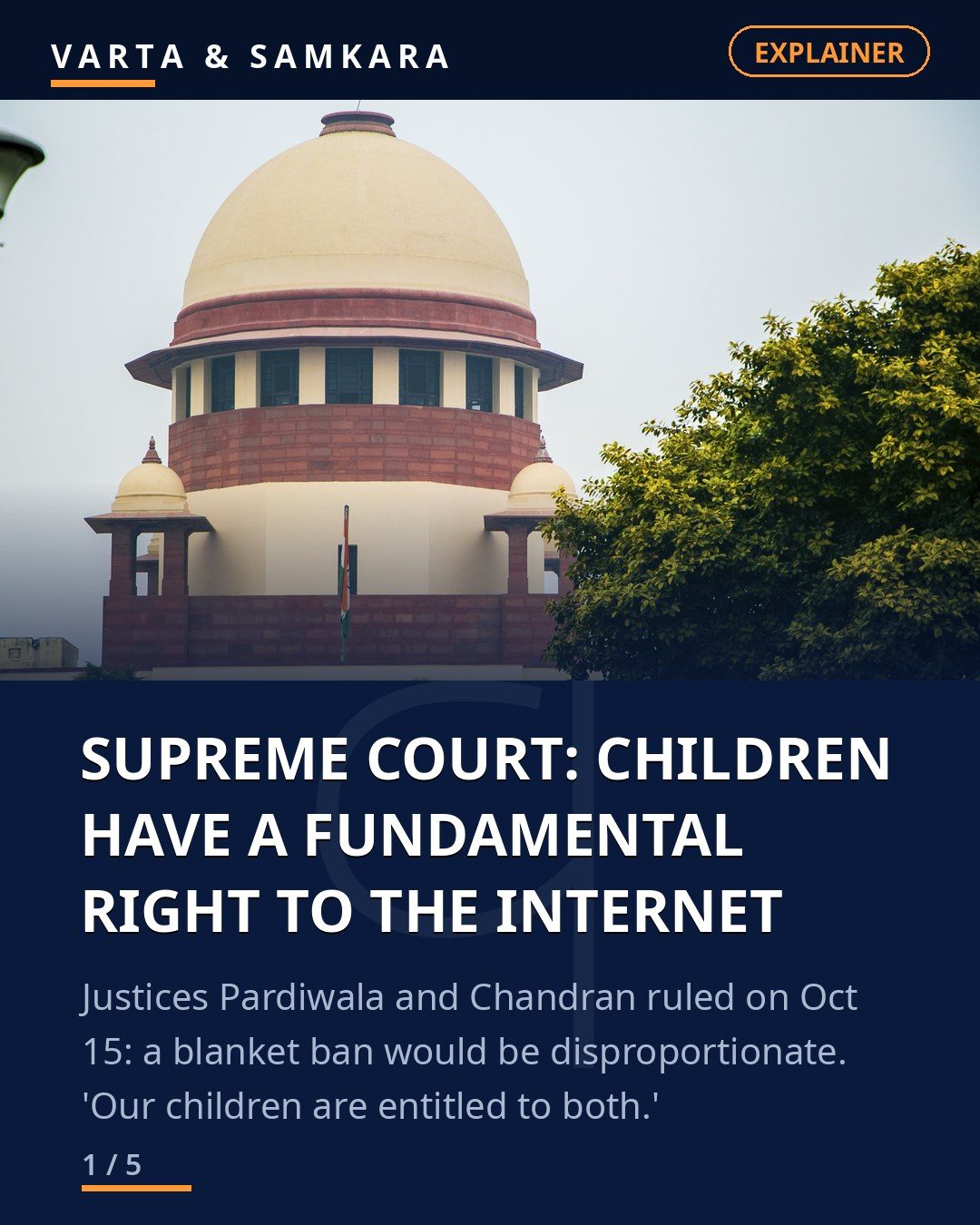
The Supreme Court has held that children, like any other individual, have a fundamental right to access and use the internet under Article 21 read with Article 19(1)(a). The bench of Justices J.B. Pardiwala and Vinod K. Chandran said a blanket ban on children going online would be disproportionate.
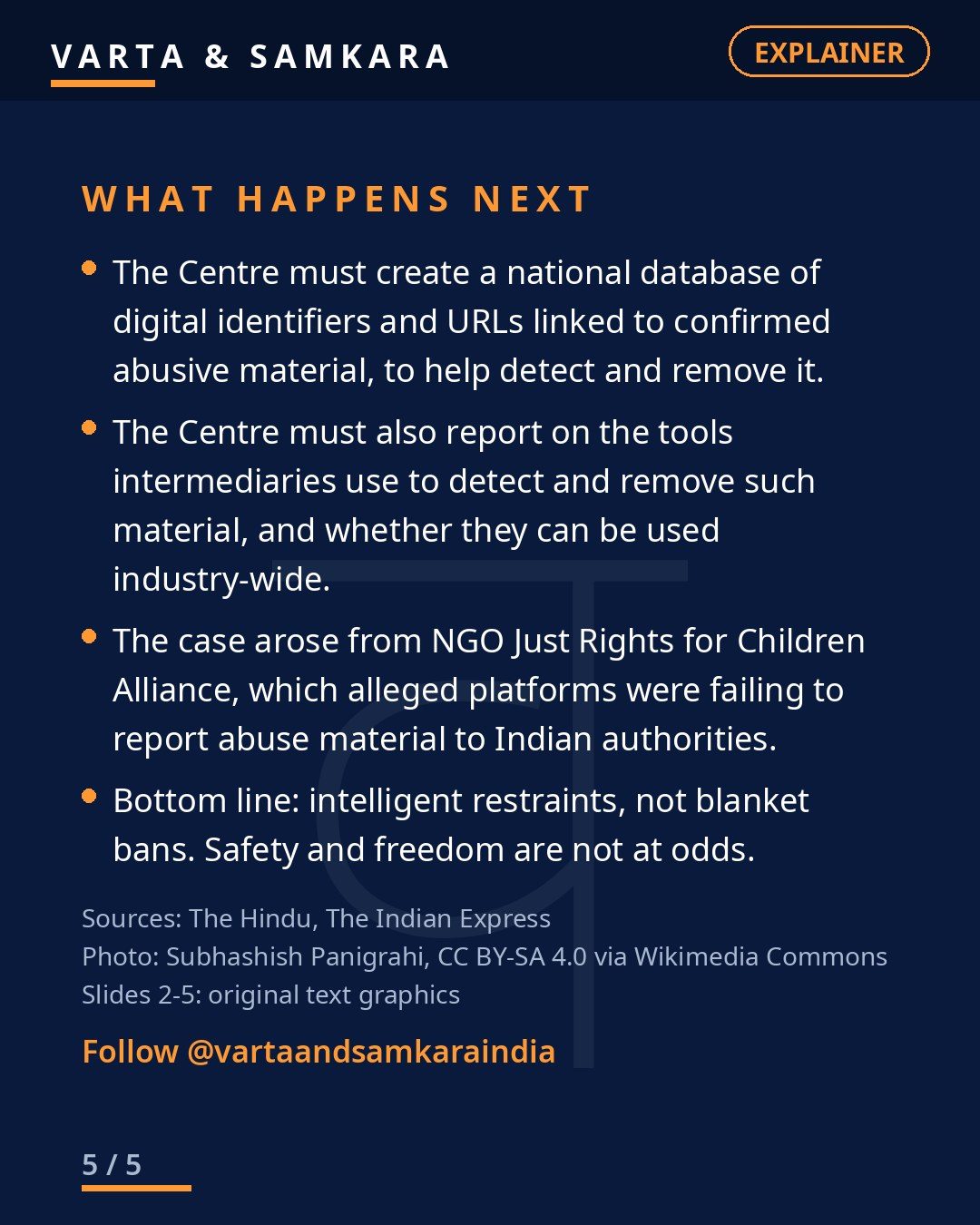
Key points from the October 15 order (made available October 17): 1. Blanket restrictions are "unproven measures of proven disproportionality". No jurisdiction has shown children are safer because of them. 2. Children do not stop using the internet when banned. They keep using it without their parents knowing, moving to unregulated, more unsafe platforms. 3. Restrictions make children who are threatened online reluctant to report, out of fear of reprisal for using the internet, undermining the POCSO Act. 4. Safeguards are still allowed: parental consent and oversight, dedicated "child mode" for social media, private-by-default accounts, and blocking inherently harmful content like adult websites. 5. The wrongdoer is the person who creates or circulates abuse material and the intermediary that fails to remove it. Keeping children offline "would be to mistake the victim for the problem".
In pictures
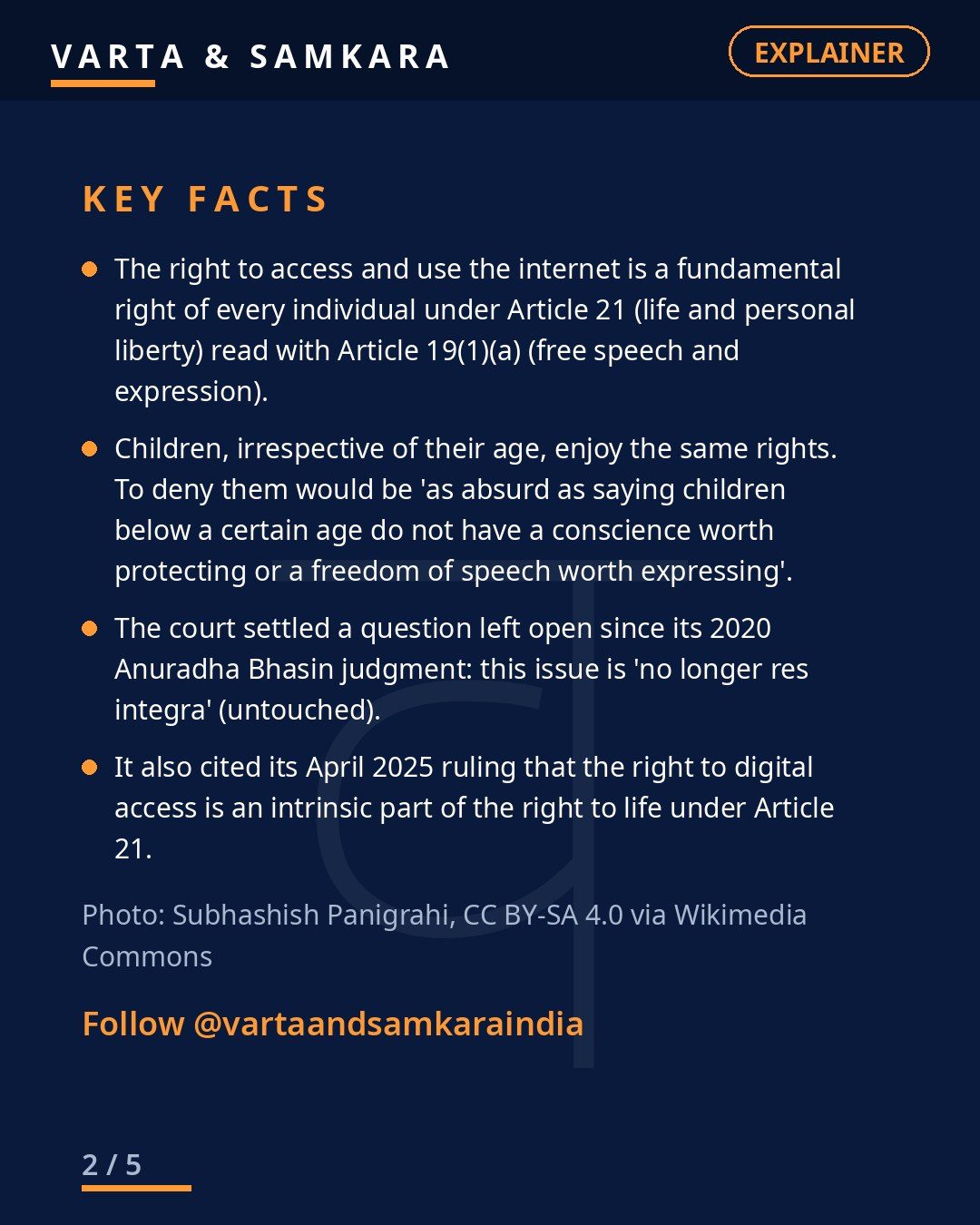
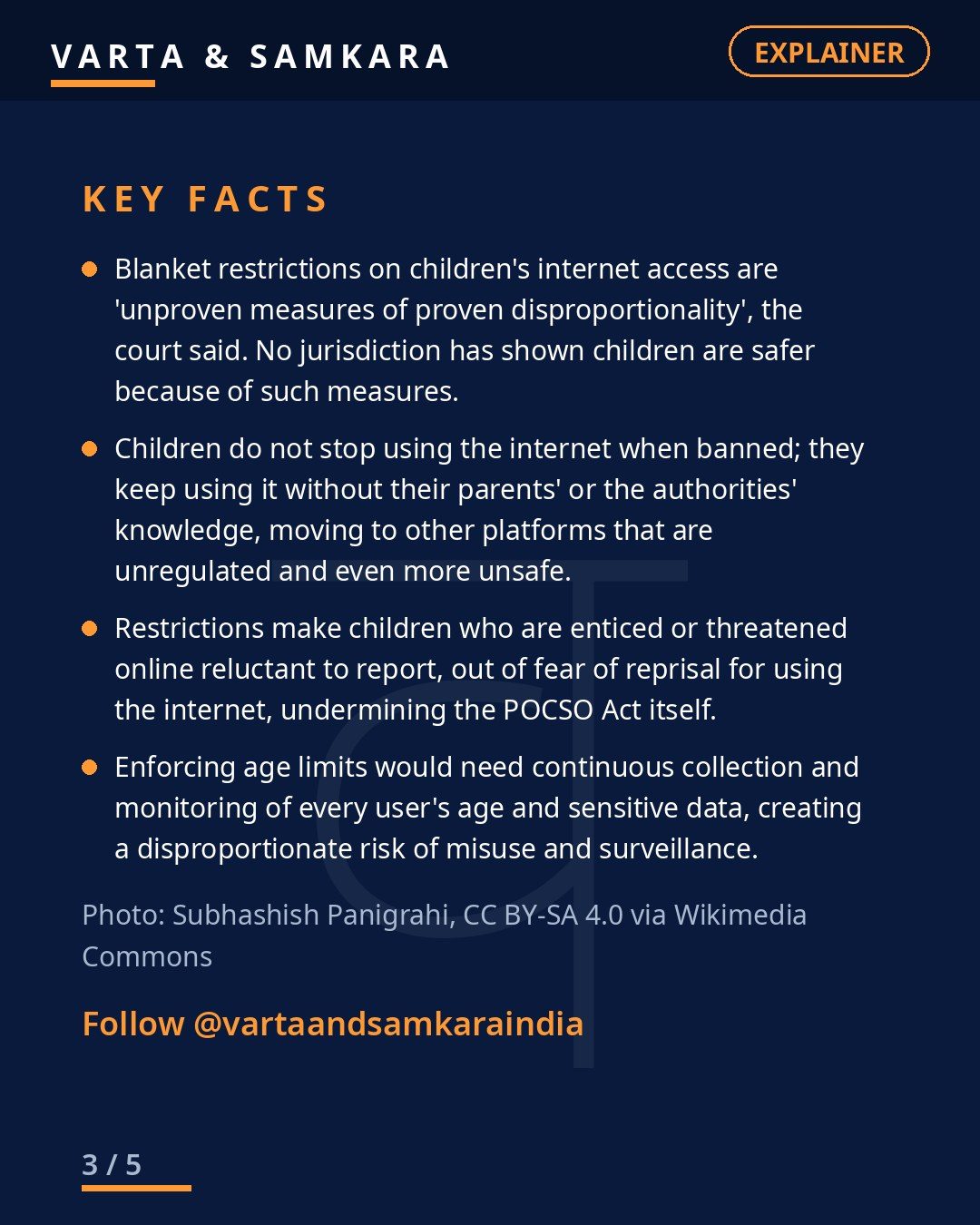
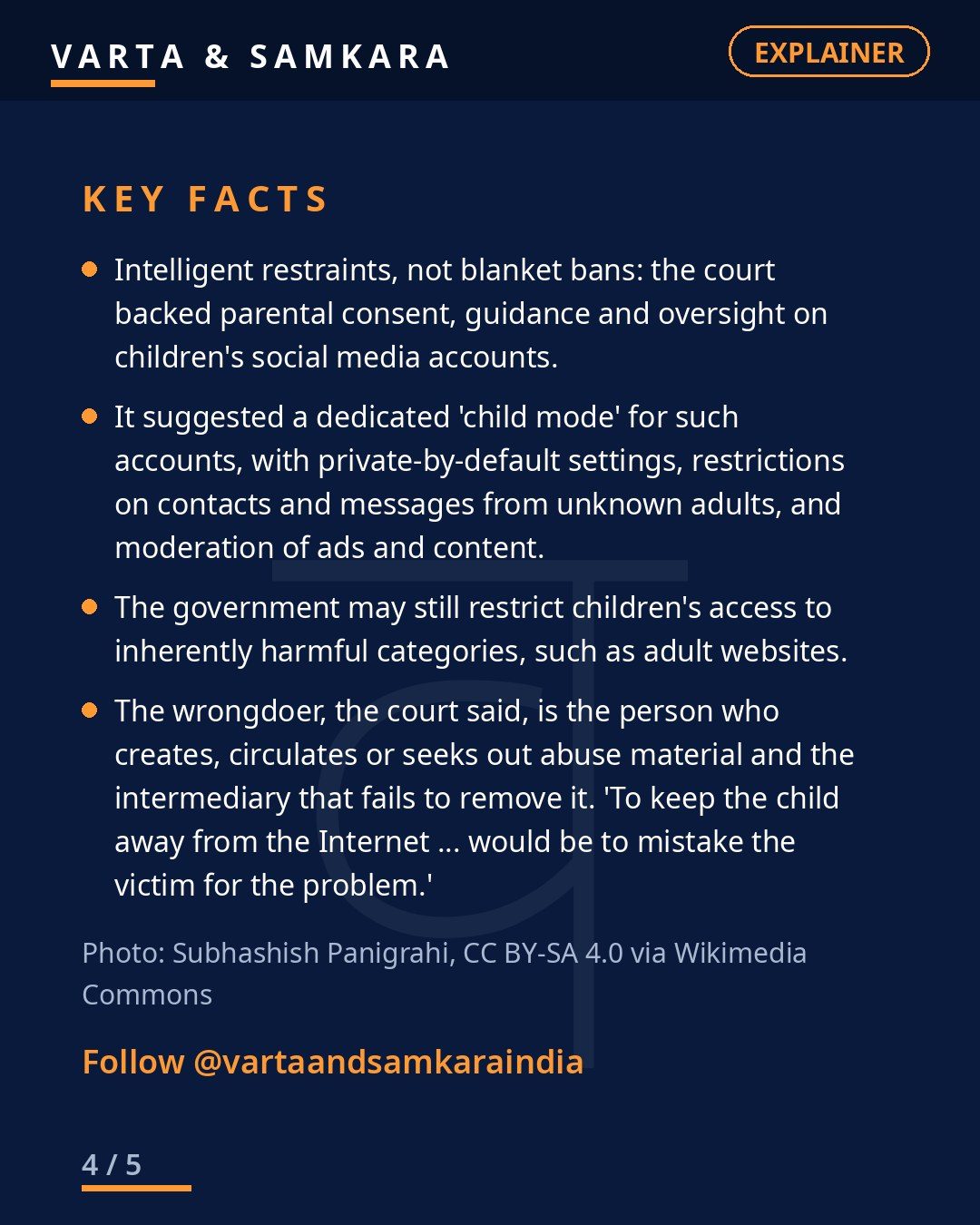
Source: The Hindu, The Indian Express
Visuals: Photo: Subhashish Panigrahi, CC BY-SA 4.0 via Wikimedia Commons; slides 2-5 original text graphics
Visuals: Photo: Subhashish Panigrahi, CC BY-SA 4.0 via Wikimedia Commons (verified genuine SC of India photo, local file reused from 2026-10-16 run); slides 2-5 original text graphics; no AI visuals, no music; media built: posts/2026-10-17-sc-child-internet-rights/slide-1..5.jpg (1080x1350, ~200-240KB each) + caption.txt (1601 chars, 13 hashtags, no em dashes)
TechnologyCulture#SupremeCourt#InternetRights#FundamentalRights#DigitalIndia#ChildRights#OnlineSafety#CyberSafety#ChildrenOnline#Article21#ConstitutionOfIndia#TechNews#India
See the original reel / carousel with motion graphics on Instagram.
View on Instagram