
Vishnu Ganesh Pingle: The engineer who carried ten bombs to Meerut
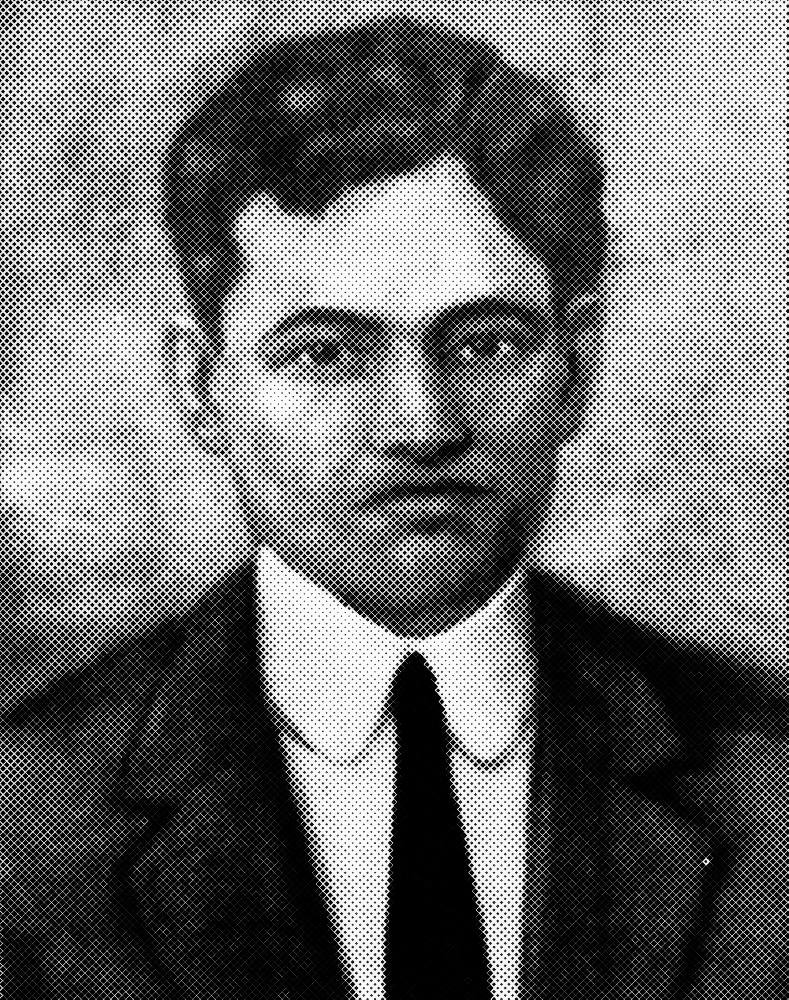
Portrait: Wikimedia Commons, CC BY-SA 4.0
Vishnu Ganesh Pingle was born in January 1888 (some accounts say 1889) into a farmer's family at Talegaon Dhamdhere in Shirur taluka of Pune district. He faced hardships in completing even his schooling. Then he crossed the ocean and earned a degree in engineering at the University of Washington. It was in America that he came into contact with revolutionaries like Lala Har Dayal, Bhai Parmanand, Dr. Khankhoje, Sohan Singh Bhakna, Kartar Singh Sarabha and Pandit Kanshi Ram, and became an active member of the Ghadar Party, which believed in armed struggle against the British. He turned his engineering training to the party's service, making bombs.
After the outbreak of the First World War, Pingle returned to India and threw himself into revolutionary work in Punjab. He maintained secret contacts with Rash Behari Bose and Sachindranath Sanyal, and together they planned the Ghadar uprising of February 1915, an attempt to trigger a nationwide armed revolt while Britain was distracted by the war. An expert in several languages and a master of disguise, Pingle spread unrest among Indian soldiers, secretly circulating revolutionary pamphlets and the Ghadar newspaper inside the cantonments.
As a last desperate move, Pingle and Kartar Singh tried to trigger a mutiny in the 12th Cavalry regiment at Meerut. Kartar Singh escaped from Lahore but was arrested in Benares. Pingle was apprehended in the lines of the 12th Cavalry at Meerut on the night of 23 March 1915. According to a Mumbai police report, he was carrying ten bombs of the pattern used in the attempt to assassinate Lord Hardinge in Delhi, said to be enough to blow up an entire regiment.
Mass arrests followed across Punjab and the Central Provinces. Rash Behari Bose fled to Japan in May 1915. Pingle, along with Kartar Singh Sarabha, Harnam Singh and Bhai Parmanand, was tried at the Lahore Conspiracy trial by a special tribunal constituted under the Defence of India Act of 1915 for his role in the February plot. He was executed by hanging at the Lahore Central Jail on 16 November 1915, alongside Kartar Singh. He was twenty-seven.
A century after his death, his native village of Talegaon Dhamdhere marked his martyrdom centenary in November 2015, with history lovers and youth groups forming a committee in his honour. His granddaughter, Rajani Patil, went on to serve as a Member of Parliament. But in the national memory, the engineer who smuggled ten bombs into a cavalry barracks remains what the Indian Express called him: a largely unsung hero.
Source: The Indian Express, Wikipedia
Visuals: Archival portrait
Follow the daily five-post slate on Instagram.
Follow on Instagram
