
Ayyankali: The reformer who claimed Kerala's public roads for the oppressed
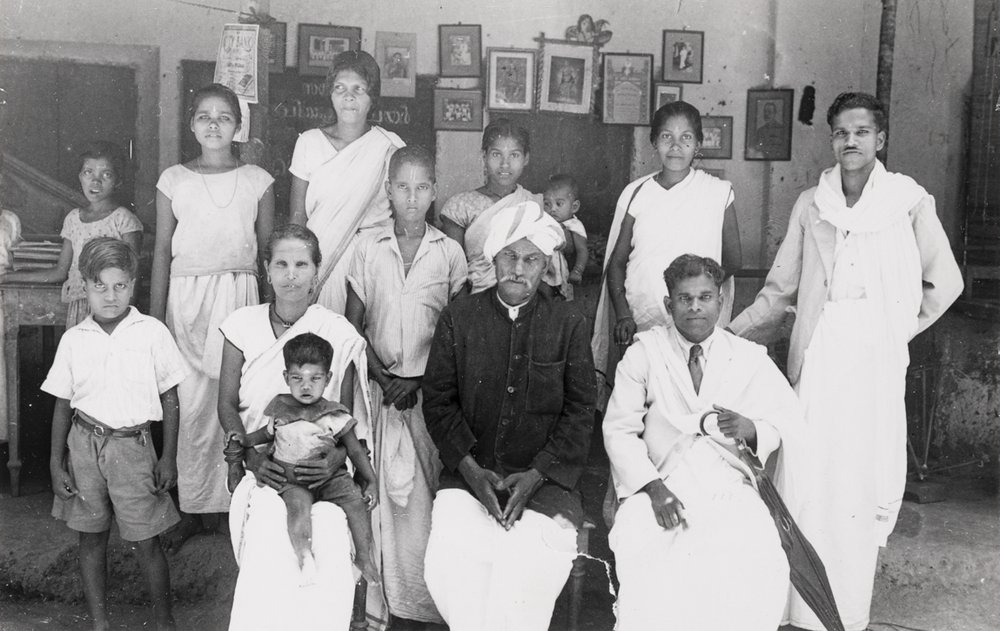
Portrait: Wikimedia Commons, public domain
Ayyankali (28 August 1863 to 18 June 1941) was a social reformer from the princely state of Travancore who fought the caste rules that kept his own Pulayar community out of public life. Born at Venganoor, near present-day Thiruvananthapuram, he was the eldest of eight children of Ayyan and Mala. The Pulayars worked as bonded labourers for feudal landlords and were barred from public roads, clean clothes, schools and temples. His own father served as an adiyalan, a slave, to a landlord. Ayyankali never learned to read or write, yet he came to believe education was the key to his people's freedom.
His most famous act came in 1893, when he was thirty. He bought a decorated bullock cart, a villuvandi, hung brass bells on two white bulls, dressed in a white vest, dhoti and turban, and drove it along public roads that Dalits were forbidden to use. Each of those acts was a privilege reserved for upper castes, and his ride broke all three rules at once. Upper-caste men stopped the cart at several crossroads and tried to attack him, but he carried on, and the ride became known as the Villuvandi Samaram, the bullock cart protest.
The defiance spread. He led Dalits into the Nedumangad market, a space closed to them, and was attacked with his companions at Balaramapuram in 1899. The clashes that followed, known as the Chaliyar riots, broke out in several villages. The state eventually intervened, and by 1900 the Pulayars had won the right to use most public roads, though temple roads stayed closed to them.
Ayyankali then turned to education. In 1904, inspired by the reformer Ayyavu Swamikal, he helped set up a branch of Swamikal's Brahma Nishta Matam at Venganoor. In 1907 he founded the Sadhu Jana Paripalana Sangham, the Association for the Protection of the Poor, which campaigned for Dalit children to enter government schools. When he tried to enrol a Pulayar girl at the Ooruttambalam government school, upper-caste men burned the building down. His answer was a strike of agricultural labourers, who left the landlords' paddy fields until the government agreed to end caste restrictions on schooling. Sources differ on the year, placing it between 1907 and 1915, but agree it was the first such strike by oppressed farm labourers in the region.
He also won Pulaya women the right to cover their upper bodies in public, secured in 1915-16, and took part in the Kallumala Samaram of 1915, when Dalit women cast off the stone beads forced on them. In the early 1910s he joined the Sree Moolam Popular Assembly, the Travancore legislature, serving there for nearly three decades. His long campaign for temple entry bore fruit in 1936, when the Maharaja's Temple Entry Proclamation opened Travancore's Hindu temples to all castes. Mahatma Gandhi visited him at Venganoor to congratulate him.
Ayyankali died on 18 June 1941, aged 77, six years before Independence. An Indian postage stamp honoured him in 2002, and the historian P. Sanal Mohan has called him the most important leader of modern Kerala. He is also remembered as the Kerala Spartacus and the King of Pulaya.
Yet outside Kerala he remains little known. His enemy was caste inside a princely state rather than the British, he left no writings of his own because he could not read or write, and national histories have little room for a reformer whose battlefield was a village road and a schoolroom. His legacy is the one he rode for in 1893: public space, schooling and dignity for everyone, not only those born into the right caste.
Source: Wikipedia, Scroll, The Print, The New Indian Express
Visuals: Archival portrait
Follow the daily five-post slate on Instagram.
Follow on Instagram
