Mohammed Abdur Rahiman: Khilafat leader who stood for a united, secular India
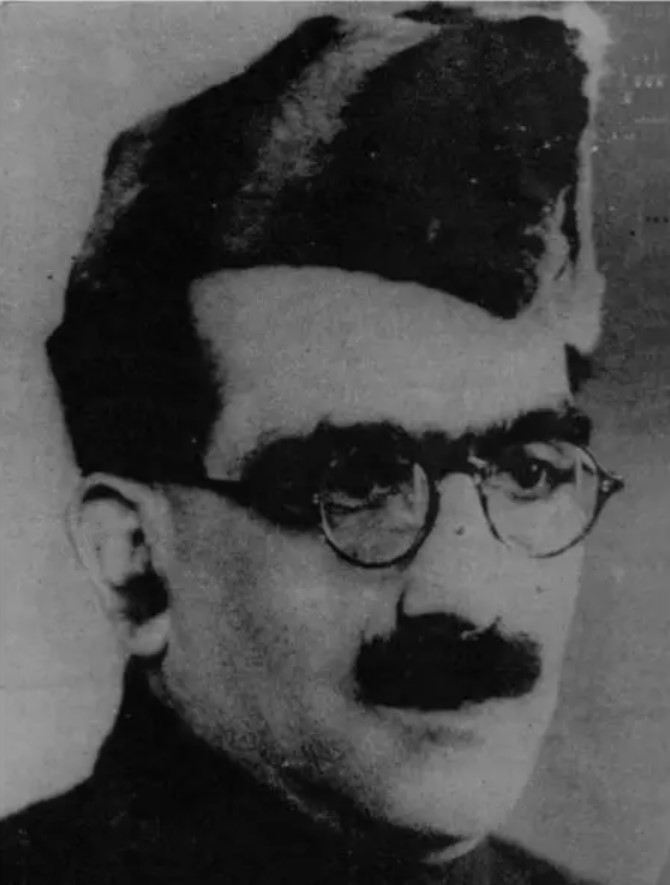
Portrait: Wikimedia Commons, public domain
Mohammed Abdur Rahiman Sahib (1898-1945) was a Muslim freedom fighter from Malabar who gave up a promising college career to join the national movement, spent years in British jails, and spent the rest of his life arguing that Indian Muslims should fight for a united India rather than separatism.
He was born in 1898 at Azhikode near Kodungallur, in the Kingdom of Cochin. He studied at Veniyambadi and Calicut, then at Presidency College in Madras and Aligarh. When the Non-cooperation and Khilafat movements gathered force, he abandoned his studies and returned to Malabar to carry the Congress message from village to village, urging ordinary people to read newspapers, organise themselves, and take part in politics instead of letting decisions be taken over their heads.
His first major political appearance came at the Ottappalam conference of the Kerala Pradesh Congress Committee in April 1921, where he helped propagate the joint Khilafat and Congress programme. When the Moplah rebellion broke out in Malabar later that year, he worked to restore peace in the riot-affected areas. The British nevertheless arrested him in October 1921 for alleged complicity and sentenced him to two years in prison.
After his release he became one of the Congress's most effective orators in South India. During the Salt Satyagraha of 1930 he broke the salt law on Calicut beach, was lathi-charged by the police, and received nine months of rigorous imprisonment in Kannur Central Jail. From 1929 to 1939 he edited Al-Ameen, a Malayalam daily published from Calicut, until British pressure forced the paper to shut down in 1939.
In 1935 he was elected to the Madras Legislative Assembly from Malappuram. With the support of E. M. S. Namboodiripad he became president of the Kerala Pradesh Congress Committee (Malabar) in 1938 and played a central part in organising the Congress across Kerala. The British jailed him again from 1940 to 1945, an imprisonment that broke his health. He died on 23 November 1945 at Pottashery, aged 47, reportedly of a heart attack.
What marked him apart was his uncompromising secularism. As communal politics hardened in the 1930s and 1940s, Rahiman refused both separatism and submissiveness, insisting that Muslims were equal citizens of an undivided India. He travelled the countryside speaking against communalism and every form of injustice, earning respect across communities; even Vaikom Muhammad Basheer wrote of him as a kind-hearted man. He met Subhas Chandra Bose shortly before Bose left India for Japan.
Rahiman died less than two years before Independence, so he never saw the country he had fought for, and he never received a national profile to match his influence in Malabar. The film-maker P. T. Kunju Mohammed made the 2011 film Veeraputhran about his life, and his house at Azhikode has been developed as a museum under the Muziris Heritage Project. His legacy is the one he defended in every speech: that secular, united politics was not a favour granted to minorities but the foundation of the nation itself.
Source: Wikipedia, The Hindu, The Wire
Visuals: Archival portrait
Follow the daily five-post slate on Instagram.
Follow on Instagram