
Ananta Singh: The Revolutionary Who Surrendered, Then Died an Outlaw
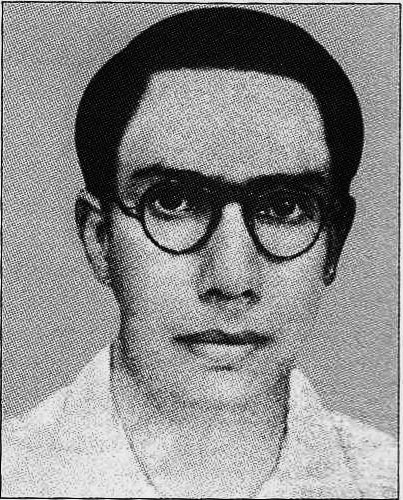
Portrait: Wikimedia Commons, CC BY-SA 2.5
Ananta Lal Singh (1 December 1903, 25 January 1979) took part in the Chittagong armoury raid of 1930, gave himself up to the British because he could not bear the torture of his comrades, and then spent his last decades as the founder of a far-left group accused of bank robberies. His autobiography is titled "Keu Bale Dakat, Keu Bale Biplabi", Some Call Me a Dacoit, Some a Revolutionary, and the title is the most honest summary of his life.
He was born in Chittagong; his ancestors were Punjabi-speaking Rajputs who had migrated from Agra, and his father was Golap Singh. His sister Indumati Singh was also a noted freedom fighter. While studying at the Chittagong Municipal School he met Surya Sen and became his follower. He joined the Non-cooperation movement in 1921, and on 14 December 1923 he and Nirmal Sen carried out the robbery of the Assam-Bengal Railway treasury office on Sen's plan. Arrested in Calcutta and released, he was jailed again in 1924 and served four years. After his release he founded a gymnasium to recruit young men for the revolutionary movement.
On 18 April 1930 Singh was one of the leaders of the armoury raid. He escaped to Chandernagore, but when he learned that his captured comrades were being tortured in jail, he surrendered to the police in Calcutta on 28 June 1930 and faced the trial. He was sentenced to transportation for life and sent to the Cellular Jail at Port Blair. After a long hunger strike in 1932, he was brought back to a mainland jail through an initiative taken up by Mahatma Gandhi and Rabindranath Tagore. He was finally released in 1946 and joined the Communist Party of India.
The post-independence chapter is the controversial one. In the 1960s Singh founded the Revolutionary Communist Council of India, a far-left group whose members were accused of robbing banks in Calcutta to buy weapons. In 1969 he and other members were arrested from a forest hideout near Jaduguda, now in Jharkhand, and he remained in jail until 1977. He died in Calcutta on 25 January 1979, soon after his release, reportedly of cardiac problems.
Singh also produced the popular Bengali film "Jamalaye Jibanta Manush" (1958) starring Bhanu Bandyopadhyay, and his role in the raid has been played on screen in "Khelein Hum Jee Jaan Sey" (2010) and "Chittagong" (2012). The Telegraph's obituary-style profile put it plainly: his life was controversial throughout. That is precisely why it deserves remembering in full, the surrender and the robberies included, rather than the cleaned-up version.
Source: Telegraph India, Wikipedia
Visuals: Archival portrait
Follow the daily five-post slate on Instagram.
Follow on Instagram
