Bagha Jatin: The tiger-slayer who fought the British for 75 minutes at Chashakhand
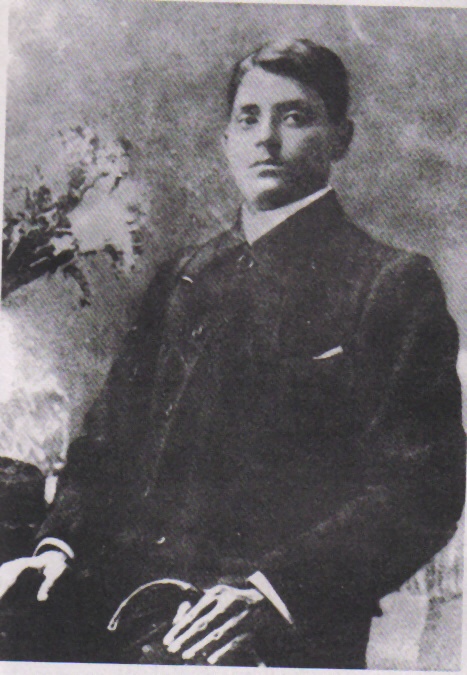
Portrait: Wikimedia Commons, public domain
Jatindranath Mukherjee was born in December 1879 (sources give the 7th or the 8th) at Kushtia, in what is now Bangladesh, to Sharat Shashi and Umeschandra Mukherjee. He lost his father at five and was raised by his mother, a gifted poet. He grew into a strapping, physically powerful young man. In 1906, visiting his village, he single-handedly fought a Royal Bengal tiger that had been terrorising the locals, killing it with a dagger after a battle of several hours. He was gravely injured. The British administration awarded him a silver shield, but the people gave him the greater honour: the name Bagha Jatin, Tiger Jatin.
He was among the founder members of the Anushilan Samiti in 1900 and became one of the principal leaders of the Jugantar party, the central association of Bengal's revolutionary nationalists. Influenced by Swami Vivekananda and in contact with Sri Aurobindo and Sister Nivedita, he fused spiritual discipline with armed conspiracy. His ideals were simple. "Amra morbo, jagat jagbe," he said: "We shall die to awaken the nation."
When the First World War broke out, Jatin saw the chance of a lifetime. He organised the Indo-German conspiracy, known as the Christmas Day Plot, to stage an armed uprising with German arms smuggled into India. He set up Harry and Sons as a front for the arms traffic. The British raided the firm and traced him to the village of Kaptipada, where he was hiding with four companions: Chittapriya Ray Chaudhuri, Manoranjan Sengupta, Niren Dasgupta and Jatish Pal. Warned to leave, Jatin refused to abandon Niren and Jatish, and the delay proved fatal to his escape.
For two days he and his companions fled through the forests and hills of Mayurbhanj in torrential rain, pursued by police who had announced a reward for the capture of the five "bandits," before reaching Balasore railway station. On 9 September 1915 they took position in an improvised trench in the undergrowth on a hillock at Chashakhand, near Balasore. Chittapriya asked Jatin to leave for safety while the others guarded the rear. Jatin refused to leave them.
What followed was one of the most remarkable gunfights of the freedom struggle. For seventy-five minutes, five revolutionaries armed with Mauser pistols held off a large force of police and army armed with modern rifles, approaching in a pincer movement. The government side suffered an unrecorded number of casualties. On the revolutionary side, Chittapriya Ray Chaudhuri died, Jatin and Jatish were seriously wounded, and Manoranjan Sengupta and Niren were captured after their ammunition ran out.
Bagha Jatin was taken to the government hospital at Balasore, where he died of his bullet wounds on 10 September 1915. He was thirty-five. Nirendra and Manoranjan were hanged in Balasore jail; Jyotish was imprisoned for life.
Charles Tegart, the British intelligence chief who had set out to capture him, said afterward: "Though I had to do my duty, I have a great admiration for him. He died in an open fight." Tegart is also said to have remarked that had Jatin been an Englishman, his statue would have stood beside Nelson's in Trafalgar Square. The man who killed a tiger with a dagger and then fought an empire with a pistol is remembered in Bengal, but his name never travelled as far as his courage did.
Source: Business Standard (PTI), Wikipedia
Visuals: Archival portrait
Follow the daily five-post slate on Instagram.
Follow on Instagram