Bhikaiji Cama: The woman who raised India's flag at Stuttgart in 1907
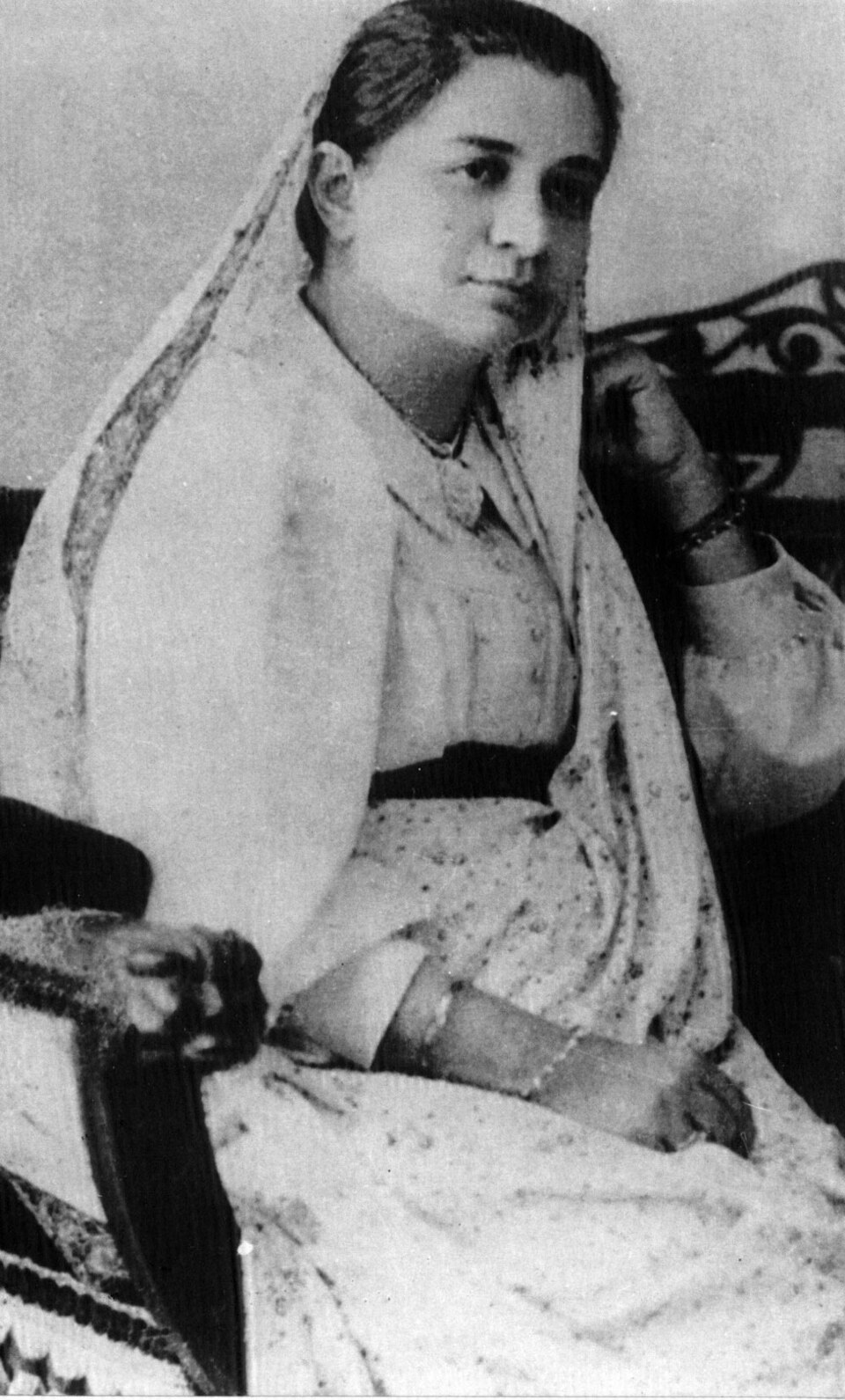
Portrait: Wikimedia Commons, public domain
Bhikaiji Rustom Cama was born on 24 September 1861 in Bombay, as Bhikaji Patel, into an extremely wealthy Parsi business family. Educated at the Alexandra Girls' English Institution, she grew up as the Indian nationalist movement was taking root and was drawn to political questions early. In 1885 she married Rustomji Cama, a well-known lawyer with pro-British views, and her involvement with sociopolitical causes soon caused differences between the couple.
In 1896, when plague swept the Bombay Presidency, she led volunteer efforts among the afflicted and contracted the disease herself. She survived, but her health was broken. In 1902 she travelled to London for medical treatment, a move that changed her life. There she met Dadabhai Naoroji, the great critic of British economic policy in India, and became his private secretary, working for the Indian National Congress. She also came into contact with the revolutionaries around Shyamji Krishna Varma, Veer Savarkar and Lala Har Dayal, and addressed meetings in London's Hyde Park. In 1905 she joined Varma's Indian Home Rule Society.
Her militant views attracted the attention of the British authorities, and in 1907 she moved to Paris to avoid arrest. With Munchershah Burjorji Godrej, S. R. Rana and other expatriates she founded the Paris Indian Society, which became a hub of anti-British activity in Europe. Her home in Paris became a haven for revolutionaries from around the world, and she supported and financed them, in India and out of it, until her last days.
Her most celebrated act came on 22 August 1907 at the International Socialist Conference in Stuttgart, Germany. Before an audience of about a thousand delegates from around the world, she unfurled one of the earliest versions of an Indian national flag, the first Indian flag ever hoisted on foreign soil. Based on the Calcutta Flag of 1906 and co-designed with Savarkar and Shyamji Krishna Varma, it was a tricolour of green, yellow and red. The eight lotuses on the upper band stood for the eight provinces of British India; the central band carried the words Vande Mataram in Devanagari; the sun and crescent on the lower band represented Hinduism and Islam. She asked every delegate to rise and salute it, and in her speech demanded freedom and equality for India, declaring that the country would one day be free. The original flag is now on display at the Maratha and Kesari Library in Pune.
With Har Dayal she launched the revolutionary paper Bande Mataram, copies of which were smuggled into India, and she published Madan's Talwar in memory of Madan Lal Dhingra. When France and England became allies, the British asked for her extradition; the French government refused. The British banned her entry into India, afraid of her revolutionary record.
In 1935, paralysed by a stroke, she petitioned the British government to be allowed to return home. Permission was granted, and she reached Bombay in November 1935. She died nine months later, on 13 August 1936. She bequeathed most of her assets to the Avabai Petit Orphanage for girls, which established a trust in her name. India issued a commemorative stamp in her honour on 26 January 1962, and Bhikaji Cama Place in New Delhi is among the places that carry her name. Known as the Mother of the Indian Revolution, she carried India's flag to the world four decades before independence, and paid for it with thirty-three years of exile.
Source: Encyclopaedia Britannica, Wikipedia
Visuals: Archival portrait
Follow the daily five-post slate on Instagram.
Follow on Instagram