
Durgavati Devi: The Woman Who Smuggled Bhagat Singh Out of Lahore
Portrait: Wikimedia Commons, CC BY 2.5
Durgavati Devi was born on 7 October 1907 in Allahabad, the only child of a Gujarati couple. Her mother died while she was young, and her father renounced the world for sannyas, leaving her to be raised by an aunt. She studied only up to Class V. At eleven she was married to Bhagwati Charan Vohra, the revolutionary thinker of the Hindustan Socialist Republican Association. The other revolutionaries called her "Bhabhi," the elder brother's wife, and she became Durga Bhabhi to history.
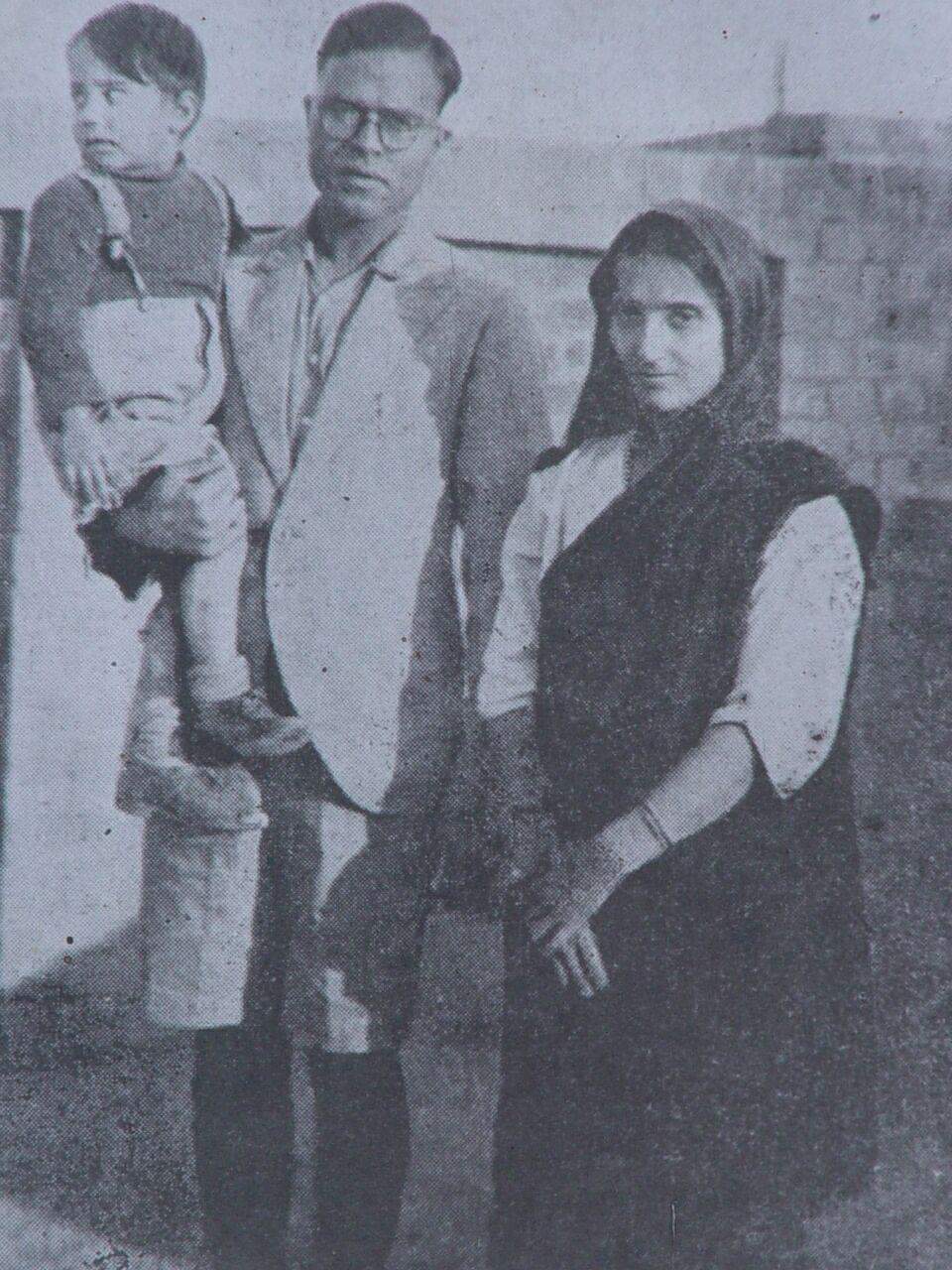
What began as a wife supporting her husband became a record of action in its own right. She joined the Naujawan Bharat Sabha and was part of its first public demonstrations. On 19 December 1928, two days after Bhagat Singh and his comrades shot dead the British police officer John Saunders in Lahore, they came to her house. The police were hunting for two young men; Durga Bhabhi gave Bhagat Singh and Rajguru a way out. Travelling with her infant son in her arms, she and Bhagat Singh posed as a married couple, Rajguru posing as their servant, and rode the train from Lahore to Calcutta in plain sight of the manhunt. It is one of the most daring escapes of the freedom struggle, and it depended on a woman the police never thought to suspect.
She kept giving. When Bhagat Singh was arrested, she sold her ornaments, worth Rs 3,000, to raise money to defend him and his comrades under trial. After Jatin Das died in the 63-day hunger strike in Lahore jail, it was Durga Bhabhi who led the funeral procession carrying his body from Lahore to Calcutta, crowds swelling at every halt along the route. With other revolutionaries she ran a bomb factory in Delhi, known as "Himalayan Toilets."
Her own husband died on 28 May 1930, testing a bomb meant for the rescue of Bhagat Singh from Lahore Central Jail. The comrades buried him quietly in the wilderness and did not even let her see his face. Within months, after Bhagat Singh, Rajguru, and Sukhdev were hanged, she chose revenge: in October 1930 she attempted to assassinate the former Punjab Governor Lord Hailey, opening fire on a British police officer and his wife. Hailey escaped. She was arrested and sentenced to three years in prison.
The sources disagree on the exact targets and casualties of that attack, but not on its fact: a widowed mother, barely 23, had taken up a gun against the Raj.
She lived another 69 years after the hangings, dying on 15 October 1999 at the age of 92, having lived quietly in Ghaziabad and opened a school for poor children in Lucknow. She never traded on her past. The textbooks that teach every child Bhagat Singh's name spare her a line, if that. Yet the most famous escape in the story of the HSRA belongs to her courage, and she belongs at the center of the story she was written out of: not merely a Bhabhi who served food and sewed flags, but an armed revolutionary whom the British had every reason to fear.
Source: The Indian Express, Oneindia, Organiser
Visuals: Archival portrait
Follow the daily five-post slate on Instagram.
Follow on Instagram
