Durgabai Deshmukh: Freedom fighter at twelve, Constituent Assembly member, and builder of India's welfare state
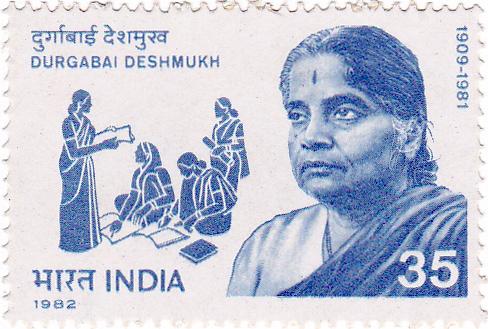
Portrait: India Post commemorative stamp (1982), Wikimedia Commons, GODL-India
Durgabai Deshmukh was born on 15 July 1909 in Rajahmundry, in the Madras Presidency (now Andhra Pradesh), into a Madhwa Brahmin family; her birth name was Gummididala. She was married at the age of eight to Subba Rao. After her maturation she refused to live with him, and her father and brother supported her decision. She left the marriage to continue her education.
At twelve she left school to protest against English-medium instruction during the Non-Cooperation Movement and started the Balika Hindi Paathshala, a Hindi school for girls in Rajahmundry. She taught hundreds of girls and women, including her own mother, and spread nationalist ideas through the school. Her boldness impressed Mahatma Gandhi, who gave her roles translating his speeches in Andhra Pradesh.
She took part in the Salt Satyagraha during the Civil Disobedience Movement, organising women satyagrahis, and was imprisoned by the British three times between 1930 and 1933. After her release she resumed her studies, earning a B.A. and M.A. in political science from Andhra University and a law degree from Madras University in 1942, then practising as an advocate in the Madras High Court. In 1937 she founded the Andhra Mahila Sabha, which grew into a major institution for education and social welfare.
In 1946 she became a member of the Constituent Assembly, where she was the only woman on the panel of Chairmen. She pressed for the Hindu Code Bill, insisting that Hindu women secure equal rights to property; championed the independence of the judiciary; supported Hindi (Hindustani) as the national language; and, by one account, moved nearly 750 amendments. She also foresaw the need for separate family courts, a vision realised with the Family Courts Act of 1984, three years after her death.
After independence she served on the Planning Commission and became the first chairperson of the Central Social Welfare Board, mobilising voluntary organisations for the education, training and rehabilitation of women, children and the disabled. She headed the National Committee on Women's Education in 1958, founded the Council for Social Development and Sri Venkateswara College, and compiled the Encyclopaedia of Social Work in India. In 1953 she married C.D. Deshmukh, the first Indian governor of the Reserve Bank of India and India's finance minister from 1950 to 1956; Jawaharlal Nehru was one of the three witnesses. She received the Padma Vibhushan in 1975, the Nehru Literacy Award in 1971, and a UNESCO award.
She died on 9 May 1981 at Narasannapeta, Andhra Pradesh, aged 71. One anecdote captures her character: when Nehru arrived at a Khadi exhibition without a ticket, she barred his entry until he paid, and he later praised her for it. Her name lives on in institutions such as Andhra University's Dr. Durgabai Deshmukh Centre for Women's Studies, but the general public has largely forgotten the twelve-year-old who gave up school to teach her mother to read.
Source: Wikipedia, The Civil India, Organiser
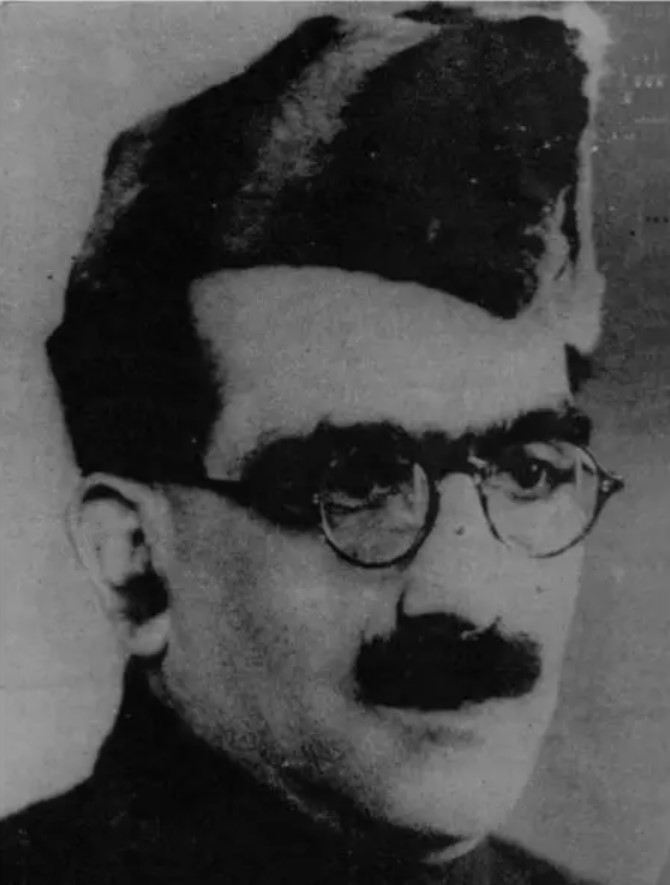
Visuals: Archival portrait
Follow the daily five-post slate on Instagram.
Follow on Instagram