
Gomdhar Konwar: The Ahom prince who rose against the British in 1828
Portrait: Wikimedia Commons, CC BY-SA 4.0
Gomdhar Konwar, also written Gamadhar Konwar, was a prince of the Ahom royal family who led one of the earliest organised revolts against British rule in India, nearly three decades before the uprising of 1857. Born around 1807, he was a close relative of Ahom king Pratap Singha and grew up as the old order collapsed: the Treaty of Yandaboo of 1826 transferred Assam from Burmese to British control, and the East India Company's officers soon stripped the Ahom nobility of political authority and privilege.
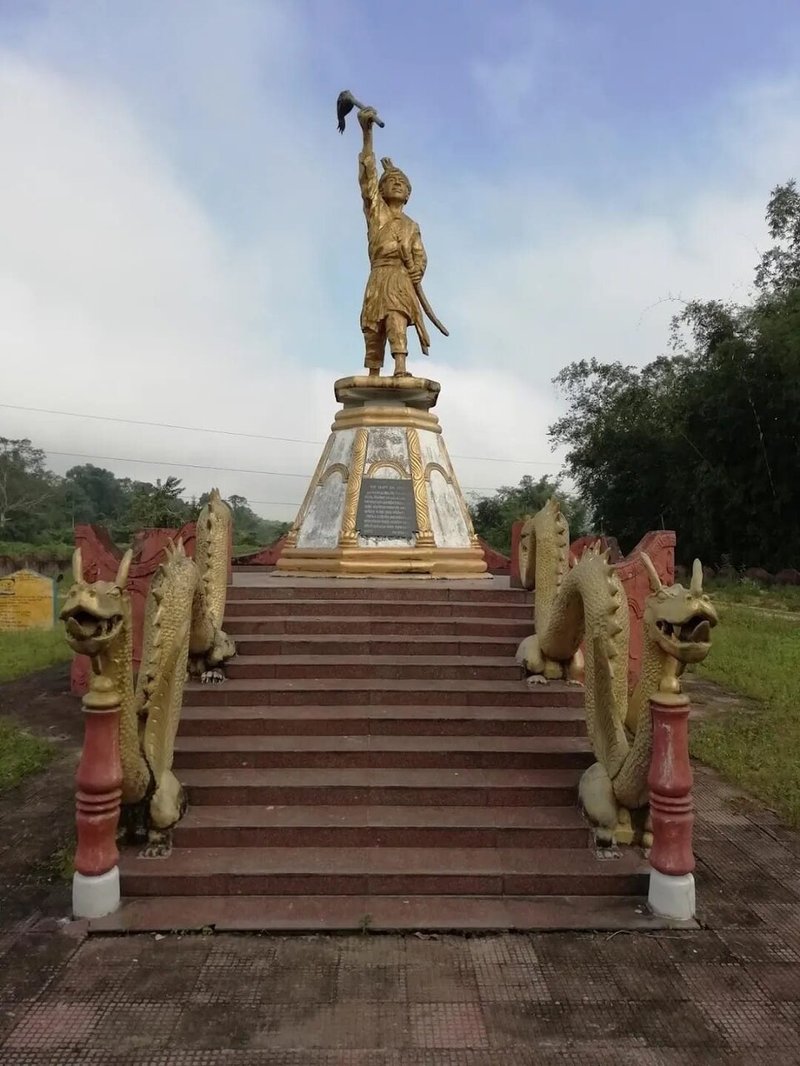
In 1828, former Ahom nobles led by Dhanajoy Borgohain rallied around Gomdhar. In a formal ceremony at Toratoli Bosa bahor near Jorhat, conducted with Ahom rites and priests, he was declared king of Assam. He established his fort at Nakachari Rajabari, recruited soldiers, gathered arms, and began preparing an armed struggle whose aim was to capture Rangpur, the old Ahom capital. He is also reported to have set ablaze a British armoury at Rongpur before the rising was crushed.
The British struck first. A counter-offensive led by Lieutenant Rutherford met the rebels near Deberapar Marangial Namghar, and the rising was defeated. Gomdhar fled to the Naga Hills but was soon captured with his associates. He was found guilty of "illegally assuming the Insignia of Royalty" and sentenced to death. The sentence was commuted to seven years of imprisonment in banishment, and he was deported from Assam. Accounts differ on where he was sent: some say the Andamans, the dreaded Kalapani, while the historian K. N. Dutta's Landmarks of Freedom Struggle in Assam records that he was kept in a jail in Bengal. Nothing is known of him afterwards.
Gomdhar's story might have vanished entirely had a palm-leaf manuscript not survived. A thirty-page sanchi paat, or tree-bark manuscript, written in the Tai language in 1828 by his close associate Mokham Barua and preserved by Barua's descendants for two centuries, was recovered near Sivasagar and translated into Assamese by Tai-language expert Mridul Phukon. It was later adapted into the play Moi Gamadhare Koisu (This is Gamadhar Speaking), staged publicly in Jorhat.
A committee marking his birth bicentenary has argued that Gomdhar deserves recognition as India's first freedom fighter, pointing out that his revolt came some thirty years before Mangal Pandey's. The committee staged its concluding bicentenary function at Nakachari Rajabari, where the prince's fort once stood on land the villagers of the area still identify with him. Whether or not that title is accepted, his 1828 rising remains the first organised attempt to restore Ahom sovereignty and expel the British from Assam.
Source: Hindustan Times, The Telegraph, Wikipedia
Visuals: Archival portrait
Follow the daily five-post slate on Instagram.
Follow on Instagram
