
Har Dayal: The Oxford scholar who founded the Ghadar Party and then renounced revolution
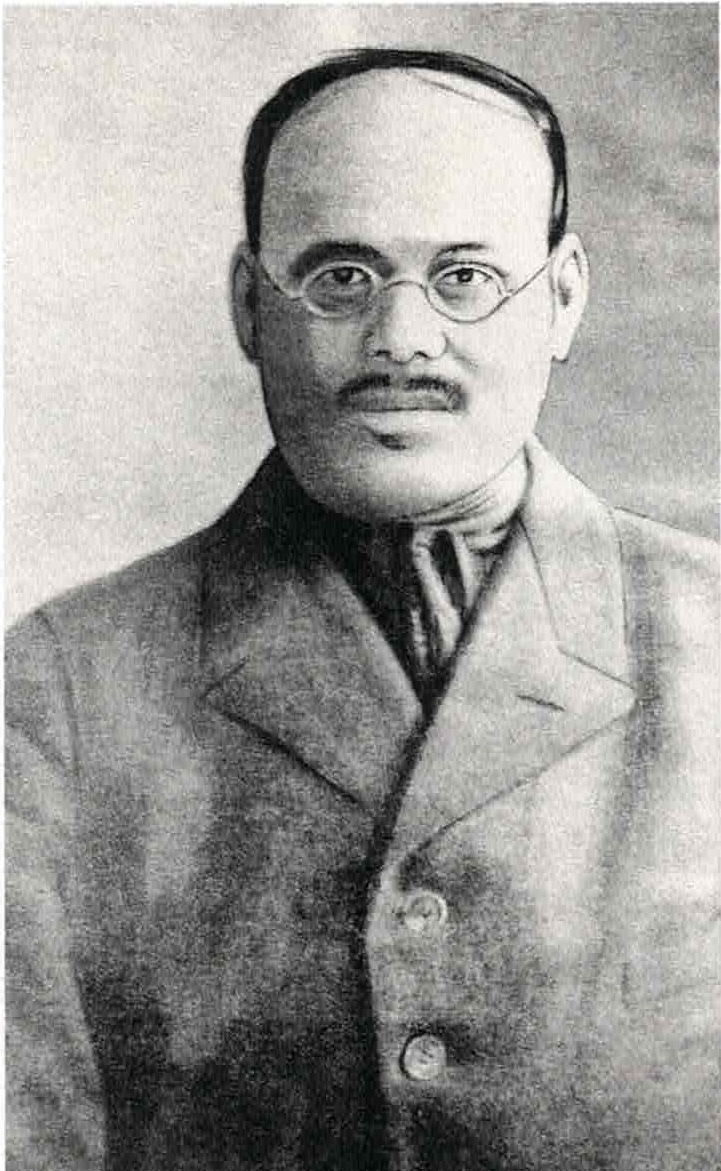
Portrait: Wikimedia Commons, public domain
Har Dayal Mathur was born on 14 October 1884 in Delhi, into a family wealthy enough to recognise his brilliance early and groom him for the civil service. He took his bachelor's degree at St. Stephen's College, his master's in English literature at Government College, Lahore, and then won a State Scholarship to St. John's College, Oxford, in 1905. A few months short of finishing his degree, he did something almost unheard of. He renounced the scholarship and the degree, declaring that he could not accept the patronage of a government that occupied his country illegitimately, and walked out of Oxford.
In London he joined Shyamji Krishna Varma at India House in Highgate and wrote for the Indian Sociologist. He went on to edit Madame Cama's revolutionary periodical Bande Mataram in Paris, and his essays in the Calcutta-based Modern Review ranged from psychosocial analyses of British rule to experimental theories of education. A Canadian secret agent reported to Delhi in 1913 that of all Indian agitators in America, Har Dayal was "the most dangerous." He returned to India in 1908 and wrote so provocatively against the government that he was banned; Lala Lajpat Rai advised him to leave the country.
He drifted through France, Germany, Martinique and Algiers, and reached the United States in 1911. He worked briefly at Harvard, then secured a post teaching Indian philosophy at Stanford, where his anarchist views got him into trouble with the university. Moving to Berkeley, he met Ram Chandra, and together they began organising the Punjabi immigrant workers of the Pacific coast. In 1913 the Pacific Coast Hindi Association was founded in San Francisco, with Sohan Singh Bhakna as president and Har Dayal as general secretary. On 1 November 1913 it launched the weekly Ghadar, which openly called for armed revolt. The association took the paper's name and became the Ghadar Party.
The British pressed the Americans to act. Har Dayal was arrested by US immigration officials in March 1914. Released on bail, he fled to Switzerland and then to Berlin, where he became the principal adviser to the German government's wartime attempt to foment revolt against the Raj. Disillusioned by the Germans, he made his anger public and was expelled. He settled in Stockholm as a professor of Indian philosophy and wrote Forty-Four Months in Germany and Turkey, arguing that if the weaker countries of Asia could not win independence, British or French rule was preferable to German or Japanese.
In his later years Har Dayal decisively rejected his revolutionary past. He abandoned his Anglophobia, advocated a mixed British and Indian administration for his country, and became a firm admirer of Western culture. He moved to California in the 1920s and taught Sanskrit at the University of California, Berkeley. He died in London on 4 March 1939, reportedly poisoned, on the eve of a long-planned return to India. A Delhi library bears his name, but few of its visitors know the man: the quixotic intellectual who founded a revolution and then, with the same restless honesty, walked away from it.
Source: The Indian Express, Encyclopaedia Britannica
Visuals: Archival portrait
Follow the daily five-post slate on Instagram.
Follow on Instagram
