
Hemchandra Kanungo: The Man Who Brought Bomb Science from Paris
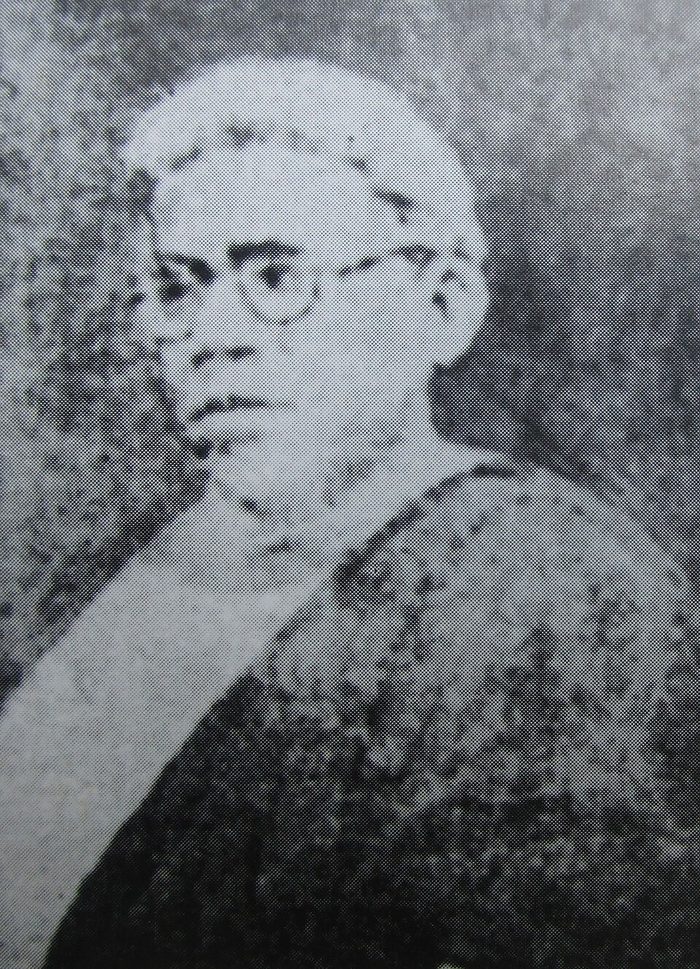
Portrait: Wikimedia Commons, public domain
Hemchandra Das Kanungo, usually written as Hemchandra Kanungo, was born on 4 August 1871. He is believed to have been the first Indian revolutionary to travel abroad specifically to obtain military and political training. In 1907 he sailed to Paris, where he learned the technique of assembling picric acid bombs from exiled Russian revolutionaries (some accounts name his teacher as Nicholas Safranski). He returned to Bengal in January 1908 carrying the knowledge that would arm the revolution.
With Aurobindo Ghosh and Barindra Kumar Ghosh, Kanungo opened a secret bomb factory at Maniktala near Calcutta, the headquarters of the Jugantar group, and he was counted among the founders of the Jugantar party itself. His expertise flowed through the entire network: the bombs used in the Muzaffarpur attempt on Kingsford were his work in collaboration with Ullaskar Dutta. He also contributed articles to the Jugantar Patrika to draw more young men into the movement, and he was one of the creators of the Calcutta flag, on which Bhikaiji Cama's famous flag, raised at Stuttgart in August 1907, was based.
Kanungo's Paris mission had consequences far beyond Bengal. His bomb-making knowledge was disseminated through Indian nationalist organizations both in India and abroad, making him, in effect, the teacher of a generation of revolutionaries. Kazi Nazrul Islam later gave him the honorific "Biplabi Dronacharya", the Dronacharya of the revolutionaries, for the mentorship he gave to so many young fighters.
In the Alipore Bomb Case of 1908-09 he was one of the principal co-accused alongside Aurobindo Ghosh. He was sentenced to transportation for life and deported to the Cellular Jail in the Andamans, where he served alongside Barindra Ghosh and Ullaskar Dutta. The British considered the three the most dangerous of the deportees. He was released in 1921 and lived on until 8 April 1951, spending his later years away from public life. A scholar-revolutionary in an age of action, he had given the movement its technology and then watched others take the credit for it.
Kanungo is barely a name in the popular history of the freedom struggle, yet historians regard him as the most prominent figure of the early phase of the revolutionary movement. He was the technician without whom the romantic image of the Bengali bomb-thrower could not have existed: the man who crossed the world to learn an explosive science and brought it home to use against an empire. In 2026 he was named in Parliament among the deportees to the Andamans who "never ever wrote a mercy petition" and whom the nation has let slip from memory.
Source: Wikipedia, The Statesman
Visuals: Archival portrait
Follow the daily five-post slate on Instagram.
Follow on Instagram
