
Jatin Das: The 24-Year-Old Who Starved Himself for 63 Days in a British Jail
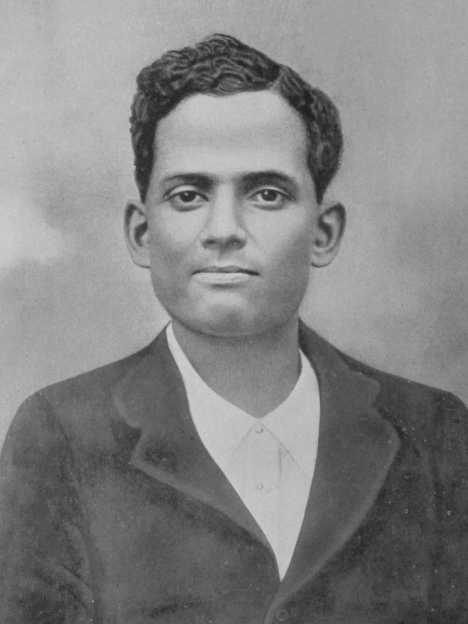
Portrait: Wikimedia Commons, public domain
Jatindra Nath Das, known to everyone as Jatin Das, was born on 27 October 1904 in Calcutta to Bankim Behari Das and Suhasini Debi. His mother died when he was nine. He was a brilliant student, passing the matriculation in the first division in 1921, the year he was first drawn into the freedom movement. At seventeen he joined Mahatma Gandhi's non-cooperation movement and was convicted for picketing shops selling foreign cloth in Burrabazar, spending time in Hooghly Jail. Around the same period he became a member of the Anushilan Samiti, the revolutionary group in Bengal.
While studying at Vidyasagar College for his B.A., Das was arrested in November 1925 under the Bengal Ordinance and interned in Mymensingh Jail without trial. It was there that he first used the hunger strike as a weapon. Having refused to salute a visiting Inspector-General of Prisons, he went on a hunger strike of about three weeks, ending it only when the officer apologised. The lesson stayed with him: a body, offered up deliberately, could move things that bombs could not.
By 1929 he was a member of the Hindustan Socialist Republican Association, the group led by Bhagat Singh and Chandrashekhar Azad. Arrested in the Lahore Conspiracy Case in June 1929 and lodged in Lahore's Borstal Jail, he watched the appalling treatment of political prisoners, flogging, inedible food, and the denial of newspapers and books. Bhagat Singh and Batukeshwar Dutt had already been on hunger strike for weeks over these conditions. On 13 July 1929, Jatin Das joined them on a fast unto death.
The authorities tried to force-feed him. Das resisted, and the feeding tube pierced his lung. Fever, violent fits, and bouts of severe coughing followed. His left side went paralysed; eventually he could not speak. Week by week the newspapers tracked his decline: 148 pounds on arrest, 109 by mid-August, 103 by 23 August, 92 by 2 September. Jawaharlal Nehru, who visited him on 9 August, told the press that Das "speaks in whispers... and looks for release in death." A jail committee recommended his release; the government refused, fearful of his popularity.
He died on 13 September 1929, sixty-three days into the strike, aged 24. In a letter to the British governor written while fasting, he had said that the individual must die so that the nation may live, and that he must die so that India may win freedom and glory.
His death shook the empire. The Imperial Legislative Assembly was forced to debate whether the state had the right to starve a man for holding an opinion. His funeral procession in Calcutta drew lakhs, reports put the figure at over five lakh. Newspapers across Europe covered it, and he was called the "Indian Terence MacSwiney" after the Irish republican who had died on hunger strike nine years earlier.
Yet today Jatin Das is a footnote. His death came eighteen months before Bhagat Singh, Sukhdev, and Rajguru were hanged, and the gallows, being the more dramatic symbol, swallowed the memory of the jail cell. He left no speeches and no trial statements, only a body that refused, day after day, to cooperate with its own destruction. In that refusal lies a reminder that the freedom struggle was not only about the shots that were fired, but about the men who taught the Raj that an Indian life could not be starved cheaply.
Source: Wikipedia, The Hindu, Awaz The Voice
Visuals: Archival portrait
Follow the daily five-post slate on Instagram.
Follow on Instagram
