
Kalpana Dutta: The Revolutionary Who Survived the Gallows and Was Written Out
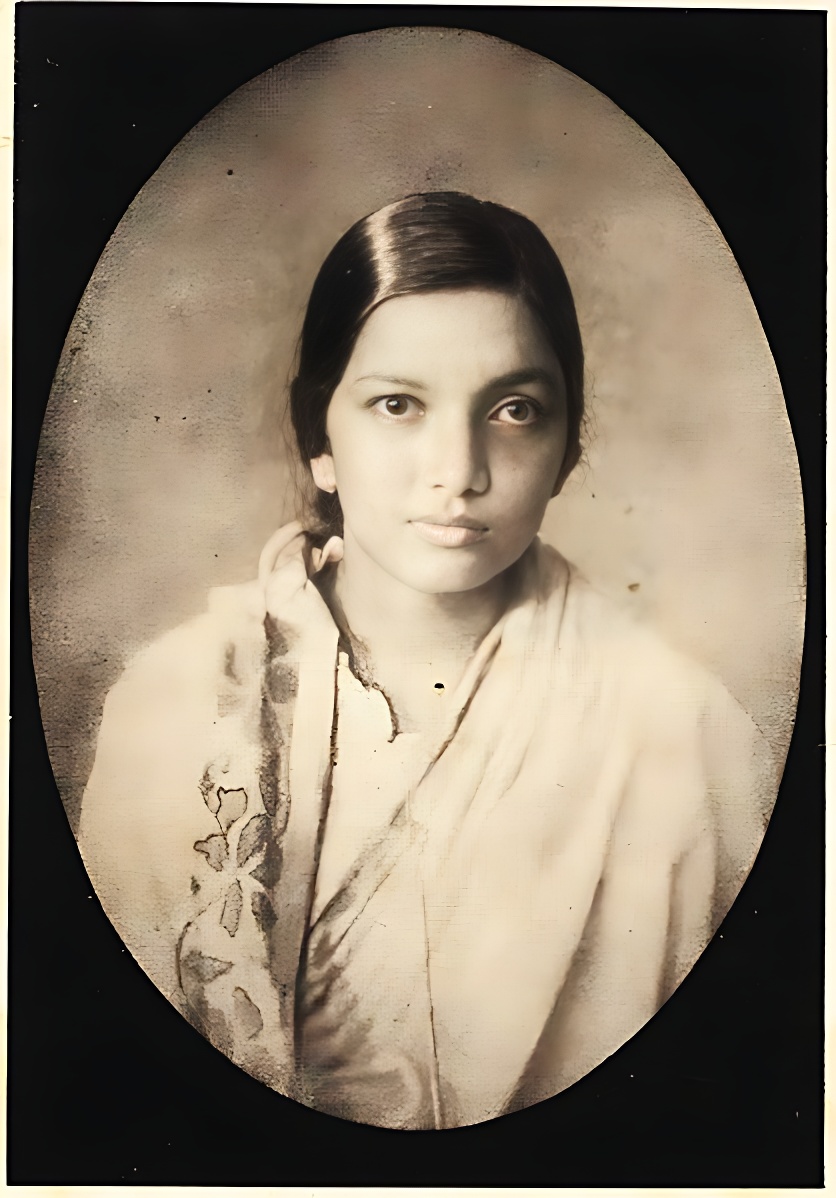
Portrait: Wikimedia Commons, public domain
Kalpana Dutta was born on 27 July 1913 in Sripur village, Chittagong district, in what is now Bangladesh. A bright student, she passed matriculation with letter marks in mathematics and Sanskrit from Dr. Khastagir Girls' High School and went to Bethune College in Calcutta, where she joined the Chhatri Sangha, the women students' association in which Bina Das and Pritilata Waddedar were also active. She learned stick and dagger fighting and began couriering explosives for the revolutionaries.
In May 1931 she joined the Indian Republican Army, Chattagram branch, the armed resistance group led by Surya Sen, a year after the Chittagong armoury raid. She made bombs and carried messages. In September 1931, Sen entrusted her and Pritilata Waddedar jointly with the attack on the European Club in Chittagong. A week before the operation, Kalpana was arrested while reconnoitring the club's surroundings. She was released on bail and went underground rather than face trial. Pritilata carried out the attack alone, and died of cyanide rather than be captured.
Kalpana kept fighting. On 16 February 1933, the police surrounded their hideout in Gairala village. Surya Sen was captured, but Kalpana escaped. She even tried to bomb the jail to free him; the attempt failed. She was finally arrested in May 1933 and tried in the second supplementary trial of the Chittagong armoury raid case. The sentence was transportation for life. She was 19. After a nationwide campaign for the release of Bengal's revolutionary prisoners, with figures like Gandhi, Tagore, and C.F. Andrews interceding, she walked free in 1939.
What she did with freedom sets her apart. She graduated from Calcutta University in 1940 and joined the Communist Party of India, working as a relief organiser during the 1943 Bengal famine and through the Partition of Bengal. In 1945 her memoir, "Chittagong Armoury Raiders: Reminiscences," appeared in English, one of the rare first-hand accounts of the uprising. She contested the 1946 Bengal Legislative Assembly election as a Communist candidate from Chittagong and lost. In 1943 she had married the Communist leader P.C. Joshi. Later she worked at the Indian Statistical Institute until retirement. She died in Calcutta on 8 February 1995, aged 81. Her story reached a wider audience through Ashutosh Gowariker's 2010 film Khelein Hum Jee Jaan Sey, in which she is portrayed by Deepika Padukone.
She is forgotten for a perverse reason: she survived. The movement's memory keeps its martyrs, Pritilata with the cyanide, Surya Sen at the gallows, and loses its survivors. Her later Communist politics, her memoir, her decades of unglamorous relief work, and a long life spent in a free country did not fit the martyrdom frame. Kalpana Dutta deserves remembering precisely because her revolution did not end with a death sentence: it continued through famine kitchens, a memoir, and a lifetime of ordinary, stubborn service.
Source: Wikipedia, Mainstream Weekly, The Better India
Visuals: Archival portrait
Follow the daily five-post slate on Instagram.
Follow on Instagram
