
Kanhu Murmu: The Younger Brother Who Carried the Santhal Revolt to Its End
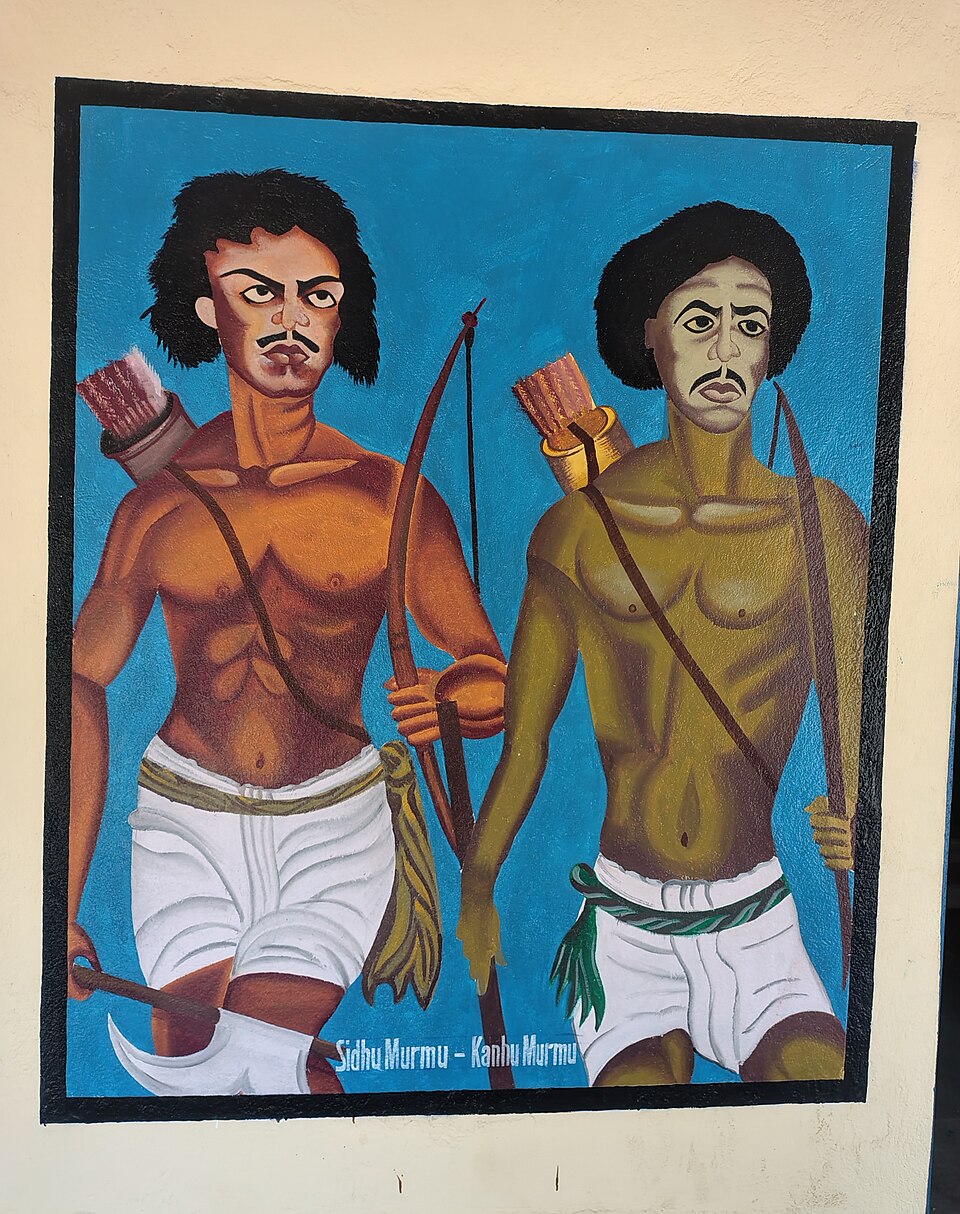
Portrait: Wikimedia Commons, CC BY-SA 4.0
Kanhu Murmu, born around 1820 at Bhognadih in what is now Jharkhand's Sahibganj district, was the younger of the two brothers who led the Santhal Hul of 1855-56, the great tribal uprising against the East India Company. Where Sidhu was the elder and the public face of the revolt, Kanhu was its co-commander, and it was Kanhu who kept the rebellion alive after Sidhu's capture and paid for it with his life.
The brothers' grievances were the Santhals' grievances: lands seized under the Permanent Settlement of 1793, moneylenders who lent at ruinous rates and took everything, and a Company administration of police, revenue officers, and courts that lived off extortion. On 30 June 1855, Kanhu stood with Sidhu before the great gathering at Bhognadih and announced the divine command they said they had received, that the Santhals must throw off the Company's rule and set up a government of their own. Some ten to twenty thousand people took the oath of rebellion.
Kanhu was an organizer as well as a fighter. The rebels built a communication network through Manjhi Than, the village meeting points, with messengers carrying news from village to village. They formed disciplined fighting groups, and the brothers strictly warned their followers not to harm innocent people or loot villages. Their war was against the Company, the zamindars, and the moneylenders, not against their neighbors.
He drew first blood in the uprising. On 7 July 1855, when a daroga arrived at Babupur with two cartloads of rope intending to bind the gathering, Kanhu drew his sword as the men moved to seize Sidhu, and cut the throat of the moneylender Manik Moodi. Sidhu killed Mahesh Datta beside him. That same evening, by Sidhu's order, Kanhu's men also killed a tyrannical tahsildar who had come to watch the spectacle. From that day the Hul was open war, and Kanhu fought through the brutal year that followed, as the British declared martial law, burned villages, and turned cannon and elephants on men armed with bows and arrows.
Sidhu was captured and hanged in late 1855. Kanhu fought on for months more. He was arrested on 30 November 1855 while fleeing toward Hazaribagh, and was publicly hanged at his own village of Bhognadih on 23 February 1856, at two in the afternoon. With his death the organized resistance ended. Their brothers Chand and Bhairav had already died in battle.
Kanhu's legacy is inseparable from his brother's: Hul Diwas on 30 June, the 2002 commemorative postage stamp, Sido Kanhu Murmu University at Dumka, and Sidho-Kanho-Birsha University at Purulia. But in histories that treat the brothers as a single name, Kanhu's own role, the younger brother who refused to stop when the elder was gone, is the part most easily lost.
Source: Sabrang India, GKToday, The Avenue Mail
Visuals: Archival portrait
Follow the daily five-post slate on Instagram.
Follow on Instagram
