Kartar Singh Sarabha: The nineteen-year-old Bhagat Singh called his guru
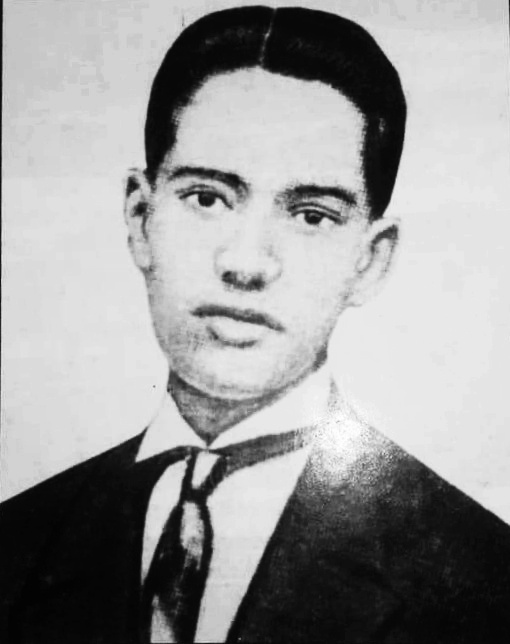
Portrait: Wikimedia Commons, public domain
Kartar Singh Sarabha was born on 24 May 1896 in the village of Sarabha in Ludhiana, Punjab. At sixteen he sailed to the United States to study at the University of California, Berkeley. What he found there was not just an education but the racial discrimination meted out to Indian immigrants, and it hardened his nationalism. In 1913 he joined the newly founded Ghadar Party in San Francisco and became one of its most energetic workers, playing a key role in editing and printing the Punjabi edition of the party's weekly newspaper, Ghadar. Its first issue, dated 1 November 1913, carried his words: "Today there begins 'Ghadar' in foreign lands, but in our country's tongue, a war against the British Raj. What is our name? Ghadar. What is our work? Ghadar."
When the First World War broke out in 1914, the Ghadarites saw their moment. Thousands sailed back to India to launch an armed uprising with the help of Indian soldiers in the cantonments of Punjab. Kartar Singh was among them, returning in November 1914 to organise a revolt within the British Indian Army alongside Rash Behari Bose. The plan was to capture the cantonments of Mian Mir and Ferozepur and engineer mutinies near Ambala and Delhi.
The plot was betrayed by Kirpal Singh, a police informer planted in the party's ranks. The government disarmed the native soldiers and the revolt collapsed. Kartar Singh, who had been ordered to escape toward Afghanistan with his comrades, refused to run while they were being held. He came back with two friends to Chak No. 5 in Sargodha and began preaching rebellion among the soldiers there. On 2 March 1915, Risaldar Ganda Singh had Kartar Singh, Harnam Singh Tundilat and Jagit Singh arrested.
He was tried in the First Lahore Conspiracy Case of 1914-15. Judgment was pronounced on 13 September 1915 at the Central Jail, Lahore: of the 63 accused Ghadarites, 24 were sentenced to death, and Kartar Singh was one of them. The court recorded that he was the most dangerous of all the rebels, "very proud of the crimes committed by him," and did not deserve mercy. He had refused legal defence and made no petition for mercy.
Kartar Singh Sarabha was hanged in the Central Jail, Lahore, on 16 November 1915. He was nineteen. It is said he went to the gallows singing a song he had written: "Sewa desh di jindadiye badi aukhi, gallan karniya dher sokhaliyan ne" (Serving one's country is very difficult; it is so easy to talk).
He became the Ghadar movement's supreme symbol of martyrdom. Bhagat Singh regarded him as his guru, friend and brother, and is said to have carried his photograph in his pocket at all times. A statue of Kartar Singh was erected in Ludhiana, and the Punjabi novelist Nanak Singh wrote the novel Ikk Mian Do Talwaran based on his life. Yet outside Punjab his name is little known, a nineteen-year-old who chose the rope rather than ask for it to be loosened.
Source: Asianet Newsable (ANI), The Tribune
Visuals: Archival portrait
Follow the daily five-post slate on Instagram.
Follow on Instagram