Maulvi Ahmadullah Shah: The Maulvi of Faizabad who led the 1857 revolt in Awadh
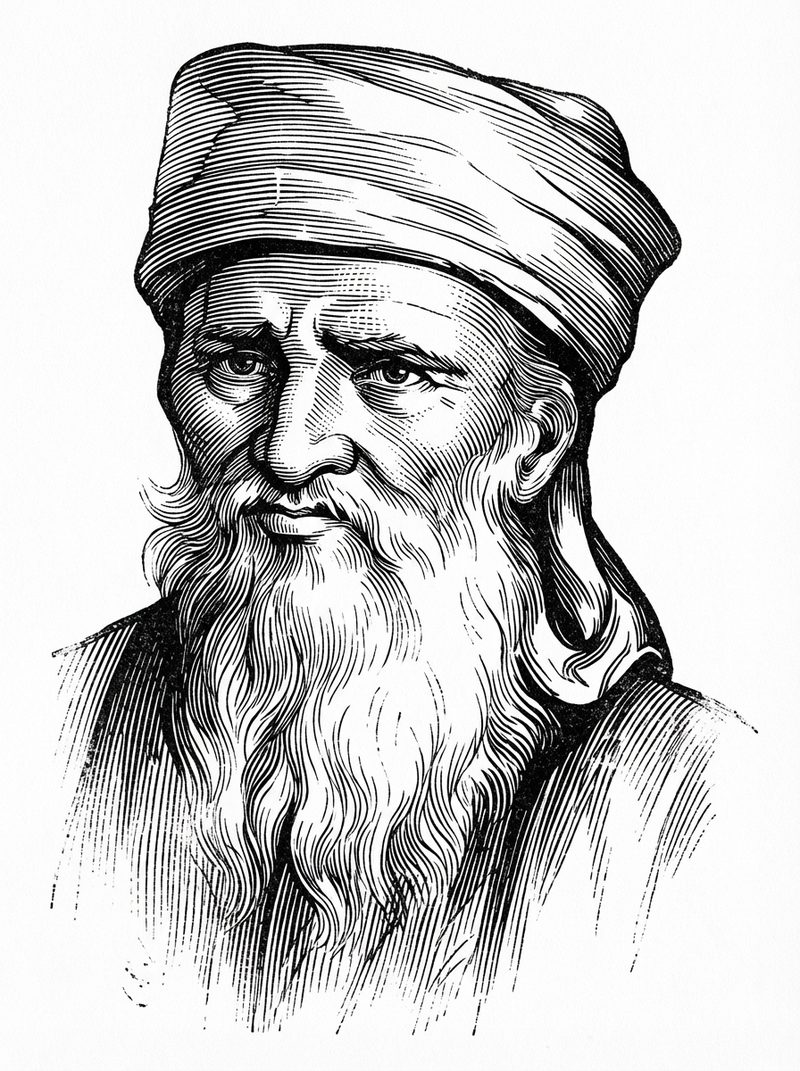
Portrait: State Archives of Uttar Pradesh via Wikimedia Commons, CC BY-SA 2.5
Maulvi Ahmadullah Shah (1787-1858), known as the Maulvi of Faizabad, was one of the principal leaders of the 1857 uprising in Awadh. British officers who fought him held him in rare regard. Thomas Seaton called him "a man of great abilities, of undaunted courage, of stern determination, and by far the best soldier among the rebels," and George Bruce Malleson mentioned him repeatedly in his six-volume History of the Indian Mutiny. Seaton also left a physical description: tall, lean and muscular, with large deep eyes, beetle brows, a high aquiline nose, and lantern jaws.
Born in 1787, most accounts place his birth in Faizabad in Awadh, though some say Madras; his family came from Gopaman in Hardoi, and his father Ghulam Hussain Khan had been a senior official in Haider Ali's army. He was well educated, fluent in English, and had travelled to England, Russia, Iran, Iraq, and performed the Hajj in Mecca and Medina. Also called Danka Shah and Nakkar Shah, he was drawn to Sufi thought and, while preaching in central India, began urging people to rise against foreign rule. The British imprisoned him on charges of sedition.
He was also fondly called Maoulvi Faizabadi. V.D. Savarkar devoted a chapter to him in his history of the 1857 war, a sign of the stature he held among the rebellion's leaders.
During 1857 he made Faizabad his centre, using the Masjid Sarai in the Chowk area as his headquarters and holding secret meetings with rebel leaders there. He became known as the "Lighthouse of Rebellion" in Awadh and, by The Wire's account, kept Faizabad free of British control for almost a year. A practicing Muslim, he embodied the region's Ganga-Jamuna culture of Hindu-Muslim unity, and leaders of both communities fought alongside him: Nana Sahib, Kunwar Singh, Begum Hazrat Mahal, Khan Bahadur Khan, and the Mughal prince Firoz Shah. His 22nd Infantry Regiment, commanded by Subedars Ghamandi Singh and Umrao Singh, fought in the Battle of Chinhat.
The British never captured him alive, and a reward of Rs 50,000 was announced for him, dead or alive. On 5 June 1858, after arranging to meet Raja Jagannath Singh of Powayan in Shahjahanpur to draw him into the war, he was shot at the gate of the raja's house by the raja's brother and retainers. He died on the spot. His head was severed, carried to the district magistrate at Shahjahanpur, and the next day hung at the kotwali.
Despite being one of the most feared and respected rebel commanders of 1857, Ahmadullah Shah has no major national memorial. In 2021, the Indo-Islamic Cultural Foundation considered naming the proposed mosque at Dhannipur in Ayodhya after him, a recognition that came more than 160 years after his death. He remains a symbol of the Hindu-Muslim unity of 1857 and of a rebellion whose leaders came from far beyond the princely courts.
Source: The Wire, Times Now News
Visuals: Archival portrait
Follow the daily five-post slate on Instagram.
Follow on Instagram