
Rani Avantibai Lodhi: The queen of Ramgarh who defied the British in 1857
Portrait: Wikimedia Commons, CC BY-SA 4.0
Rani Avantibai Lodhi (1831-1858) was the warrior queen of the small estate of Ramgarh, in present-day Dindori district of Madhya Pradesh, who led an armed uprising against the British in 1857. Born on 16 August 1831 in Mankehni village into a Lodhi Rajput family, she married Vikramaditya Singh Lodhi, son of Raja Laxman Singh of Ramgarh. When her husband fell seriously ill and the British declared him unfit to rule, she took over the administration to protect the interests of her minor sons, Aman Singh and Sher Singh. The British East India Company refused to recognize her authority, placed Ramgarh under the Court of Wards, and appointed its own administrator. She treated this as annexation under Lord Dalhousie's Doctrine of Lapse and resolved to resist.
Skilled in sword-fighting and horse riding, she travelled across villages rallying farmers, tribal communities, and local chieftains, with whom she shared a deep bond that British officers struggled to understand. She organized publicity for a conference convened under the Gond ruler Raja Shankar Shah, sending neighboring kings and landlords letters accompanied by glass bangles, with the message that they should either tighten their waists to defend the motherland or sit at home wearing bangles. When the revolt broke out she raised an army of 4,000 farmers, tribals, and local chieftains. Her first battle with the British took place at Khairi near Mandla, where she defeated Deputy Commissioner Waddington and his forces so completely that they fled. She controlled Mandla from December 1857 to February 1858. Stung by the defeat, the British returned with the help of the King of Rewa, attacked Ramgarh, and set it ablaze. Avantibai withdrew to the hills of Devharigarh and waged guerrilla warfare, at one point infiltrating and disbanding Waddington's camp.
Trapped by British forces and facing certain capture, she chose death over surrender. On 20 March 1858, at Sukhi-Talaiya between Balapur and Ramgarh, she pierced herself with her own sword. Tradition holds that her last words invoked Rani Durgavati's vow never to let the enemy lay hands on her while she lived. She was 26.
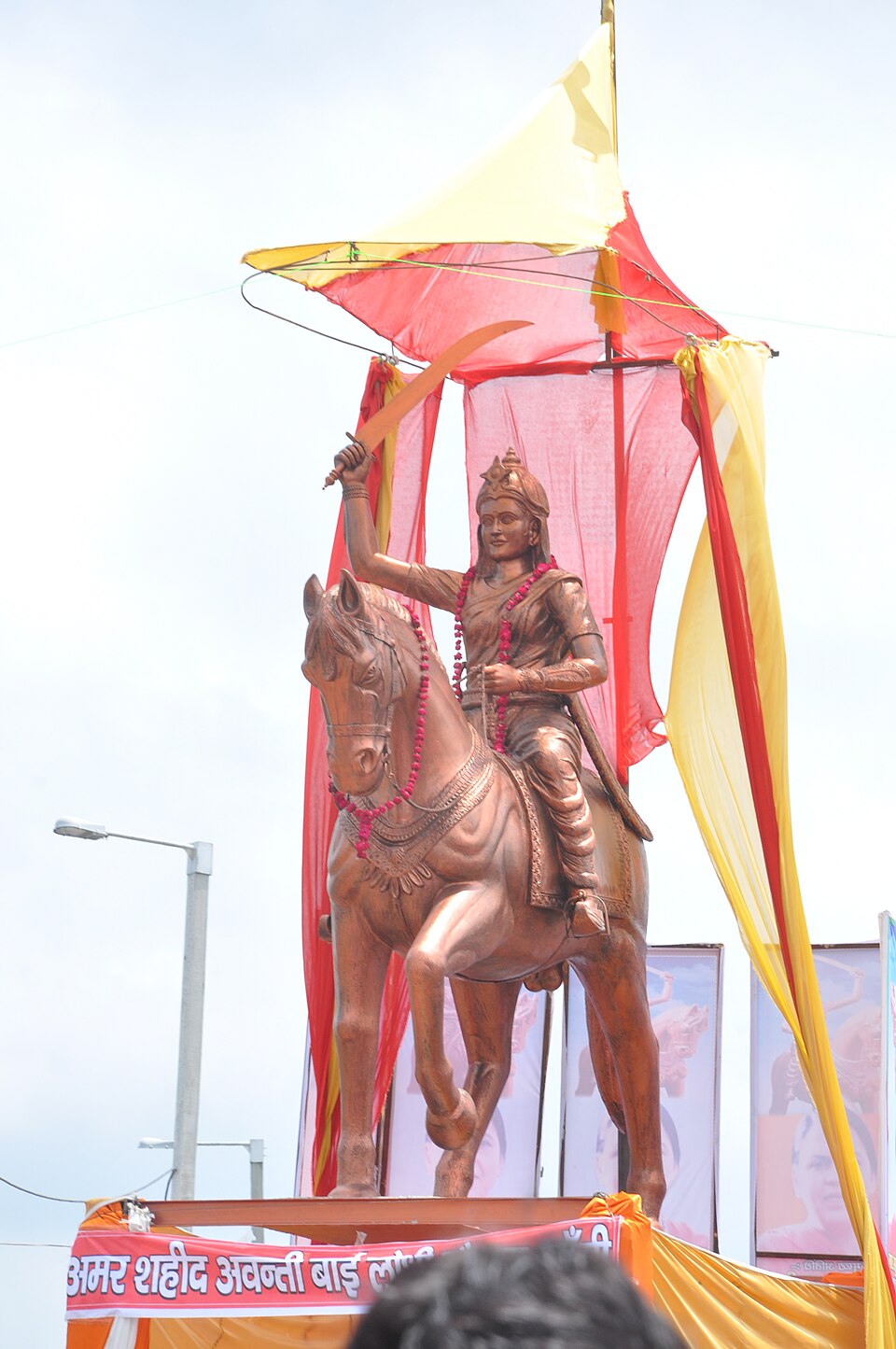
India Post issued a stamp in her honor in 1988, memorials stand in her name in Madhya Pradesh, and a statue of her stands at Dongargarh in Chhattisgarh, but her story never entered the national narrative of 1857. It survived instead in local folklore, theatre, and official records: the story of a queen who defended a small estate with an army of ordinary villagers until there was nothing left to defend.
Source: Feminism in India, ForumIAS
Visuals: Archival portrait
Follow the daily five-post slate on Instagram.
Follow on Instagram
