Rani Gaidinliu: The Naga Leader Sentenced to Life Imprisonment at Sixteen
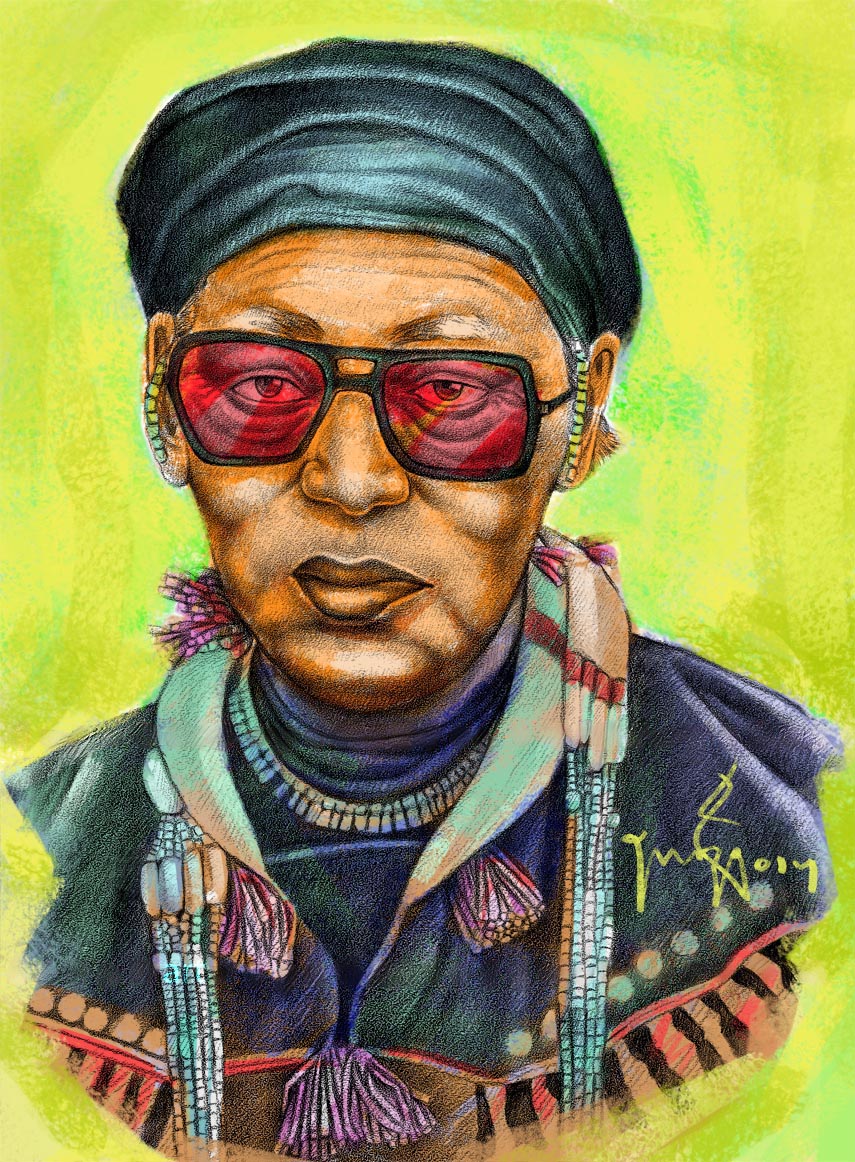
Portrait: Wikimedia Commons, CC BY-SA 4.0
Gaidinliu Pamei, known to India as Rani Gaidinliu, was a Naga spiritual and political leader who took command of an anti-British movement at the age of sixteen and spent fourteen years in British jails for it. She was born on 26 January 1915 (some records give 26 October 1915) at Nungkao village in the Tamenglong district of Manipur, the fifth of eight children of Lothanang and Karotlienliu, of the Rongmei tribe of the Zeliangrong Nagas. There were no schools in her part of the hills, and she had no formal education.
At thirteen she joined the Heraka movement of her cousin Haipou Jadonang, a socio-religious revival of the ancestral Naga religion that opposed both British-imposed reforms and the spread of Christian missionaries in the Naga hills. The movement soon took on a political aim: an independent Naga kingdom, the Naga Raj. Within the Heraka faith, Gaidinliu came to be regarded as an incarnation of the goddess Cherachamdinliu.
When the British hanged Jadonang on 29 August 1931, the sixteen-year-old Gaidinliu took over his movement. She told the Zeliangrong people not to pay taxes to the British, raised donations and volunteers from the villages, and moved constantly through what are now Assam, Nagaland, and Manipur to evade arrest. Her forces clashed with the Assam Rifles in the North Cachar Hills and at Hangrum in 1932. The British announced cash rewards for her capture.
She was captured in 1932, tried at Imphal in a trial that lasted ten months, and sentenced to life imprisonment. From 1933 to 1947 she was held in jails at Guwahati, Shillong, Aizawl, and Tura. In 1937 Jawaharlal Nehru met her in Shillong Jail, was struck by her resolve, and promised to work for her release. He called her the "Daughter of the Hills" and gave her the title of "Rani," queen, by which she has been known ever since. He even wrote to the British MP Lady Astor asking for her release. The request was rejected.
She walked free only in 1947, with independence, and went back to work for her people. She remained a defender of the ancestral Naga religious practices and resisted the conversion of her community to Christianity, a stand that has made her a divisive figure in Nagaland, where most Naga tribes are Christian and many dispute her claim to the Naga cause.
Independent India honored her as a freedom fighter: the Tamrapatra in 1972, the Padma Bhushan in 1982, the Vivekananda Seva Award in 1983, and the Stree Shakti Puraskar in 1991, with the Birsa Munda Puraskar following posthumously in 1996. A postage stamp carried her portrait in 1996, and in 2016 the Indian Coast Guard commissioned a fast patrol vessel named ICGS Rani Gaidinliu. She died on 17 February 1993 at Longkao, her birthplace.
In 2015, the Prime Minister said it was the country's misfortune that people like Rani Gaidinliu had either not been remembered adequately or had been deliberately forgotten. A girl of sixteen who defied an empire and paid with fourteen years of her youth deserves better than either fate.
Source: Wikipedia, The Times of India, Vajiram and Ravi
Visuals: Archival portrait
Follow the daily five-post slate on Instagram.
Follow on Instagram