
Sachindra Nath Sanyal: The Ideologue Who Wrote the Revolutionary's Bible
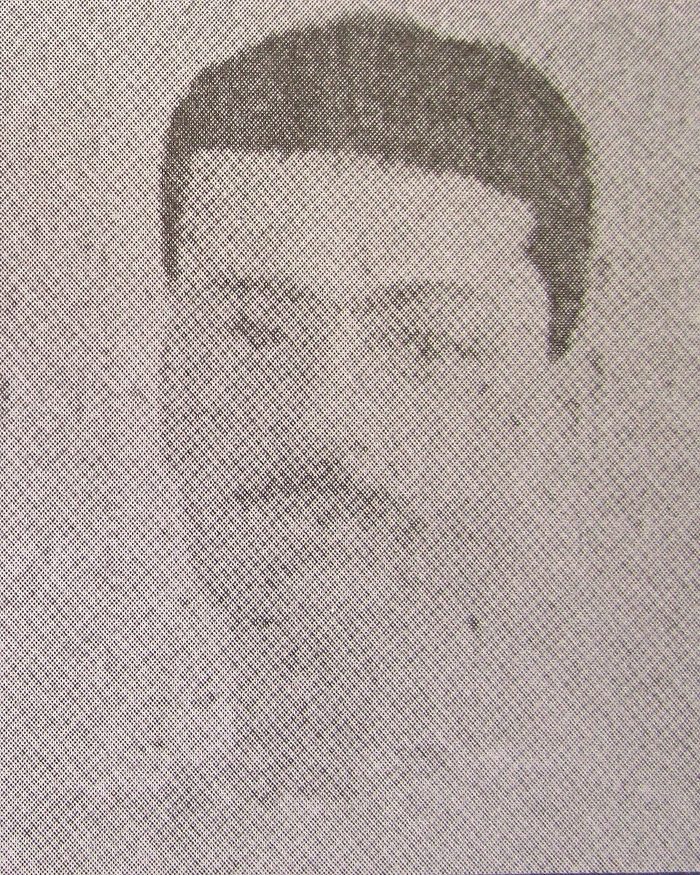
Portrait: Wikimedia Commons, public domain
Sachindra Nath Sanyal was born on 3 June 1893 in Benares into a Bengali family, in what were then the North-Western Provinces. In 1913 he founded a branch of the Anushilan Samiti at Patna, and by 1912 he was already working with Rash Behari Bose on the Delhi conspiracy against Viceroy Lord Hardinge. He was deeply involved in the Ghadar plans of 1914-15, and after Bose fled to Japan in 1915, Sanyal was regarded as the senior-most leader of India's revolutionary movement.
Arrested in the Benares Conspiracy Case, he was sentenced to transportation for life and deported to the Cellular Jail in the Andamans. It was there that he wrote his enduring work, Bandi Jeevan (A Life of Captivity, 1922), a memoir that combined his prison experience with a history of the revolutionary movement. The book became the bible of the armed nationalist movement, read by a generation of revolutionaries. He was released in 1920, but when he resumed anti-British work the government sent him back, and his ancestral home in Benares was confiscated as reprisal.
After Mahatma Gandhi called off the Non-Cooperation Movement in 1922, Sanyal concluded that armed struggle was the only road left. In October 1924, together with Ram Prasad Bismil and others, he founded the Hindustan Republican Association. He wrote its manifesto, The Revolutionary, which was distributed across the major cities of North India on 1 January 1925. The document laid out the goal plainly: the overthrow of British rule and the establishment of a federal republic, with socialism named as its economic creed. It was the ideological foundation of everything the HRA, and later the HSRA, would do.
Sanyal was the key strategist of the Kakori train action of 9 August 1925, arranging the arms for the operation, including, by one account, 50 Mauser pistols smuggled in for the purpose. In the crackdown that followed, he was arrested and again sentenced to life. Deported to the Cellular Jail a second time, he had the rare and terrible distinction of being sent to Port Blair twice. He was released from Naini Central Prison in August 1937, but was re-arrested in 1940 under the Defence of India Act. By then he had contracted tuberculosis. He was moved to Gorakhpur jail for his final months and died there on 7 February 1942.
Sanyal mentored the next generation, including Chandrashekhar Azad and Bhagat Singh, and in 1920-24 he debated Gandhi himself on revolution versus non-violence, a correspondence published in Young India. Yet today he is far less known than his own pupils. The ideologue who wrote the movement's manifesto and its most-read memoir died in a prison hospital of a treatable disease, five years before the freedom he had spent his whole adult life planning.
Source: Wikipedia, Times of India
Visuals: Archival portrait
Follow the daily five-post slate on Instagram.
Follow on Instagram
