Rukmini Lakshmipathi: First woman jailed in the Salt Satyagraha, and Madras Presidency's first woman minister
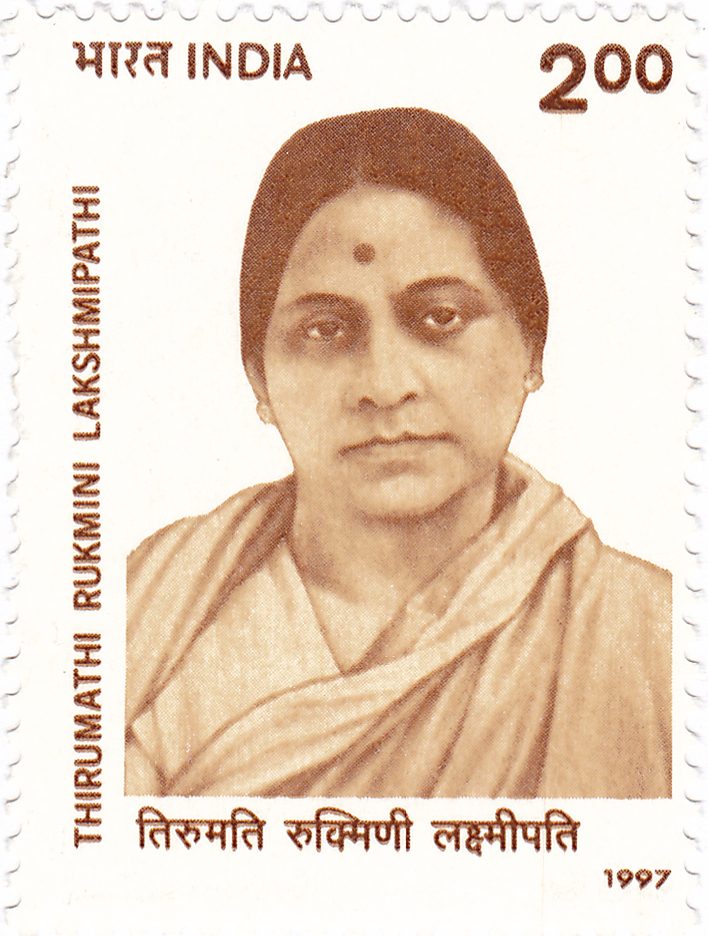
Portrait: India Post commemorative stamp (1997), Wikimedia Commons, GODL-India
Rukmini Lakshmipathi was born on 6 December 1892 in Madras into a family of agriculturists; her grandfather was the landlord Raja T. Ramrao. She earned her B.A. from the Women's Christian College in Madras and married Dr. Achanta Lakshmipathi. She entered public work early: she was secretary of the Madras branch of the Bharat Stree Mahamandal and joined the Women's Indian Association in 1917. In 1923 she joined the Indian National Congress and donated all her jewellery to Gandhiji's Harijan Welfare Fund. In 1926 she represented India at the International Women's Suffrage Alliance congress in Paris.
In 1930 she joined the Vedaranyam Salt Satyagraha, one of the 99 satyagrahis chosen for the march from Tiruchirapalli to the coast. She was already a vice-president of the Tamil Nadu Congress Committee. Halfway through the march she reportedly rushed to Madras when her son fell ill with food poisoning, and returned within hours. As the marchers neared the sea, the British police turned violent. Running among the satyagrahis to hold the group together, she weathered blows meant for others, and was finally dragged away from a pile of salt she was defending from the police. She became the first woman in the country to be arrested under the salt laws and was sentenced to one year's imprisonment. She was jailed again for six months during the Civil Disobedience Movement, and in 1940 she was imprisoned for a year for taking part in the Individual Satyagraha.
In 1934 she won a by-election to the Madras Legislative Council, becoming the first woman elected to the Madras legislature. In the 1937 elections she was elected to the Madras Presidency Legislative Assembly, and on 15 July 1937 she became its Deputy Speaker, a post she held until October 1945. From 1 May 1946 to 23 March 1947 she served as Minister for Public Health in the T. Prakasam cabinet, the first (and only) woman minister of the Madras Presidency. Her short tenure is credited with the inauguration of maternity centres in villages. She remained an MLA until her death on 6 August 1951.
Her legacy is marked in small, durable ways: a postage stamp was issued in her honour in 1997, and Marshall's Road in Egmore, Chennai, was renamed after her. At her death, K. Kamaraj, then the Tamil Nadu Congress chief, recalled how, as the party's vice-president in the "crucial years" of 1942-45, she had directed the national movement in the state with "devotion and zeal". She had moved from being beaten by police at Vedaranyam to presiding over the province's legislature, and few remember her name today.
Source: Wikipedia, The Hindu, The Philatelist
Visuals: Archival portrait
Follow the daily five-post slate on Instagram.
Follow on Instagram