
Suhasini Ganguly: The Teacher Who Hid Chittagong's Most Wanted Men
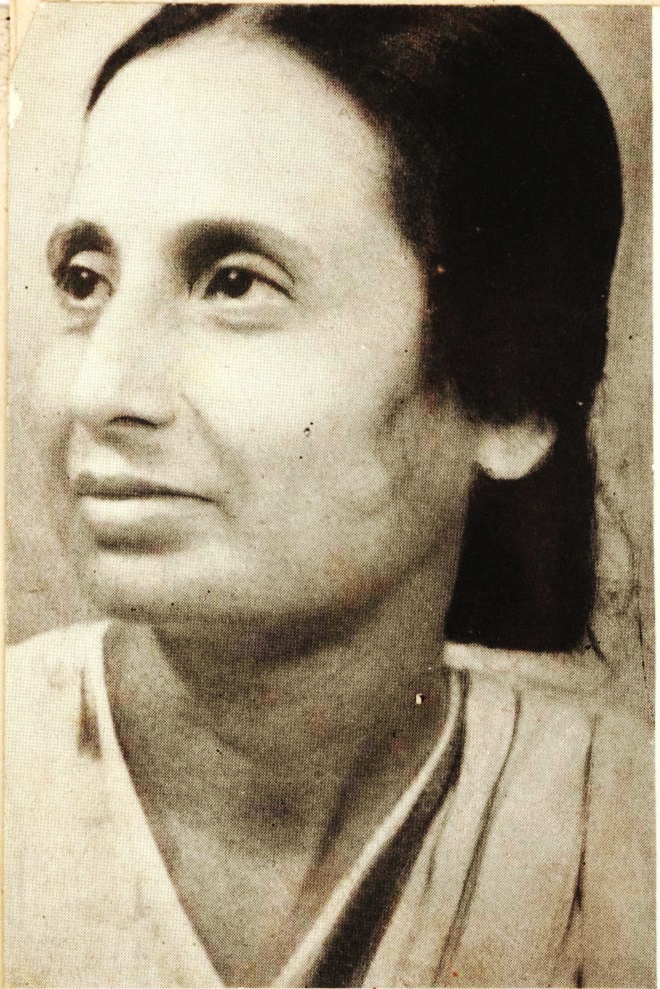
Portrait: Wikimedia Commons, public domain
Suhasini Ganguly was born on 3 February 1909 in Khulna, Bengal, to Abinashchandra Ganguly and Sarala Sundara Devi, her family hailing from Bikrampur in Dhaka. She passed matriculation from Dhaka Eden School in 1924, and while studying for the Intermediate of Arts she took a teacher's job at a deaf-and-dumb school and moved to Kolkata. It was the step that changed her life.
In Kolkata she met Kalyani Das and Kamala Dasgupta, who drew her into the Jugantar Party and the Chhatri Sangha, the women's student organisation. On their behalf she taught swimming in Raja Srish Chandra Nandy's garden, and there, in 1929, she met the revolutionary Rashik Das, who became her political teacher. When the British discovered her activities, she slipped across the border into Chandannagar, then French territory, beyond British jurisdiction.
Then came the Chittagong armoury raid of 18 April 1930. Surya Sen's men were on the run, and the Chhatri Sangha's leaders gave Suhasini, then 21, a dangerous assignment. She and the Jugantar member Sashadhar Acharya posed as husband and wife and opened a modest house in Chandannagar to the fugitives: Ananta Singh, Lokenath Bal, Ananda Gupta, Jiban Ghoshal, and others. She played the part down to the last detail, wearing sindoor and the conch-shell bangles of a married Bengali woman, teaching at the local Kashishwari Pathshala, visiting the market, chatting with neighbours. To Chandannagar she was simply a respectable wife and schoolteacher, while inside her house the empire's most wanted men rested and regrouped.
It lasted four months. On 1 September 1930, tipped off by a betrayer, the British police under Charles Tegart surrounded the house. The revolutionaries chose to fight. In the gun battle that followed, Jiban Ghoshal was killed; Suhasini, Acharya, and Ganesh Ghosh were captured and tortured. She was released not long after, but the British had her marked. In 1932 she was arrested again under the Bengal Criminal Law Amendment Act of 1925 and sent to the Hijli Detention Camp near Kharagpur, where she remained for six years.
After her release she stayed with the movement, drifting toward the Communist Party of India like many former Jugantar members. Her imprisonment did not end with the British: she was arrested and jailed even after Independence. She died in Kolkata on 23 March 1965, aged 56.
A lane in Kolkata is named Suhasini Ganguly Sarani, and that is nearly all that remains of her in public memory. She fired no famous shots and wrote no famous manifesto. She simply did what the revolution needed done: she opened her door to hunted men, lived a lie for months in plain sight, went to Hijli for six years, and kept going. The men she sheltered are the names in the books. She was the house that hid them.
Source: Wikipedia, The Indian Express, Ritam Digital
Visuals: Archival portrait
Follow the daily five-post slate on Instagram.
Follow on Instagram
