
Thakur Roshan Singh: The Kakori Martyr Who Never Boarded the Train
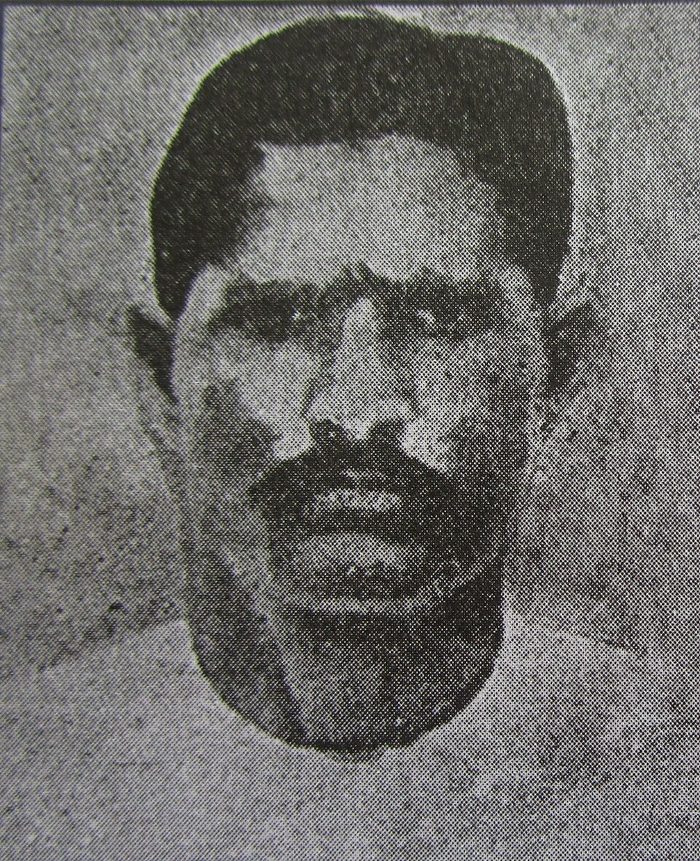
Portrait: Wikimedia Commons, public domain
Thakur Roshan Singh was born on 22 January 1892 in the village of Nabada in Shahjahanpur district of the United Provinces, to Thakur Jangi Singh and Kaushaila Devi. A Rajput skilled in the lathi, sword, and rifle, and inspired by Arya Samaj ideals, he threw himself into the Non-Cooperation Movement. During 1921-22 he was sentenced in the Bareilly shooting case and served two years in prison. Like many of his generation, the Chauri Chaura episode disillusioned him with non-violence, and after his release from Bareilly Central Jail he joined the Hindustan Republican Association in 1924, entering Ram Prasad Bismil's revolutionary circle.
What makes Roshan Singh's story unusual among the Kakori martyrs is that he took no part in the Kakori train action of 9 August 1925. His prosecution rested on a separate charge: during a robbery for revolutionary funds at Bamrauli in December 1924, a villager was shot and killed. In January 1926 the British arrested him and tried him for that murder. The trial ended with the same sentence handed to the Kakori accused: death. He was sentenced under sections dealing with murder and waging war against the state, and the colonial court treated him as part of the same conspiracy it was crushing.
He was hanged on 19 December 1927 at Allahabad jail, aged 35, the same day Bismil and Ashfaqulla Khan went to the gallows at Gorakhpur and Faizabad. Days before his death he wrote from his Naini jail cell that his death would be a cause of happiness and asked his friend to pray for him. His family, by several accounts, faced social and financial hardship after his execution, including difficulty in arranging marriages for his daughters.
Roshan Singh is the least known of the four men hanged in the Kakori case, partly because the most famous telling of the story centres on the train robbery he never took part in. But his life and death illustrate the same machinery: a young man radicalized by the promise and failure of non-violent mass politics, drawn into a revolutionary underground, and destroyed by a colonial justice system that used one conspiracy trial to hang him for another crime. In Shahjahanpur he is remembered as a "gumnam nayak", an unsung hero, and his birth anniversary on 22 January is still marked by those who believe the country owes him more than it has given. Of the four Kakori martyrs, his is the name most often left out of the telling.
Source: Times of India, Indiatimes (PTI)
Visuals: Archival portrait
Follow the daily five-post slate on Instagram.
Follow on Instagram
