Veer Savarkar: The Freedom Fighter History Tried to Forget
Vinayak Damodar Savarkar is the only major figure of India's freedom struggle whose patriotism is still treated as a debate topic. Every few months, his mercy petitions resurface in political speeches, presented as proof that he "begged" the British and betrayed the cause. The same public discourse rarely mentions what those petitions were, what the men mocking them did themselves, or what Savarkar actually suffered.
This piece does not ask you to agree with Savarkar's ideology. It asks something simpler: judge him on verified facts, with the same yardstick applied to everyone else.
The sentence: two life terms, 50 years
Start with what is not in dispute. In 1910, Savarkar was arrested in London in connection with the revolutionary movement: he was accused of supplying the pistol used in the assassination of A.M.T. Jackson, the Nasik collector, and of waging war against the King Emperor. After a dramatic escape attempt at Marseilles, he was brought back to India, tried, and sentenced to transportation for life twice over, a total of 50 years. On 4 July 1911, aged 28, he entered the Cellular Jail in the Andamans: Kala Pani.
The Cellular Jail was designed for solitary confinement. Each prisoner lived alone in a cell measuring 13.5 feet by 7.5 feet, with a ventilator too high to see through. Prisoners were yoked to the oil-grinding kolhu and set to other hard labor. Savarkar spent ten years there, from 1911 to 1921, before being shifted to mainland jails. He was conditionally released in 1924 and confined to Ratnagiri district until 1937.
The mercy petitions: what they actually were
The charge sheet against Savarkar in public debate is his clemency petitions. Here are the dates, from the official record. His first petition was received on 30 August 1911, a month after he reached the Andamans, and was rejected on 3 September 1911. He filed again in November 1913, again in 1917, and again in 1920. These were formal, legal petitions of the kind political prisoners of that era routinely filed. There was nothing unprecedented about the mechanism itself.
Two facts are usually left out. First, the earliest petitions of 1911 and 1913 were filed years before Mahatma Gandhi even returned to India from South Africa, so the claim that Savarkar acted on anyone's prompting collapses on the timeline alone. Second, in May 1920 it was Gandhi himself who took up the Savarkar brothers' case in public. Writing in Young India on 26 May 1920, in an article titled "Savarkar Brothers," Gandhi pointed out that the brothers had been excluded from the Royal Clemency of 1919 while other political prisoners walked free, and argued that the Viceroy was bound to grant them liberty unless they could be proved a danger to the state. Whatever one's view of the petitions' language, the tallest leader of the freedom movement considered their continued imprisonment unjust.
The language test: apply it to everyone
The petitions are mocked today for their language, particularly the formal sign-off "your most obedient servant." This is where the double standard becomes impossible to ignore. That phrase was the standard formal closing of official correspondence in British India. It signified nothing about a man's politics.
Gandhi used it himself. In his 1918 correspondence with Viceroy Lord Chelmsford, Gandhi signed off "Your Excellency's obdt. Servant." More than the sign-off, consider the substance: in 1918, Gandhi attended the Delhi War Conference and actively campaigned to recruit Indians into the British Army for the First World War, touring Gujarat through June 1918 urging enlistment. If formal courtesy to the British is evidence of loyalty to the Raj, then the entire leadership of the era stands convicted by the same evidence.
The imprisonment test: apply it to everyone
Savarkar's critics contrast his petitions with leaders who never "begged." The comparison does not survive contact with the record either.
In September 1923, Jawaharlal Nehru was arrested for defying a ban on entering the princely state of Nabha. Sentenced to two years, he was released after about two weeks, after signing a bond promising never to enter Nabha again. His father, Motilal Nehru, had meanwhile approached the Viceroy himself to secure his son's release. This is documented in the memoirs of K. Santanam, who was jailed alongside Nehru, and confirmed by historians of the period.
Even Bhagat Singh's story carries this footnote. During the Lahore conspiracy trial, his father Kishan Singh petitioned the Special Tribunal pleading his son's innocence. Bhagat Singh was furious: on 4 October 1930 he wrote to his father that the petition had "upset the whole equilibrium of my mind" and that he felt "as though I have been stabbed in the back." The point is not to diminish Bhagat Singh, who chose the gallows. The point is that petitions, bonds, and interventions by family were the normal legal landscape of the freedom struggle. Singling out one man's paperwork, filed from a torture jail, while ignoring everyone else's, is not history. It is politics.
What the ten years cost him
While Savarkar ground oil in the Andamans, the British took everything around him. His personal property was confiscated. His elder brother Ganesh, called Babarao, had already been transported for life before him for revolutionary activity. His younger brother was also jailed. His young son Prabhakar died of illness while he was inside. Babarao's wife Yesuvahini died in April 1919, with both brothers still in the Cellular Jail. His wife Yamunabai waited nearly two decades, from his London years through his imprisonment, for a normal life to resume. His father-in-law, the Dewan of Jawhar, was sacked and expelled from the state overnight on British orders.
This is the context in which the petitions were written: a man in solitary confinement, in leg irons at times, watching his family destroyed from thousands of miles away, using the only legal instrument available to a prisoner. Call it strategy or call it survival. But call it what it was.
The militarization strategy and 1946
After his release, Savarkar argued something that sounded shocking at the time: that Hindu youth should enter the British armed forces in large numbers, learn modern warfare, and be ready. At the Hindu Mahasabha sessions of December 1940 (Madura) and 1941 (Bhagalpur), he called on Hindus to join "the army, the navy and the air forces, the ordnance and other war-craft factories in their thousands and millions," and set up militarization boards to assist recruitment.
Critics read this as collaboration with the Raj. His defenders read it as long-game strategy: a disarmed population could never win freedom, and military training would one day serve India. What is historically verifiable is what happened next. On 18 February 1946, the Royal Indian Navy mutiny erupted at Bombay and spread with astonishing speed: over 20,000 sailors across 78 ships and shore establishments, from Karachi to Calcutta, rose against British command. Indian Army units in Madras and Poona showed sympathy, and in some places refused orders against the sailors.
A decade later, in 1956, former British Prime Minister Clement Attlee visited Calcutta and stayed with Justice P. B. Chakravartti. In Chakravartti's recorded account, Attlee attributed Britain's decision to leave India above all to the erosion of loyalty within the Indian armed forces, citing the INA trials and the naval mutiny. The sword Savarkar had wanted Indians to learn to wield had, in the end, become the argument that made the Empire conclude India was ungovernable.
The reformer behind the revolutionary
The Savarkar of the history textbooks, where he appears at all, is only the revolutionary. The man who emerged from prison spent his Ratnagiri years (1924 to 1937) attacking untouchability with an energy that embarrassed the orthodox. He organized inter-caste dining, campaigned for temple entry for the so-called untouchables, and built the Patit Pavan Mandir in Ratnagiri, whose foundation stone was laid on 10 March 1929 and which was inaugurated on 22 February 1931, open to Hindus of all castes with no bar on who could perform worship. He called caste discrimination a man-made practice with no scriptural sanction and insisted that a free India without social reform would not survive.
He was also among the earliest to demand complete independence when the mainstream still asked for dominion status, and his 1909 book on the 1857 uprising popularized calling it the First War of Independence, a framing every Indian schoolchild now learns. His 1923 pamphlet "Essentials of Hindutva," written in confinement, gave a name to an ideology that would shape Indian politics for a century. You do not have to admire the ideology to recognize the intellect.
Judge the record, not the slogan
Strip away the slogans and the record is this: a 28-year-old sentenced to 50 years in the Empire's most dreaded jail; ten years of solitary hard labor; a family broken by the state; legal petitions of a kind his contemporaries, including Gandhi, Nehru's family, and Bhagat Singh's father, also used; a strategic doctrine of militarization vindicated, in part, by the 1946 naval mutiny that Britain's own wartime prime minister later cited as decisive; and a social reform campaign against untouchability that few of his critics have matched in action.
Disagree with Savarkar's ideology. Debate Hindutva, debate his differences with Gandhi, debate everything he wrote after 1924. But the campaign to reduce him to a "mercy petition" is not criticism. It is the distortion of a freedom fighter's record for present-day political convenience, and it collapses the moment the same facts are checked against the same standard for everyone.
A nation that cannot look honestly at all of its freedom fighters has not finished becoming free.
Source: Author's own analysis
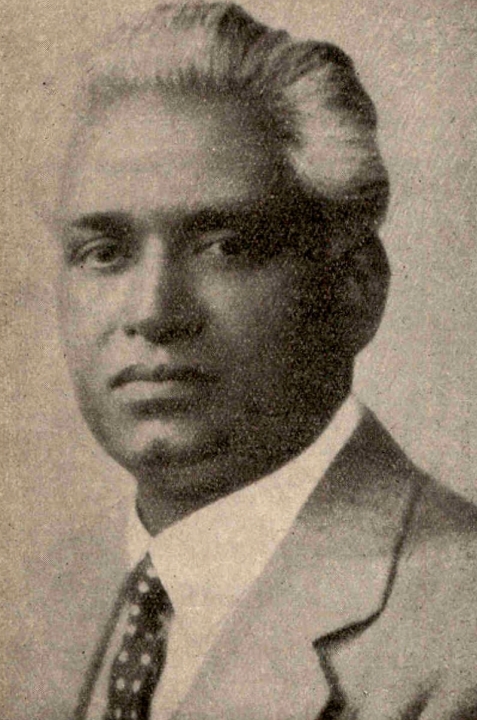
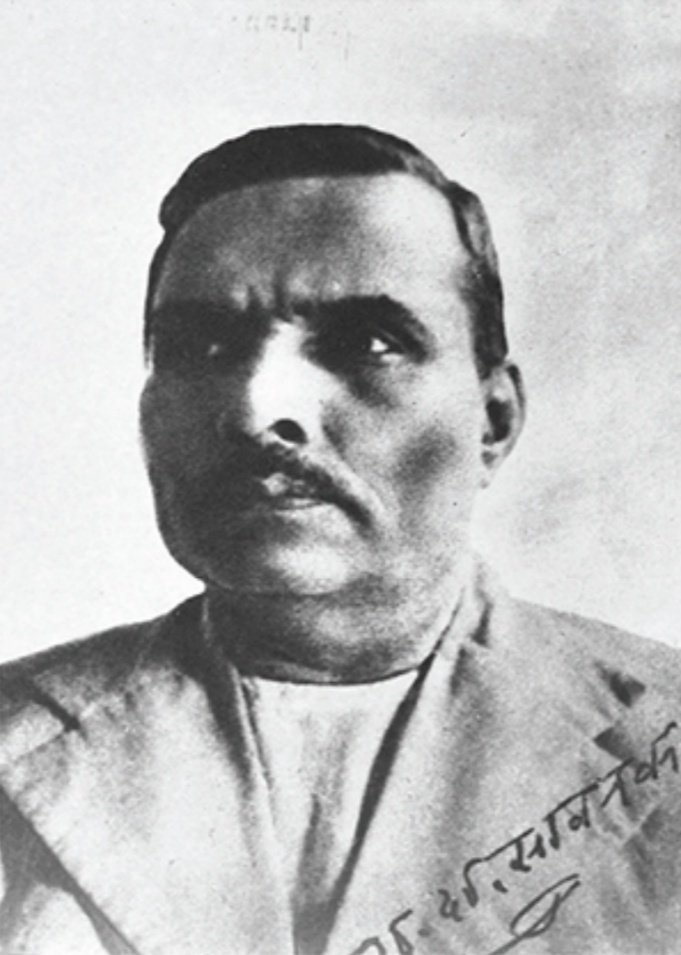
Visuals: Archival portrait
Follow the daily five-post slate on Instagram.
Follow on Instagram