V.V.S. Aiyar: The revolutionary who fathered the modern Tamil short story
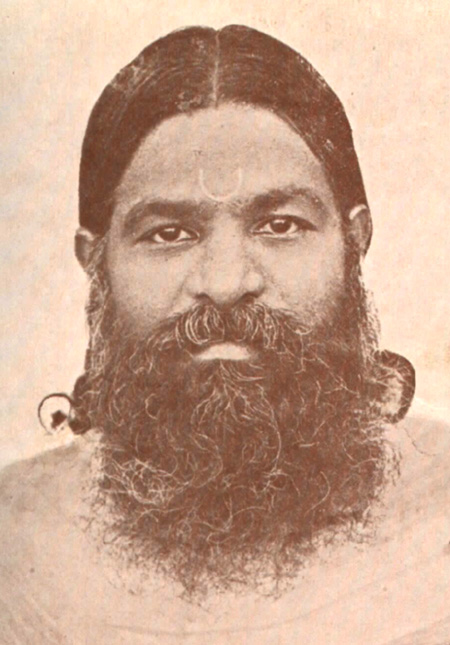
Portrait: Wikimedia Commons, public domain
Varahaneri Venkatesa Subramaniam Aiyar was born on 2 April 1881 in Varahaneri, in the town of Tiruchi, into a middle-class Brahmin family. He was a scholar of the first order, taking a BA in History, Politics and Latin from St. Joseph's College and a pleader's degree from the University of Madras in 1902. He practised as a junior lawyer in the Tiruchi district courts, then moved to Rangoon in 1906 to work in the chambers of an English barrister. A year later he sailed for London and joined Lincoln's Inn to qualify as a barrister. The polished young lawyer had arrived to collect a degree. He left with a revolution.
At India House in London, Aiyar fell under the influence of Vinayak Damodar Savarkar and was transformed. He became Savarkar's right-hand man and the vice-president of the secret society Abhinav Bharat. He headed the team of young Indians that translated Savarkar's Marathi history of the 1857 uprising, The Indian War of Independence, into English. He wrote a biography of the Italian revolutionary Garibaldi in Tamil for serial publication in Bharati's Pondicherry weekly India, and sent a weekly "London Letter" from the imperial capital, urging his countrymen toward liberty.
In 1910, with a British warrant out for his arrest, Aiyar resigned from Lincoln's Inn and fled to Paris. When Savarkar was arrested and held in Brixton prison, Aiyar, helped by Irish revolutionaries, tried to organise his rescue, then raced to Marseilles in a failed attempt to free him from the ship carrying him to India. In disguise and with false papers, Aiyar made his way to Pondicherry, then under French rule, beyond the reach of British police.
In Pondicherry he trained young revolutionaries in the use of firearms. Vanchinathan, the young man who shot the Tirunelveli Collector Robert Ashe dead in a running train in 1911 before killing himself, is believed to have been his pupil. Then, in 1917, Aiyar attended a meeting in Pondicherry addressed by Mahatma Gandhi, and was won over. The advocate of armed struggle became a satyagrahi. He edited the Tamil daily Desabhakthan from August 1920, led the non-cooperation movement in the district, and in September 1921 was arrested for sedition and sentenced to nine months in Bellary jail.
In parallel with all this ran an extraordinary literary life. Aiyar is called the father of the modern Tamil short story; his Kulathangarai Arasamaram of 1917 is counted as the genre's founding work. He produced the first complete English translation of the Tirukkural by a native scholar, judged the most scholarly of its time, and translated Kambar's Ramavatharam. In 1923 he founded a Gurukulam at Cheranmadevi, which was torn by a caste controversy over separate dining for Brahmin and non-Brahmin students. Gandhi tried to mediate. The affair hardened Periyar's break with the Congress.
On 3 June 1925, Aiyar drowned in the Papanasam falls while trying to save his drowning daughter Subhadra; both were lost. Some writers have called the circumstances mysterious, but the family tragedy is the accepted account. A revolutionary, a scholar and a storyteller died at forty-four, and the Tamil land lost a man it never quite learned how to remember.
Source: The Hindu, International Journal of History
Visuals: Archival portrait
Follow the daily five-post slate on Instagram.
Follow on Instagram