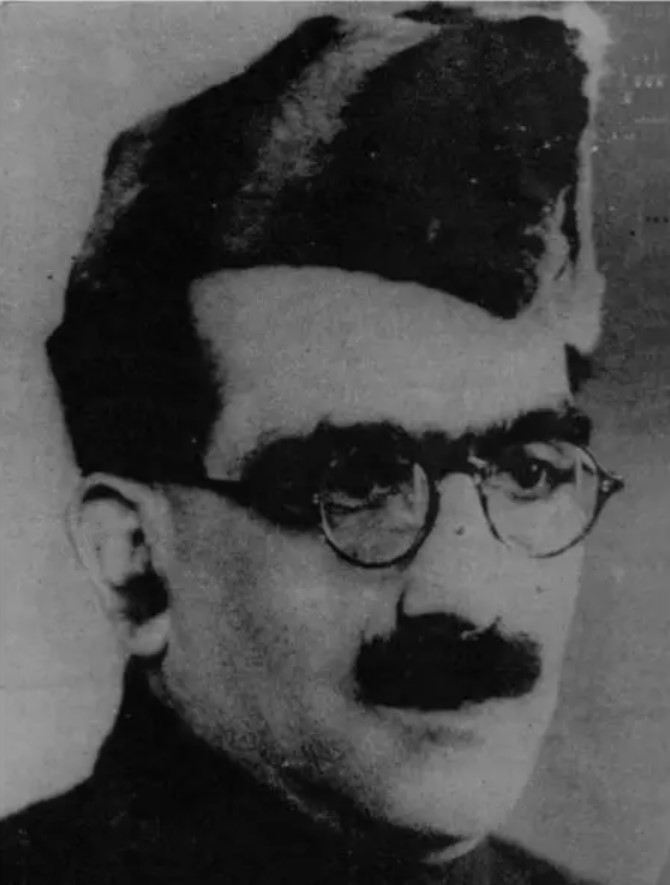
Yusuf Meherally: The Bombay socialist behind 'Simon Go Back' and 'Quit India'
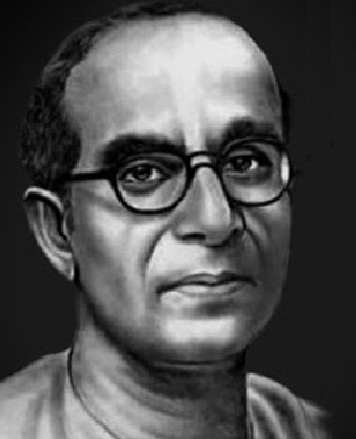
Portrait: Kalim Ajeem, Wikimedia Commons, CC BY-SA 4.0
Yusuf Meherally was born on 23 September 1903 in Bombay into a prosperous family with interests in textile mills. His family was pro-British, but he was drawn early to revolutionary movements abroad and to the struggles of working people, and he threw himself into the freedom struggle while still a student. He finished high school at Bharda High School, took a degree in History and Economics at Elphinstone College, where he earned a reputation as a formidable debater, and went on to study law at Government Law College.
In February 1928 the Simon Commission, an all-white body with no Indian members, arrived in Bombay to recommend changes to British governance in India. Meherally had founded the Bombay Youth League that year, and he organised a protest at the Bombay port. He and his colleagues dressed as coolies to get past the port's security, then greeted the Commission with a slogan he had coined: "Simon Go Back". The demonstration won him wide recognition, including from Gandhi, and the British punished him by refusing him a licence to practise law.
He went to jail during the Salt Satyagraha in 1930. In 1934 he became a founding leader of the Congress Socialist Party, which sought to give an egalitarian direction to the Congress, and through the 1930s he travelled tirelessly across India preaching grassroots socialism, workers' rights and solidarity with anti-colonial movements in Asia and Africa. He also visited Europe and America to build links with democratic socialists there. In 1938 he led the Indian delegation to the World Youth Congress in New York and attended the World Cultural Conference in Mexico. Noticing how little contemporary literature on Indian issues existed, he wrote the "Leaders of India" series, translated into Gujarati, Hindi and Urdu.
In April 1942 he was elected mayor of Bombay while imprisoned in Yerawada Central Prison, and in that capacity he formally welcomed Gandhi to the city for the All India Congress Committee session that passed the Quit India resolution. The phrase "Quit India" is widely credited to him: biographers record that he suggested it at a Bombay meeting, after alternatives like "Get out" and "Retreat" were rejected as impolite, and that Gandhi replied, "Amen". The historian Ramachandra Guha urges caution, noting the claim may be a misattribution and that Madhu Dandavate's 1986 biography records only that Meherally's Padma Publications issued a booklet titled Quit India. What is not disputed is that he had over a thousand "Quit India" badges printed before the AICC met, and that after the leaders were arrested on 9 August 1942 he organised his socialist colleagues, including Rammanohar Lohia, Aruna Asaf Ali and Achyut Patwardhan, to carry the movement forward underground. He himself was arrested on 9 August 1942 and remained in prison until 1946.
After his release he became a member of the legislative assembly in independent India. The 1942 detention had damaged his health, and he died of heart trouble in Bombay on 2 July 1950, aged 47. He is forgotten partly because larger figures crowded out the socialists, and partly because even his most famous slogan's authorship is contested. But two of the independence movement's most resonant phrases, "Simon Go Back" and "Quit India", are attached to his name, and Mumbai's Yusuf Meherally Centre keeps his socialist and Gandhian legacy alive.
Source: Wikipedia, Scroll.in
Visuals: Archival portrait
Follow the daily five-post slate on Instagram.
Follow on Instagram