Azimullah Khan: Nana Sahib's diplomat and the ideologue of 1857
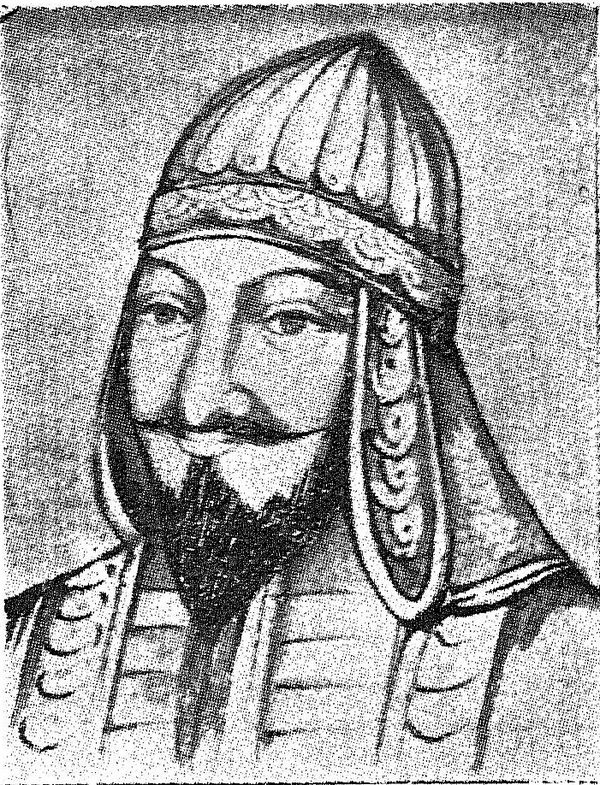
Portrait: Wikimedia Commons, public domain
Azimullah Khan Yusufzai (1830-1858), known as Dewan Azimullah Khan and as "Krantidoot," the ambassador of revolution, was Nana Sahib's prime minister and among the first to conceive the 1857 uprising as a national war of independence. Born on 17 September 1830, he was rescued as a starving boy with his mother from the famine of 1837-38 and given shelter at a mission in Cawnpore. There he learned English and French, no small achievement for an Indian in the 19th century. He worked for Englishmen, even as a cook's assistant, using the work to master foreign languages, and then became a teacher at the government school in Cawnpore. His reputation as a scholar reached Nana Sahib's court at Bithoor, and after Peshwa Baji Rao II died in January 1851 he joined Nana's service as secretary, rising to Dewan, or prime minister.
In 1853 Nana Sahib sent him to London on the Maratha mission to plead for the restoration of his annual pension of Rs 8 lakh, which Lord Dalhousie had stopped on the grounds that Nana was an adopted son, not a natural heir. In London Azimullah moved through the British establishment, meeting John Stuart Mill, Charles Dickens, Thomas Carlyle, and Tennyson, and saw imperial power at close quarters. Returning via Constantinople in 1855, he picked up revolutionary ideas and made contacts with Turkish and Russian agents. The mission's failure hardened him into an ideologue of revolt. He is credited with the slogan "Hum hain iske malik, yeh Hindustan humara" (We are its masters, this Hindustan is ours).
During 1857 he worked as Nana Sahib's strategist and propagandist at Kanpur, one of the keen intellects that, as V.D. Savarkar later wrote, first shaped the plans of the revolution. Savarkar wrote that among the keen intellects and minds that first conceived the idea of the War of Independence, Azimullah "must be given a prominent place," and that his plans "deserve special notice." After the defeat he fled to Nepal and died there of illness. Accounts differ on the year, giving 1858 or 1859, and the circumstances of his death remain obscure.
Called the Krantidoot, he carried the Indian cause to London and back and helped turn a pension dispute into a doctrine of national liberation. Yet he left no army and no battlefield martyrdom, and history remembers his master Nana Sahib while forgetting the diplomat who argued India's case before the empire and returned convinced it could be overthrown.
Source: Governance Now, Zee News
Visuals: Archival portrait
Follow the daily five-post slate on Instagram.
Follow on Instagram