
Balkrishna Chapekar: The brother who shot Lieutenant Ayerst and evaded the gallows for two years
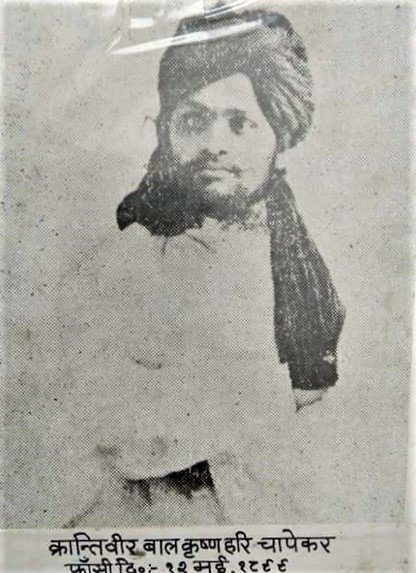
Portrait: Wikimedia Commons, CC BY-SA 4.0
Balkrishna Hari Chapekar (1873 - 12 May 1899), also called Bapurao, was the middle of the three Chapekar brothers who assassinated Poona's British plague commissioner in 1897. Raised with his brothers in a devout, modest household at Chinchwad under their father Haripant Chapekar, he shared their anger at the brutal plague measures imposed on Poona by W. C. Rand and his soldiers: forced entry into homes, public stripping and examination of residents including women, segregation camps, and the vandalism of property and religious symbols.
The brothers had not acted on impulse. They had earlier visited Lokmanya Tilak at Tilak Wada, recited a Marathi poem voicing their anger at British rule, and asked him whether his blood did not boil at what they all witnessed. Tilak's reply, that they too were part of the country and should act themselves, moved them to found the Chapekar Club. Within three months the club drew some six hundred young members, who gathered on open ground behind Parvati hill to train in sword fighting, pistol firing and stick fighting.
On the night of 22 June 1897, during Queen Victoria's Diamond Jubilee celebrations, the brothers ambushed the officials returning from Government House. While Damodar shot Rand at point-blank range, it was Balkrishna who fired on Rand's military escort, Lieutenant Charles Ayerst, killing him on the spot. Rand died of his wounds on 3 July.
Balkrishna proved the hardest of the brothers to catch. After Damodar's arrest in October 1897 and execution on 18 April 1898, Balkrishna remained at large for over a year. He was finally betrayed and apprehended in January 1899. The colonial crackdown that followed the assassination swept wide: Tilak himself faced sedition charges in 1897 over his Kesari writings in support of the revolutionaries. Tried for his part in the assassination, Balkrishna was hanged on 12 May 1899, just four days after his youngest brother Vasudeo met the same fate.
The Chapekar brothers are often described as the only instance anywhere in the world of three brothers hanged in the service of their country's independence. Balkrishna's story, the middle brother who struck the escort and then eluded the colonial police the longest, is the least told of the three, folded into the collective legend of the Chapekar name. Their ancestral home, the Chapekar Wada at Chinchwad, now houses a memorial to the trio, and statues of the brothers stand in Pune, but their names remain far less familiar than those of the revolutionaries who came a decade later.
Source: The Indian Express, Wikipedia, Organiser
Visuals: Archival portrait
Follow the daily five-post slate on Instagram.
Follow on Instagram
