Batukeshwar Dutt: Bhagat Singh's Comrade in the Assembly, Forgotten After Freedom
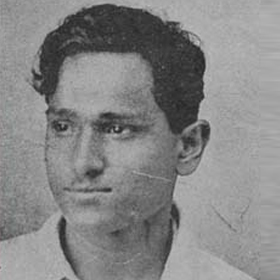
Portrait: Wikimedia Commons, public domain
Batukeshwar Dutt was born on 18 November 1910 in Onari village of Khandaghosh in Purba Bardhaman district of Bengal, the son of Goshtha Bihari Dutta. He was educated at Pandit Prithi Nath High School in Kanpur, and it was in Cawnpore in 1924 that he met Bhagat Singh. He joined the Hindustan Socialist Republican Association and became an expert in bomb-making.
On 8 April 1929, Dutt and Bhagat Singh walked into the visitors' gallery of the Central Legislative Assembly in Delhi while the house debated repressive British legislation. They threw two bombs into the chamber and showered the house with leaflets declaring that it takes a loud voice to make the deaf hear. The bombs were deliberately weak; the two men insisted they had no intention of killing anyone, a claim British forensic investigators substantiated. Then, instead of escaping, they stood their ground in the smoke, shouting "Inquilab Zindabad", and courted arrest. The HSRA had originally chosen Dutt and Sukhdev for the action; Bhagat Singh joined after changing his plans.
Tried in the Assembly Bomb Case, Dutt was sentenced to transportation for life on 12 June 1929. He was deported to the Cellular Jail in the Andamans. Bhagat Singh, Rajguru, and Sukhdev went to the gallows in the Lahore Conspiracy Case; Dutt lived on in Kala Pani, where he took part in the historic hunger strikes of May 1933 and July 1937 that won Indian political prisoners basic rights. He was repatriated to the mainland in 1937 and released from Bankipur Jail in Patna in 1938.
Freedom did not free him from prison. He joined the Quit India Movement in 1942 and was jailed again, for four more years. He had contracted tuberculosis in jail, and the disease shadowed the rest of his life. After independence he married Anjali in November 1947; their only daughter was Bharti Bagchi. But independent India gave him almost nothing. He sought government help for employment and was turned away. He tried one business after another, and they failed. He lived in penury, away from the political limelight, a forgotten man.
Batukeshwar Dutt died on 20 July 1965 at the All India Institute of Medical Sciences in Delhi after a long illness. He was cremated at Hussainiwala near Ferozepur in Punjab, on the banks of the Sutlej, beside Bhagat Singh, Rajguru, and Sukhdev. The B.K. Dutt Colony in New Delhi is named after him. He outlived all his comrades by 34 years, long enough to learn that the country he had bombed an assembly for had no job, no pension of consequence, and barely a memory to offer him.
Source: Wikipedia, Asianet Newsable
Visuals: Archival portrait
Follow the daily five-post slate on Instagram.
Follow on Instagram