
Bina Das: The 20-Year-Old Who Fired Five Shots at the Governor of Bengal
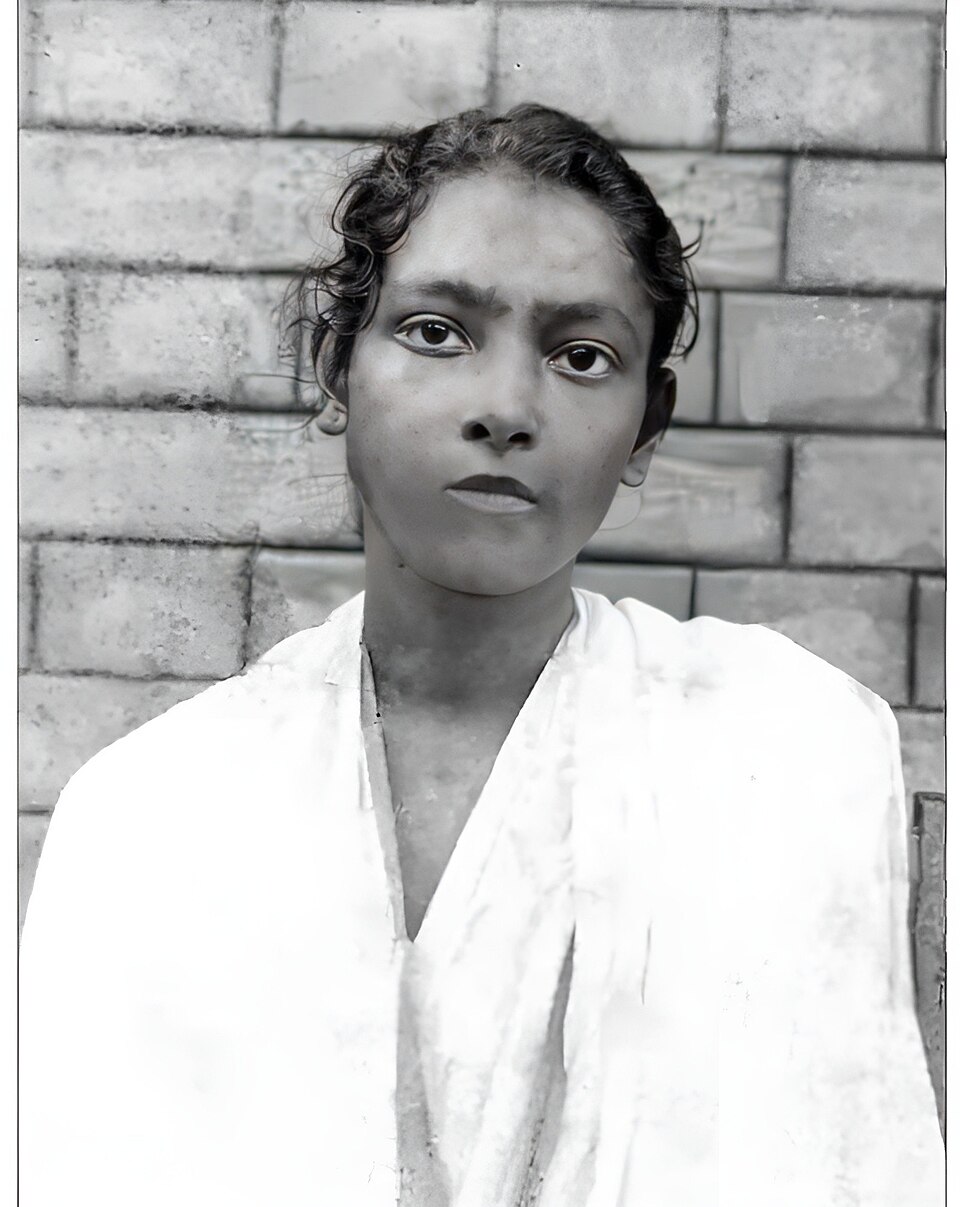
Portrait: Wikimedia Commons, public domain
Bina Das was born on 24 August 1911 in Krishnanagar, Bengal, into a family steeped in the freedom movement. Her father, Beni Madhab Das, was a teacher at Ravenshaw Collegiate School in Cuttack, and among his students was Subhas Chandra Bose. Her mother, Sarala Devi, was a social worker, and her elder sister Kalyani was herself a freedom fighter. Bina studied at St. John's Diocesan Girls' Higher Secondary School and then Bethune College in Calcutta, and joined the Chhatri Sangha, a semi-revolutionary women's student organisation of which her sister was secretary. The members trained in lathi fighting, and her mother's hostel, the Punya Ashram, hid bombs for the revolutionaries.
Through her friend Suhasini Ganguly she was drawn into the Bengal Revolutionary Party. The group had already tried and failed to kill Charles Tegart, Calcutta's police commissioner, in August 1930, and survived the crackdown that followed. In the spring of 1932, Bina learned that Stanley Jackson, the Governor of Bengal, would attend the convocation ceremony at Calcutta University on 6 February. She decided to assassinate him. Through Kamala Dasgupta of the Jugantar Party, an old Belgian five-chambered revolver was purchased for Rs 280.
At the convocation, the 20-year-old walked in with the revolver hidden under her gown. As the governor addressed the crowd, she stood, produced the weapon, and fired five shots at close range. The vice-chancellor, Lt. Col. Hassan Suhrawardy, threw himself in the way and overpowered her; one of the stray bullets injured the senior professor Dr. Dineshchandra Sen. Jackson escaped unhurt. She pleaded guilty to attempted murder.
Her five-page confession, written in English and censored but widely circulated by the British themselves, remains one of the most eloquent documents of the revolution. She wrote that her object was to die nobly, fighting a despotic system that had kept her country in subjection, and asked whether it was not better to make a supreme protest by offering her life away than to live under the tyranny of a foreign government. The Special Tribunal sentenced her to nine years of rigorous imprisonment under Section 307 of the Indian Penal Code.
She served her sentence and came out unbroken. She joined the Indian National Congress, took part in the Quit India Movement, and was imprisoned again from 1942 to 1945. She was elected to the Bengal Provincial Legislative Assembly in 1946 and the West Bengal Legislative Assembly in 1947, married the Jugantar activist Jatish Chandra Bhaumik the same year, and wrote two autobiographical works in Bengali, Shrinkhal Jhankar and Pitridhan. Drawn to socialist ideals, she left the Congress over ideological differences. After her husband's death she lived a solitary life in Rishikesh and died in 1986, largely unnoticed.
A woman who fired five shots at the head of a province's government, endured nine years of hard prison, served again in Quit India, and sat in two legislatures of a free country, ought to be a familiar name. Bina Das is not. Her five-page confession asks a question India still has not answered: was her life worth the forgetting.
Source: Wikipedia, Times of India, The Better India
Visuals: Archival portrait
Follow the daily five-post slate on Instagram.
Follow on Instagram
