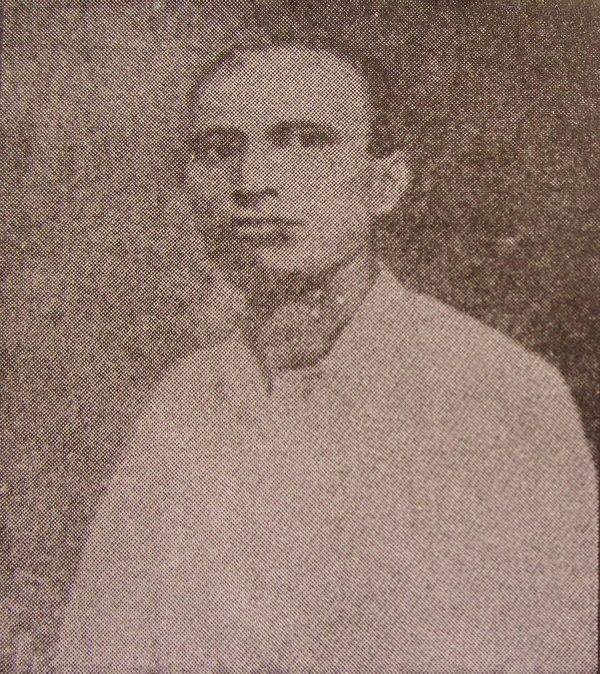
Damodar Chapekar: The eldest Chapekar brother, hanged for the Rand assassination
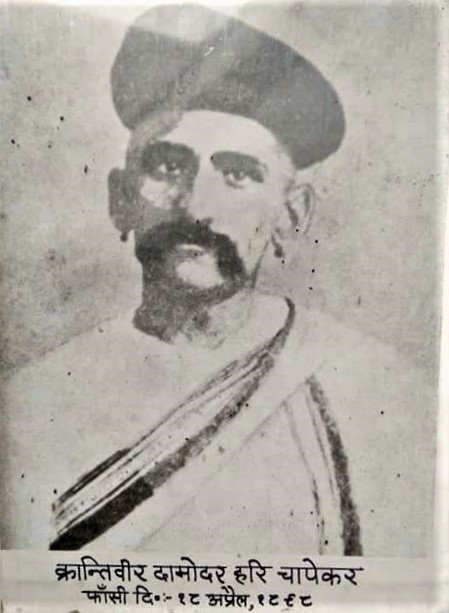
Portrait: Wikimedia Commons, CC BY-SA 4.0
Damodar Hari Chapekar (25 June 1869 - 18 April 1898) was the eldest of the three Chapekar brothers of Poona whose assassination of a British plague commissioner in 1897 became one of the first political murders of India's freedom movement. The brothers came from Chapa, a small hamlet in Poona, and belonged to a modest Konkan family; their father Haripant Chapekar had moved to Chinchwad, then little more than a village.
The provocation was the bubonic plague of 1896-97. The colonial government set up a Special Plague Committee with Walter Charles Rand, an Indian Civil Service officer, as commissioner, and brought in over eight hundred soldiers to enforce its measures. Despite official orders to respect religious sentiment, Rand's men entered private homes, stripped and examined occupants including women in public, evacuated families to hospitals and segregation camps, and vandalised property and religious symbols. Complaints from Poona's citizens were ignored.
The brothers had prepared themselves deliberately. They visited Lokmanya Tilak at Tilak Wada, recited a Marathi poem expressing their fury at British rule, and asked him whether his blood did not boil. Tilak told them that they too belonged to the country and should act, and the brothers went on to found the Chapekar Club, which drew some six hundred young members within three months for training in arms on open ground behind Parvati hill. Tilak's newspaper Kesari wrote strongly in support of such revolutionaries, a stand that brought him sedition charges in 1897.
On the night of 22 June 1897, as Queen Victoria's Diamond Jubilee celebrations ended at Government House, the brothers lay in wait on a dark road. When Rand's carriage emerged, Damodar fired at point-blank range; his brother Balkrishna shot Rand's military escort, Lieutenant Ayerst. Ayerst died on the spot, and Rand succumbed to his wounds on 3 July. Pune's historian Mohan Shete has noted the brothers' distinctive code: they had written to Rand beforehand warning him he would be killed that night, refusing to strike like cowards without warning.
Damodar was arrested that October. From prison he wrote his autobiography, Musings from the Gallows, in which he explained his act: "Just as Prahlad worshipped the Almighty with boundless devotion, so my love for my country is unwavering... undying. I shall relinquish all happiness and sacrifice my life for my country." He was hanged on 18 April 1898.
Damodar's execution did not end the story: his younger brothers continued the fight and followed him to the gallows within a year. The Chapekar Wada, the family's ancestral home at Chinchwad, has been rebuilt as a memorial, but the brothers remain overshadowed in popular memory by the later narrative of non-violent resistance.
Source: The Indian Express, Wikipedia, Organiser
Visuals: Archival portrait
Follow the daily five-post slate on Instagram.
Follow on Instagram