
Dheeran Chinnamalai: The Kongu chieftain who kept the Polygar Wars burning
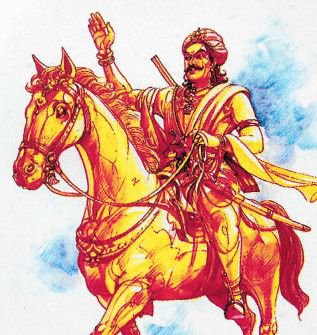
Portrait: Wikimedia Commons, CC BY-SA 4.0
Dheeran Chinnamalai was born Theerthagiri on 17 April 1756 at Melapalayam, near Erode in present-day Tamil Nadu. His father was Rathnasamy Gounder and his mother Periyatha. Along with his two brothers, he learned martial arts in his youth and organised the young men of the Kongu region into trained fighting groups. He belonged to the Kongu Vellalar community, and his title, Sarkkarai Manradiar, referred to his Payiran clan. He took the name Chinnamalai after an early act of defiance: he waylaid and recovered taxes collected by the diwan of Hyder Ali of Mysore, and then defeated the diwan's soldiers sent in retaliation.
He became one of the principal leaders of the Polygar Wars against the British East India Company, and one of the most prominent commanders of the Second Polygar War of 1801 to 1802. Before that, he had allied himself with Tipu Sultan of Mysore. A thousand-strong army under his command received French military training in modern warfare alongside Tipu's forces, and his men fought alongside the Sultan's army in the victories at Chitheswaram, Mazahavalli, and Srirangapatna.
After Tipu's death in 1799, Chinnamalai returned to the Kongu region and built a fort at Odanilai. From there he continued to wage war against the British on his own terms. His forces defeated the Company at the Cauvery in 1801, at Odanilai in 1802, and at Arachalur in 1804. When the British brought cannon against his fort, he abandoned it and shifted to guerrilla warfare from Karumalai in the Palani region, a move that prolonged his resistance for another year.
His end came through betrayal. According to the accounts that survive, his cook, Nallappan, betrayed him to the British. Chinnamalai and his two brothers were captured and hanged at Sankagiri Fort in Salem district. Most sources date the hanging to 31 July 1805, which fell on Aadi Perukku day, though at least one report, carried by ANI, gives 2 August 1805 instead. He was 49 years old.
The British then banned all literature about Chinnamalai, and what we know of him survived largely through oral tradition, Kummi folk songs, and later books by Tamil scholars such as Pulavar S. Rasu. That is one reason he remains far less known than the Polygar leaders of the Tirunelveli region, though his war began decades before 1857 and his fort at Odanilai and his battles are still remembered in western Tamil Nadu. The Tamil Nadu government later built a mani mandapam (memorial) for him at Arachalur in Erode district and installed his statue in Chennai, and his birth anniversary is now marked with official tributes each April.
Source: Wikipedia, The Commune, Daily Prabhat (ANI)
Visuals: Archival portrait
Follow the daily five-post slate on Instagram.
Follow on Instagram
