
Madan Lal Dhingra: The London student who shot Curzon Wyllie in 1909
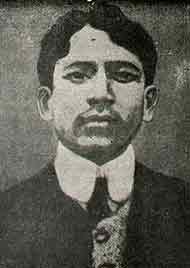
Portrait: Wikimedia Commons, public domain
Madan Lal Dhingra (18 September 1883 - 17 August 1909; some Indian accounts give his birth date as 18 February 1883) carried India's revolutionary struggle onto British soil itself. Born in Amritsar into an affluent and influential Punjabi Khatri family, his father Dr. Ditta Mal Dhingra was a respected civil surgeon loyal to the establishment. After schooling in Amritsar and at Government College, Lahore, where he was drawn to the Swadeshi movement and the writings on India's poverty and famines, Dhingra sailed for England in 1906 to study mechanical engineering at University College London.
London changed him. At India House, the nationalist hub run by Shyamji Krishna Varma, he fell under the influence of Vinayak Damodar Savarkar and joined the secret Abhinav Bharat Mandal, learning to shoot and hardening his conviction that only force would move the empire. On 1 July 1909, at the Indian National Association's annual "At Home" gathering at London's Imperial Institute, Dhingra approached Sir William Hutt Curzon Wyllie, the political aide-de-camp to the Secretary of State for India, and shot him dead at close range, firing five shots, four of which struck their target. A Parsi doctor who tried to intervene was also killed. Dhingra, who had studied the literature on the causes of Indian poverty and famines and concluded that swaraj and the Swadeshi movement were the only remedies, made no attempt to flee and was arrested on the spot.
At his Old Bailey trial on 23 July 1909, Dhingra refused to mount a legal defence and owned the act as a patriotic one, telling the court: "I believe that a nation held down by foreign bayonets is in a perpetual state of war." He demanded the death sentence and walked to the gallows with composure that stunned observers; accounts of the time record that even Winston Churchill is said to have admired the dignity of his final statement. He was hanged at Pentonville Prison, London, on 17 August 1909, aged twenty-five. His calmness in the face of death stunned many observers and made him a lasting symbol of revolutionary courage.
His family disowned him for his anti-British stand and refused to claim his body; he was buried in London, and his remains were brought home only in 1976 and cremated at Amritsar. A memorial to him was inaugurated in Amritsar's Golbagh area in 2023. Dhingra's act, one of the first revolutionary assassinations by an Indian in Britain, announced to the empire that its critics could strike at its very centre.
Source: The Tribune, GS Times, Wikipedia
Visuals: Archival portrait
Follow the daily five-post slate on Instagram.
Follow on Instagram
