Rao Tula Ram: The Rewari leader who carried the 1857 revolt beyond India's borders
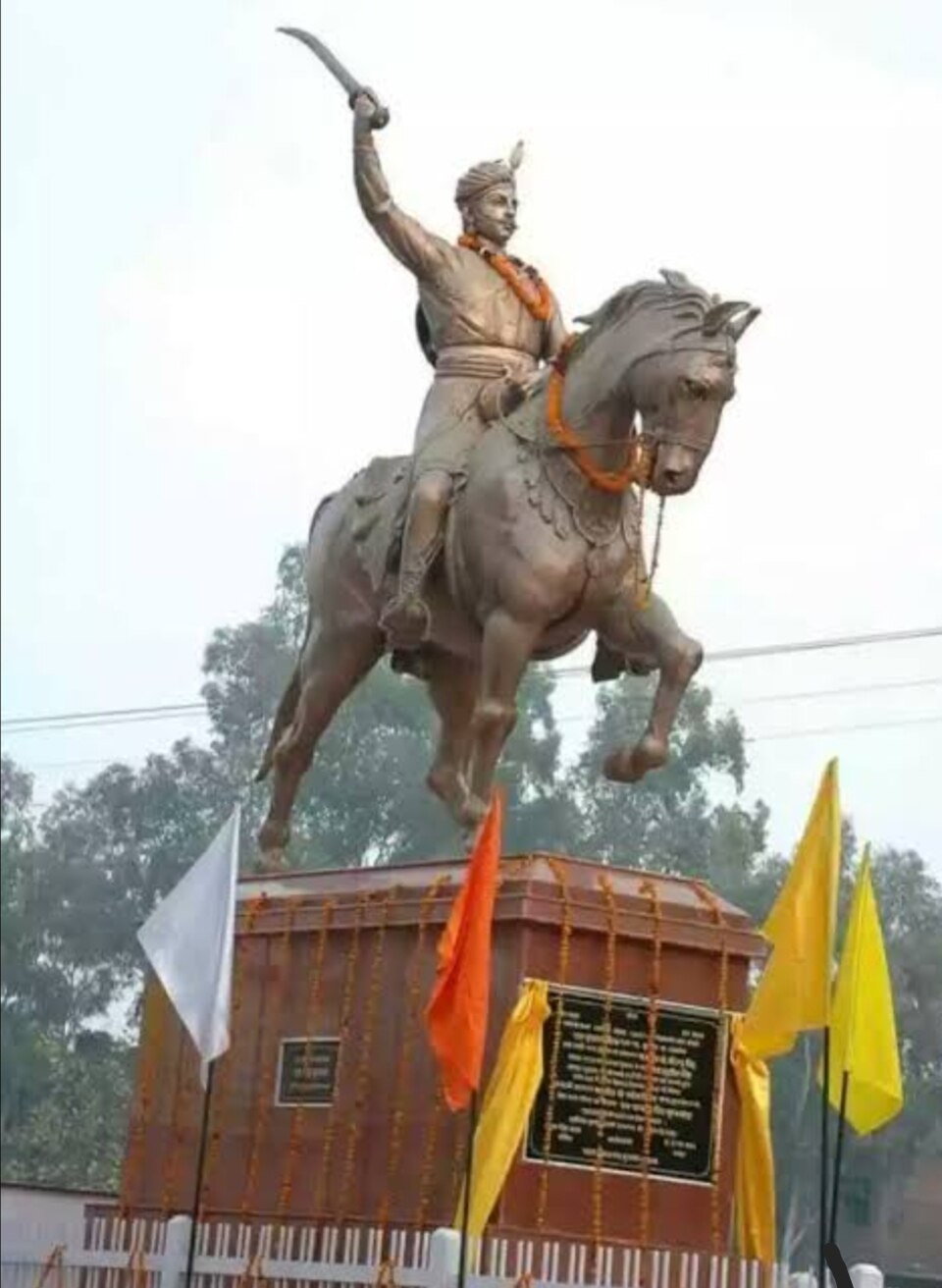
Portrait: Wikimedia Commons, public domain
Rao Tula Ram (1825-1863) was one of the key leaders of the 1857 uprising in Haryana, credited with temporarily driving British rule out of the region that is today southwest Haryana. Born on 9 December 1825 in Rampura, Rewari, into the Ahir (Yaduvanshi) family that had long ruled the area, he was the son of Rao Puran Singh and Gyan Kanwar. His father died when he was young. He grew into a capable administrator and military commander.
On 17 May 1857, days after the Meerut outbreak, he and his cousin Rao Gopal Dev, with four to five hundred followers, deposed the local tehsildar and occupied Rewari. He raised a force of about 5,000 soldiers, set up a workshop for manufacturing guns and other ammunition, and collected revenue from Bawal, Farrukhnagar, and Pataudi to fund the struggle. Aligning himself with Bahadur Shah Zafar, he sustained the siege of Delhi from the south: ten days before the capital fell, he sent Rs 45,000 to Delhi through General Bakht Khan, along with 2,000 sacks of wheat and large quantities of other supplies. On 16 November 1857 his forces, led by his cousin Rao Kirshan Singh, fought the British at Nasibpur near Narnaul. The first charge of his troops scattered the British and killed or wounded several officers, though the British retaliated with full force. He then moved to Rajasthan and fought alongside Tantia Tope's forces for about a year, until they were defeated at Sikar.
After the uprising was crushed, he did what few other rebel leaders attempted: he left India to seek foreign help for a renewed war against the British. He met the rulers of Iran and Afghanistan, approaching the Shah of Persia and Dost Mohammad Khan, and established contacts with Tsar Alexander II of Russia. The British confiscated his estates in 1859, though his two wives retained their proprietary rights. His plans were cut short when he died of dysentery in Kabul on 23 September 1863, aged 38.
The government of India issued a postal stamp featuring him on 23 September 2001, his title was restored to his son Rao Yudhister Singh in 1877, and 23 September is observed as martyrdom day (Veershahi Divas) in Haryana, where he is a state hero. Institutions named in his honour include the Rao Tula Ram Memorial Hospital in Delhi and the capital road that houses the Institute for Defence Studies and Analyses. Nationally, however, he remains far less known than the 1857 leaders of Delhi and Lucknow, despite having kept the revolt alive in the south and carried it, in the end, to three foreign courts.
Source: Times Now News, Testbook
Visuals: Archival portrait
Follow the daily five-post slate on Instagram.
Follow on Instagram