
Rash Behari Bose: The Revolutionary Who Built the INA Before Subhas Chandra Bose
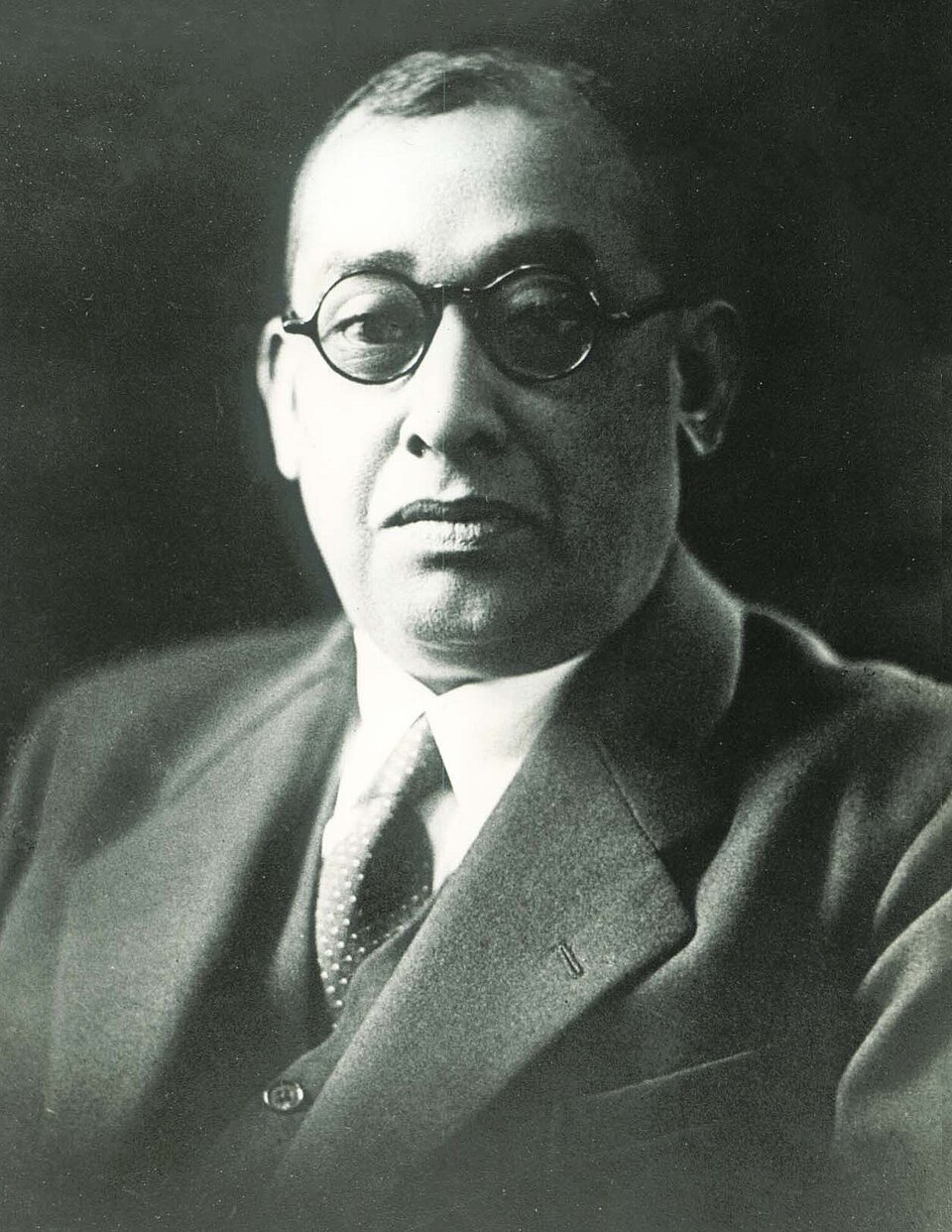
Portrait: Wikimedia Commons, public domain
Rash Behari Bose was born on 25 May 1886 in Subaldaha village of Burdwan district in Bengal, the son of Binod Behari Bose and Bhubaneswari Devi. He was educated at Chandannagar, then a French colony, where the ideas of the French Revolution left a deep mark on him. He worked as a head clerk at the Forest Research Institute in Dehradun, a government post that doubled as his cover while he built a secret revolutionary network across northern India.
The partition of Bengal in 1905 drew him headlong into militancy. Working with the Anushilan Samiti and Jugantar, he rose to mastermind the boldest strike of the era: the assassination of Viceroy Lord Hardinge. On 23 December 1912, as Hardinge rode in procession through Delhi to celebrate the transfer of the imperial capital from Calcutta, Basanta Kumar Biswas hurled a bomb at his elephant. Hardinge was wounded and his attendant killed. Bose had planned the attack at a conclave at Chandannagar and slipped straight back to his Dehradun office afterwards to deflect suspicion.
When the First World War broke out in 1914, Bose seized the moment. He coordinated with the Ghadar Party of Indian expatriates and German agents to engineer a simultaneous mutiny across Indian cantonments, fixed for 21 February 1915. The plot was betrayed by informers, and arrests swept the network, catching young leaders like Kartar Singh Sarabha. Bose evaded a raid in Lahore and, on 12 May 1915, sailed for Japan under the alias Raja P. N. Tagore, posing as a distant relative of Rabindranath Tagore. The British put a price on his head.
For years in Japan he lived almost as a fugitive, changing his residence repeatedly to shake off British agents and the Japanese police. In 1916 he married Toshiko Soma, the daughter of his protector Aizo Soma, with whom he had two children; she died in 1924. He became a Japanese citizen in 1923 and spent the interwar years writing, lecturing, and organizing the Indian community in East Asia, founding restaurants and a school for Indian culture.
In 1942, with Japan at war against Britain, he founded the Indian Independence League and raised the first Indian National Army from Indian prisoners of war and expatriates in Southeast Asia. When Subhas Chandra Bose arrived from Germany in 1943, Rash Behari handed him the leadership of the INA. The force that marched toward India as the Azad Hind Fauj was, in its institutional origin, his creation.
He died in Tokyo on 21 January 1945, aged 58, two and a half years before the independence he had pursued for four decades. Japan conferred on him the Order of the Rising Sun. In India he remains a half-remembered name, overshadowed by the man to whom he gave his army, though historians of the Ghadar movement and the INA agree that without his three decades of groundwork in exile, the Azad Hind Fauj might never have existed.
Source: Wikipedia, Drishti IAS
Visuals: Archival portrait
Follow the daily five-post slate on Instagram.
Follow on Instagram
