Shyamji Krishna Varma: The scholar who built India House and sent his ashes home 73 years later
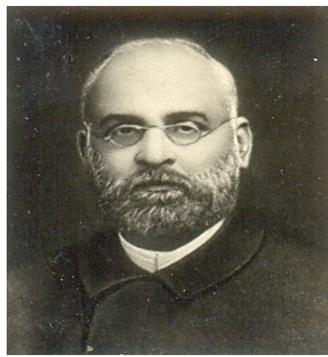
Portrait: Wikimedia Commons, public domain
Shyamji Krishna Varma was born on 4 October 1857 in Mandvi, a seaside village in Kutch, Gujarat. His roots were humble: his father Karsandas Bhanushali worked as a labourer at the docks, and he lost his mother Gomatiben when he was very young. What lifted him was scholarship. He became a noted Sanskrit scholar, studied at Balliol College, Oxford, qualified as a barrister, and served as the first president of the Bombay Arya Samaj. He was influenced by Bal Gangadhar Tilak and Swami Dayanand Saraswati, and became one of the earliest advocates of complete Indian self-rule.
In London in 1905 he founded the Indian Home Rule Society, on 18 February, with Bhikaji Cama, Dadabhai Naoroji and S. R. Rana among its supporters. It was a deliberate rival to the Indian National Congress, and it demanded nothing less than independence. The same year he opened India House at Highgate, a hostel and meeting place for Indian students, and endowed scholarships, the Saraswati scholarships, for Indian youths studying in England. He also launched the monthly journal The Indian Sociologist, which criticised British policies and argued openly for complete independence.
India House became something more than a hostel. Under Savarkar, who took over its management when Varma left London, it turned into the headquarters of Indian revolutionary nationalism abroad, drawing in Vinayak Savarkar, Lala Har Dayal, V. V. S. Aiyar and Madan Lal Dhingra. The British watched closely. In 1907 Varma shifted to Paris, and later, during the First World War, settled in Geneva. He was disbarred from the Inner Temple in 1909 for his seditious activities. That same year Dhingra assassinated Sir William Curzon Wyllie in London, and the British closed India House down.
Varma spent his last years in Geneva, publishing the final issues of the Indian Sociologist in 1922 before ill health stopped him. He died in hospital in Geneva on 30 March 1930. The British colonial government suppressed the news of his death in India, but tributes were paid by Bhagat Singh and his fellow inmates in Lahore Jail, where they were undergoing their long-drawn trial, and by Tilak's Maratha newspaper.
Before he died, Varma made prepaid arrangements with the local government of Geneva and the St. Georges cemetery to preserve his and his wife Bhanumati's ashes for a hundred years, and to send their urns to India whenever the country became independent during that period. The wish took over half a century to fulfil. On 22 August 2003 the urns were handed over by the Ville de Geneve and the Swiss government to the then Chief Minister of Gujarat, Narendra Modi, who had travelled to Geneva to collect them. After a long procession through Gujarat they reached Mandvi, his birthplace. In 2010 a memorial called Kranti Teerth was inaugurated near Mandvi, spread over 52 acres, housing a replica of the India House building at Highgate and the urns of Shyamji and his wife. In 2015 the Inner Temple unanimously reinstated his barristership, 85 years after the revolutionary passed away.
Source: Wikipedia, Drishti IAS
Visuals: Archival portrait
Follow the daily five-post slate on Instagram.
Follow on Instagram