
Sidhu Murmu: The Santhal Leader Who Declared War on the Company in 1855
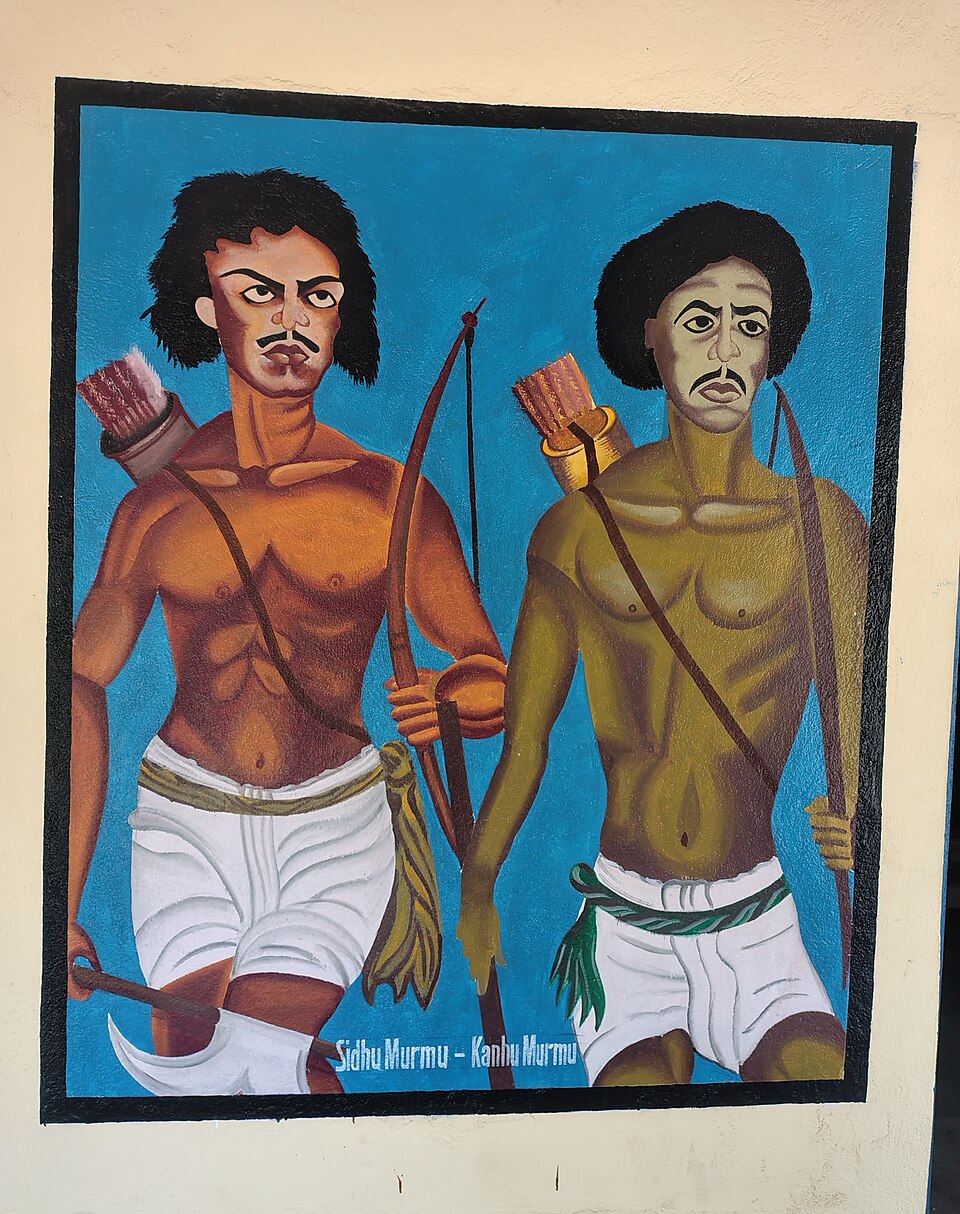
Portrait: Wikimedia Commons, CC BY-SA 4.0
Sidhu Murmu, born around 1815 at Bhognadih in what is now Jharkhand's Sahibganj district, led the largest tribal uprising of 19th-century India. With his younger brother Kanhu, their brothers Chand and Bhairav, and their sisters Phulo and Jhano, he headed the Santhal Hul, the rebellion of 1855-56 that many tribal historians call India's first organized freedom struggle, two years before 1857.
The grievances were old. The Permanent Settlement of 1793 had handed Santhal lands to zamindars. Moneylenders advanced loans at crushing rates and seized what remained. The Company's police, revenue officers, and courts ran what one history calls a combined system of extortions, oppressive exactions, forcible dispossession, abuse, and personal violence. The spark was religious: Sidhu and Kanhu told their people that the supreme deity, Thakur, had commanded them in a vision to end the Company's rule and set up a government of their own.
On 30 June 1855, somewhere between ten and twenty thousand Santhals gathered at Bhognadih and declared the Hul. Armed with bows, poisoned arrows, axes, and swords, they marched in different directions, attacking moneylenders' houses, police stations, and government buildings across the Rajmahal hills, Bhagalpur, and Birbhum, raising the cry for the end of Company rule.
The first blood came on 7 July 1855. A daroga arrived at Babupur with two cartloads of rope, intending to bind the gathering. In the altercation that followed, Kanhu cut the throat of the moneylender Manik Moodi, and Sidhu killed Mahesh Datta with his own sword. The rebellion was now open war.
The British declared martial law and sent in the army. Cannon, elephants, and systematic village-burning broke the Santhals, who fought with extraordinary courage but could not match the firepower. Historians estimate that more than 10,000 Santhals died in a campaign that lasted over a year. Chand and Bhairav were killed in battle. Sidhu was captured after being betrayed, tried by William Bell, the session judge of Bhagalpur, sentenced to death by the Nizamat Adalat in December 1855, and hanged. The banyan tree at Pachkatia in Bhognadih, from which he was hanged, still stands as a memorial.
The Hul was not in vain. An East India Company enquiry found the Santhals' grievances genuine, and Act XXXVII of 1855 created the Santhal Parganas as a separate district. Karl Marx himself noted the rebellion in his Notes on Indian History.
Sidhu is remembered every 30 June on Hul Diwas, when thousands gather at Bhognadih. A 2002 postage stamp honored him and Kanhu, and universities bear their names. Yet in the national narrative of the freedom movement, the Santhal Hul still stands in the shadow of 1857.
Source: The Avenue Mail, Wikipedia, Sabrang India
Visuals: Archival portrait
Follow the daily five-post slate on Instagram.
Follow on Instagram
