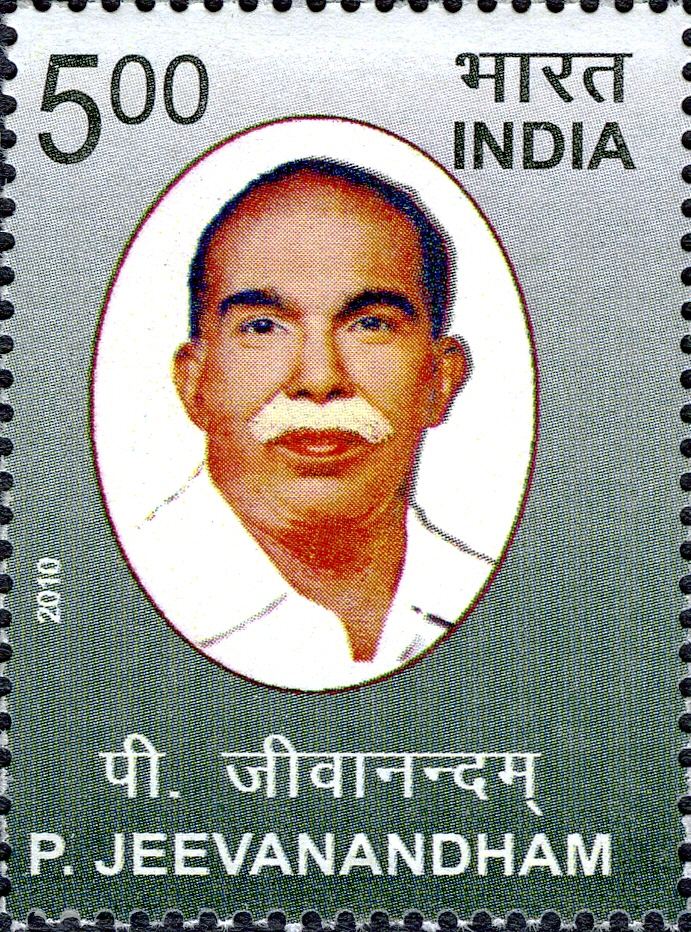
P. Krishna Pillai: the school dropout who founded Kerala's communist movement
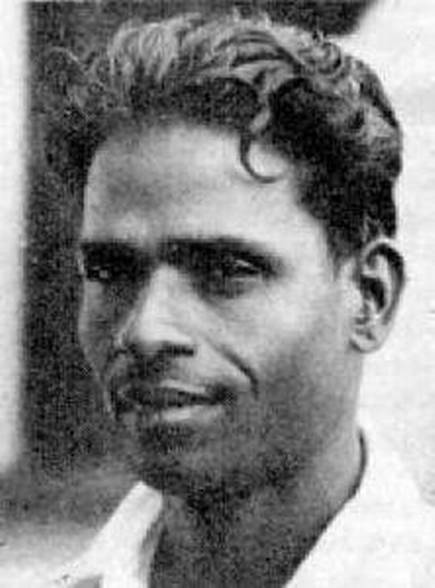
Portrait: Wikimedia Commons, public domain
P. Krishna Pillai was born on 19 August 1906 in Vaikom, in what is now Kerala's Kottayam district, to Narayanan Nair and Parvathy Amma. He lost both his parents in his early teens and dropped out of school after the fifth grade. In 1920, at about fourteen, he left home and travelled across northern India, returning two years later to a Kerala seething with social unrest.
He threw himself into the movements of the time. He volunteered in the Vaikom Satyagraha of 1924, the temple-entry agitation that first made Kerala a national name, and joined the 1930 Salt Satyagraha march from Kozhikode to Payyanur. In 1931 he became the first non-Namputhiri Brahmin to ring the temple bell of the Guruvayoor temple, a deliberate strike against caste exclusion.
Krishna Pillai began as a Gandhian and Indian National Congress worker, but his experience of class struggle steadily pushed him toward socialism. In 1934, when the Congress Socialist Party was formed in Bombay, he was appointed its secretary in Kerala, working under the Congress banner. Through the mid-1930s he concentrated on organising workers in Malabar, then extended his campaign to Cochin and Travancore in 1936. His greatest early triumph was the workers' strike in Alappuzha in 1938, a long agitation that succeeded and later inspired the Punnapra-Vayalar struggle of 1946 and the eventual downfall of C. P. Ramaswami Iyer's regime in Travancore.
In 1937 he was one of the four founders of the Communist Party of India's Kerala unit, alongside E. M. S. Namboodiripad, K. Damodaran and N. C. Shekhar. After the first communist conference in Kerala in 1939, he became the movement's driving organiser, pulling militants from the trade union and peasant movements into a disciplined party structure. In 1942 he became the first secretary of the CPI's Kerala state council (confirmed at the first state conference in Calicut in 1943), and in 1948 he was elected to the CPI's Central Committee at the party's Second Congress, just months before his death.
He died on 19 August 1948, his 42nd birthday, from a snakebite while in hiding in a thatched hut at Muhamma in Alappuzha. That hut is now his memorial. He was also a poet, and to generations of Keralites he is simply "Sakhavu", Comrade.
His personal cost was absolute: a life of 42 years with no family fortune, no titles and no retirement, spent building a movement while on the run from the police. His legacy is enormous in Kerala, where both the CPI and the CPI(M) claim him after the party's 1964 split (the CPI bought his ancestral Vaikom plot for a memorial in 2020; the CPI(M) bought the Muhamma house). But outside Kerala, and outside the Left, the man who introduced communism to a state that would one day elect the world's first communist government is almost unknown. He mentored the young V. S. Achuthanandan, sent him to organise farm workers in Kuttanad, and that single act of judgment shaped Kerala's politics for the next seven decades.
Source: Wikipedia, Onmanorama, Mathrubhumi, Business Standard
Visuals: Archival portrait
Follow the daily five-post slate on Instagram.
Follow on Instagram