Nana Patil: Krantisinh, Chief of the Satara Prati Sarkar
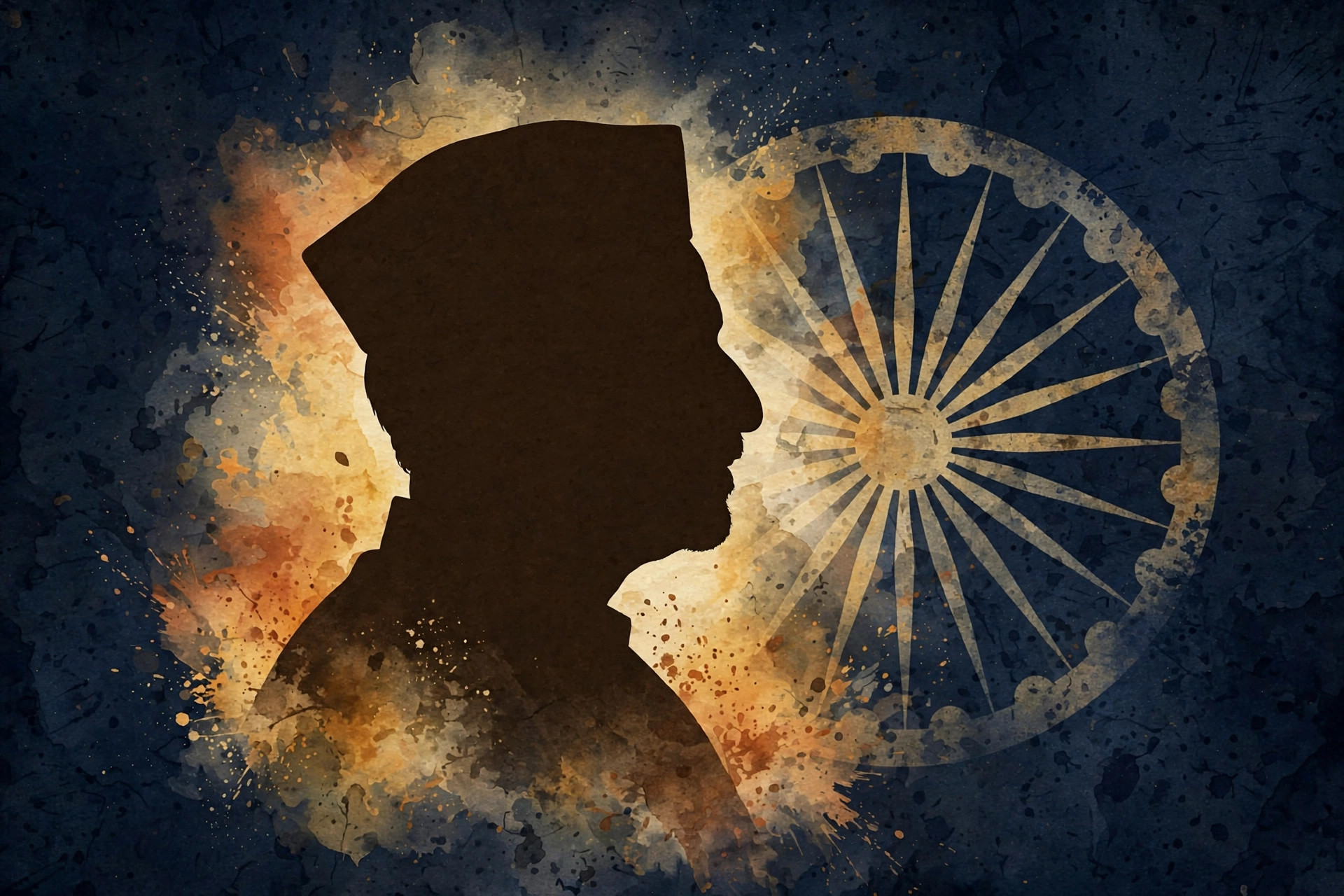
For three years, across some 150 villages of Satara and Sangli, British rule simply stopped functioning. The police could not enter without force, the taluka officers' writs went ignored, and in their place ran the Prati Sarkar, a parallel government of the people, with its own courts, its own tax collection, and its own armed volunteers. Its chief was a forty-three-year-old reformer turned underground fighter called Krantisinh, the revolutionary lion, Nana Patil.
Nana Ramchandra Pisal was born on 3 August 1900 at Yedemachindra, then in Satara district and now in Sangli district of Maharashtra. At nineteen he entered public life through the Prarthana Samaj, and over the next decade worked with that movement and with the Satyashodhak Samaj founded by Mahatma Jotirao Phule. His causes were the miseries he saw around him: blind faith, the crushing costs of weddings and festivals, the debt cycle that trapped farmers, and the rigid caste system. He promoted samaj-vivah, low-budget community marriages, and pressed for education among the poor.
His turn toward revolution came early. He became a founding member of the Hindustan Republican Association, spent three years underground between 1929 and 1932, and was imprisoned eight or nine times between 1932 and 1942 for what the British called direct attacks on the colonial order. When Mahatma Gandhi gave the Quit India call on 8 August 1942 and the Congress leadership was rounded up, Patil went underground for a second time, this time for forty-four months, moving through the Tasgaon, Khanapur, Walva and south Karad talukas of Sangli district, sheltered by village headmen and peasants who kept him out of police hands.
From August 1943, Patil led the Satara Prati Sarkar, declared alongside comrades Nagnath Naikwadi and Kisanrao Ahir and backed by socialist leaders like Achyut Patwardhan. It was an armed offshoot of the Quit India movement, one of several parallel governments that rose in 1942-43, like those at Ballia, Tamluk and Bhagalpur. The Satara one lasted the longest, running until May 1946. It collected land revenue, settled disputes through people's courts, raided government treasuries and armouries to fund itself, and aimed, in scholar Maya Pandit's description, at a new society led by peasants and workers, free of exploitation by class, caste, religion or gender. The British response was brutal: police fired at five places, killing eleven patriots, and a price was placed on Patil's head.
Independence did not return Patil to obscurity, but it did move him into the margins of national memory. He began in the Congress, joined the Peasants and Workers Party of India in 1948, and later the Communist Party of India, on whose ticket he was elected to the Lok Sabha from Satara in 1957 and from Beed in 1967. He campaigned alongside Acharya Atre for the creation of a Marathi-speaking Maharashtra. He died on 6 December 1976 at Walwa.
Why is he forgotten? Partly because his revolution was rural and armed, fitting neither the Gandhian nor the great-urban-martyr stories that Delhi likes to tell; partly because his later life as a Communist MP made him awkward for every major party's pantheon. In Maharashtra he is honoured, with a memorial announced in Mumbai at his 115th birth anniversary in 2015, but beyond the Deccan few can name the man who ran an independent government on British soil for nearly three years. The Prati Sarkar remains a rare experiment: not just resistance to the Raj, but an attempt to build, in the middle of a war for freedom, the society that freedom was meant to serve.
Source: Wikipedia, Press Information Bureau, IANS
Visuals: Archival portrait
Follow the daily five-post slate on Instagram.
Follow on Instagram