Parbati Giri: The Mother Teresa of Western Odisha
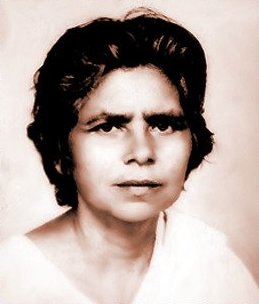
Portrait: Wikimedia Commons, CC BY 4.0
At sixteen, Parbati Giri stormed a British court to persuade its lawyers to boycott it. For that she got two years of rigorous imprisonment. After independence she spent the rest of her life running an orphanage. Western Odisha calls her its Mother Teresa; the rest of India barely knows she existed.
She was born on 19 January 1926 at Samlaipadar village near Bijepur, in what is now Odisha's Bargarh district, the daughter of Dhananjay Giri. Her uncle Ramachandra Giri was a Congress leader, and nationalist meetings at the village drew the girl in. She studied only up to class three, then left home at twelve for Congress work, training at the Bari Ashram in handicrafts, ahimsa and self-reliance.
She mobilised villagers during the Individual Satyagraha of 1940 and the Khadi Andolan. When Gandhi gave the Quit India call in 1942, sixteen-year-old Parbati was in the forefront in western Odisha, leading rallies with the tricolour. Arrested several times as a minor, she was released each time, until she stormed the SDO's office at Bargarh and staged an agitation at the Bargarh court to get lawyers to defy the British. This time she was sentenced to two years of rigorous imprisonment in Sambalpur jail.
Independence did not end her service; it redirected it. She founded the Kasturba Gandhi Matruniketan orphanage at Paikmal village and devoted her life to orphans, and later the Dr Santra Bal Niketan. She had taken further training at the Wardha and Delhi Gandhi ashrams, and she carried Gandhian constructive work into the tribal belt long after the tricolour came down from government buildings: healthcare for tribal communities, support for leprosy patients, and agitation for prison reforms were her causes for decades. The epithet Banhi Kanya, daughter of fire, captured the first half of her life; the second half was all quiet service. She led famine relief during the 1951 Odisha famine, worked on prison reforms and leprosy eradication, and spent decades on tribal healthcare in western Odisha. For this she received a prize from the central Department of Social Welfare in 1984 and an honorary doctorate from Sambalpur University in 1988. She was also called Banhi Kanya, daughter of fire, for her patriotism. She died on 17 August 1995 after a prolonged illness, aged sixty-nine.
Recognition came late and thin. In December 2025 the Prime Minister remembered her in his Mann Ki Baat broadcast as one of the unsung heroes denied their due in history's pages, and her birth centenary was observed in January 2026. Parbati Giri is forgotten because she chose the unglamorous path: no office, no memoirs, no national stage, just an orphanage in Paikmal and a lifetime spent where the cameras never went.
Source: Drishti IAS, Wikipedia
Visuals: Archival portrait
Follow the daily five-post slate on Instagram.
Follow on Instagram