Pazhassi Raja: The Lion of Kerala who fought the Company for thirteen years
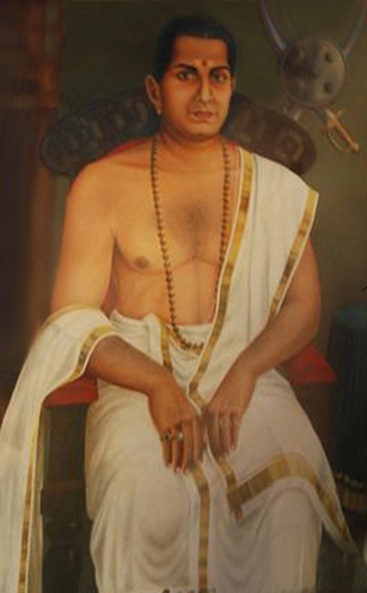
Portrait: Wikimedia Commons, public domain
Kerala Varma Pazhassi Raja, remembered as Kerala Simham, the Lion of Kerala, was one of the earliest and most significant anti-British leaders in Indian history. He was born into the Padinjare Kovilakam, the western branch of the Purannattu Swarupam royal clan of Kottayam. This is Kottayam in North Malabar, covering parts of present-day Kannur and Wayanad, not the Kottayam district of south Kerala. He was the fourth prince in the line of succession, yet rose to become one of the de facto heads of the kingdom.
His first wars were not against the British but against the Mysoreans. When Hyder Ali occupied Malabar in 1773, the Raja of Kottayam fled to Travancore, but Pazhassi Raja stayed, organised a war of resistance from 1774 to 1793, first against Hyder Ali's troops and then, from 1784, against Tipu Sultan's. His refusal to abandon his people won him their firm support.
The conflict with the East India Company began over a broken promise. An agreement of 1790 had recognised Kottayam's independence, but after the Third Anglo-Mysore War in 1792, the Company imposed its control in violation of that agreement. It appointed Vira Varma, Pazhassi Raja's uncle, as Raja of Kottayam, and to meet Company revenue targets he ordered exorbitant taxes on the peasantry. In 1793 this provoked a mass resistance led by Pazhassi Raja. When the Company tried to arrest him in 1796, he evaded capture and took to the forests, waging guerrilla warfare. After a string of reverses, the Company sued for peace in 1797.
The war was renewed in 1800 over a dispute about Wayanad, and what followed was a five-year insurgency. Pazhassi Raja's forces, drawn from the mountain forests of Wayanad and Aralam and supported by the Kurichiya tribal community under leaders such as Talakkal Chandu, waged one of the longest and bloodiest wars the Company ever fought in India. Presidency army regiments suffered losses as high as eighty percent over a decade; Bombay regiments were withdrawn, Madras regiments were deployed, and troop strength was raised from 8,000 in 1803 to 14,000 in early 1804. In early 1804, Thomas Harvey Baber, the Sub-Collector of Thalassery, organised a systematic hunt, announcing a reward of Rs 3,000 for the Raja's capture.
On 30 November 1805, British troops surrounded his hideout and shot him dead on the banks of a rivulet at Mavila Thodu, near the present Kerala-Karnataka border. Local tradition holds that he swallowed a diamond to kill himself rather than be taken alive, though the recorded account is a gunfight. Baber ordered his body cremated with the customary honours, noting that though a rebel, he was "one of the natural chieftains of the country."
The Cotiote War, as the British called it, lasted from 1793 to 1806 and ended with Kottayam annexed to the Malabar district. It was longer than any of the Anglo-Mysore, Anglo-Maratha, or Polygar wars, yet Pazhassi Raja is remembered mainly in Kerala, not in the national narrative of the freedom struggle.
Source: WION, Wikipedia, RJISAC journal
Visuals: Archival portrait
Follow the daily five-post slate on Instagram.
Follow on Instagram