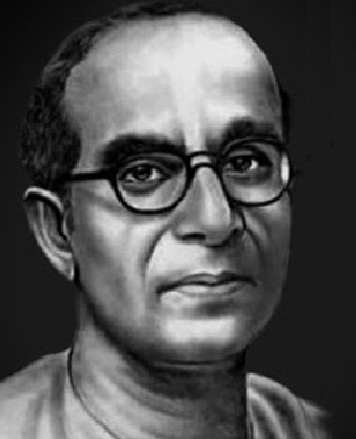
Potti Sreeramulu: The 56-day fast that redrew the map of India
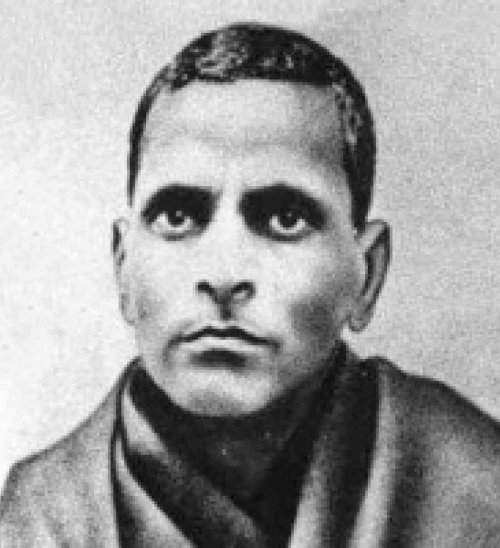
Portrait: Wikimedia Commons, public domain
Amarajeevi Potti Sreeramulu was born on 16 March 1901 at Padamatipalli in Nellore district of the Madras Presidency. Orphaned young, he trained as a sanitary engineer at the Victoria Jubilee Technical Institute in Bombay and worked briefly for the Great Indian Peninsular Railway before quitting to join Mahatma Gandhi's freedom movement. He took part in the 1930 Salt Satyagraha, the individual satyagraha, and the Quit India movement of 1941-42, and was imprisoned three times. He also did village reconstruction work at Rajkot in Gujarat and at Komaravolu in Krishna district, and between 1946 and 1948 he fasted in support of Dalit rights to enter temples in Nellore.
After independence, the demand for states on linguistic lines grew, and Telugu-speaking people in the Madras Presidency, who felt culturally and administratively marginalised under Tamil dominance, wanted a separate Andhra state. The question of Madras city itself was bitterly contested. The JVP Committee was reluctant, and an earlier fast by Sreeramulu had been broken after verbal assurances from Nehru that came to nothing. On 16 August 1951, Congressman Swami Sitaram had launched his own fast unto death for the cause.
On 19 October 1952, Sreeramulu began an indefinite fast at the Mylapore residence of Bulusu Sambamurthy in Madras, demanding the immediate creation of a separate Andhra state for Telugu speakers. Supporters gathered outside; political leaders visited; his health declined day by day on water and willpower. Neither Nehru nor the Madras government under C. Rajagopalachari acted in time. After 56 days of fasting (a few accounts say 58), he slipped into a coma and died on 15 December 1952, at the age of 51.
What followed forced the government's hand. His death procession broke into rioting and destruction of public property; disorder spread to Vizianagaram, Visakhapatnam, Vijayawada, Eluru, Guntur, Tenali, Ongole, and Nellore; police fired on crowds, killing seven people in Anakapalle and Vijayawada; and normal life in Madras and the Andhra regions was disrupted for three to four days. On 19 December 1952, Prime Minister Jawaharlal Nehru announced that a separate Andhra state would be formed, consisting of the Telugu-speaking areas of Madras state but not the city of Madras.
On 1 October 1953, the Telugu-speaking Andhra State was carved out of Madras with Kurnool as its capital and Tanguturi Prakasam as its first chief minister. Three years later, on 1 November 1956, it merged with the Telugu-speaking districts of Hyderabad State to form Andhra Pradesh, the first state in India created on linguistic lines, and the trigger for the nationwide redrawing of state boundaries.
Sreeramulu is revered in Andhra as Amarajeevi, the immortal being. India Post issued a stamp in his honour in 2000, and the house at 126 Royapettah High Road in Chennai where he died is preserved as a memorial. Yet outside Andhra, as the historian Ramachandra Guha has observed, he remains a largely forgotten figure, despite a sacrifice that changed the map of the country.
Source: The Hindu, The Better India, News18
Visuals: Archival portrait
Follow the daily five-post slate on Instagram.
Follow on Instagram