Rajendra Nath Lahiri: Hanged Two Days Early at Gonda
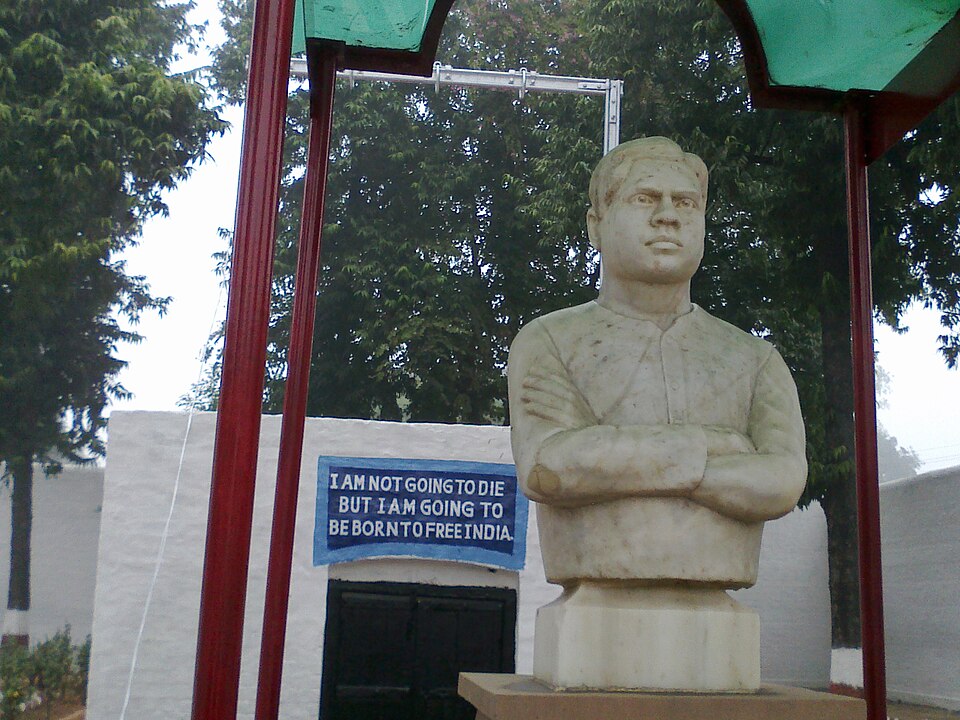
Portrait: Wikimedia Commons, CC BY-SA 3.0
Rajendra Nath Lahiri was born on 23 June 1901 (some accounts say 29 June) in Mohanpur village of Pabna district in undivided Bengal, now in Bangladesh, into a Bengali landowning family. His father was Kshitish Mohan Lahiri. At the age of nine he was sent to Varanasi for his education, and he was pursuing his M.A. in History at Banaras Hindu University when he came under the influence of Sachindra Nath Sanyal. Sanyal recognized his fire and made him editor of the revolutionary-leaning journal Banga Vaani and the coordinator and arms in-charge of the Varanasi branch of the Anushilan Samiti. He was also counted as a district organizer of the Hindustan Republican Association at Banaras.
Lahiri had already been marked by the police before Kakori. He took part in the Dakshineshwar bombing in Bengal and absconded, was later arrested, and was sentenced to ten years' rigorous imprisonment. While those proceedings were underway, the Kakori conspiracy case opened in Lucknow, and he was included among its accused and tried with the others.
On 9 August 1925 he was among the HRA men who stopped the Number 8 Down train near Kakori and seized the government treasury to fund the purchase of arms for the freedom movement. Four of the conspirators received death sentences: Bismil, Ashfaqulla Khan, Roshan Singh, and Lahiri, the youngest of the four at 26. The British feared a rescue attempt, so Lahiri was hanged at Gonda jail on 17 December 1927, two days before the date fixed for the others.
The account of his last hours, recounted by jail staff to PTI decades later, has become part of his legend. On the morning of his execution the jailor found him exercising and asked why, on his last day, he was not engaged in religious observance. Lahiri replied that he was a sanaatani who believed in rebirth, that this was the last day of his tapasya, and that he wanted to be reborn in India with a healthy body so he could continue the fight for freedom.
He was cremated young and has no grand memorial, but Gonda jail still observes his death anniversary each 17 December with a havan and a guard of honour at his bust. The boy from Pabna who edited a revolutionary magazine, organized arms, and faced the rope doing his morning exercises remains one of the quietest names among the Kakori martyrs, and one of the bravest.
Source: Wikipedia, The Print (PTI)
Visuals: Archival portrait
Follow the daily five-post slate on Instagram.
Follow on Instagram