Tarakeswar Dastidar: Hanged Beside Masterda at Twenty-Four
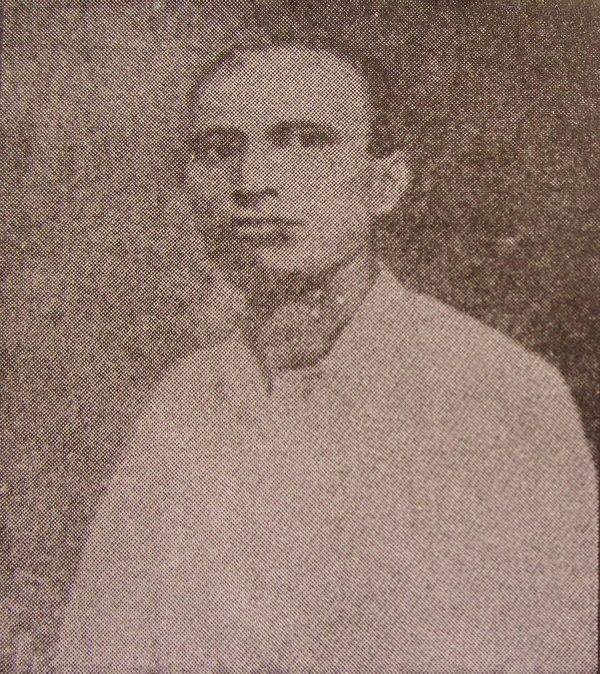
Portrait: Wikimedia Commons, public domain
Tarakeswar Dastidar (1909, 12 January 1934) was hanged in Chittagong jail on the same night as his leader Surya Sen, and he is the youngest of the Chittagong martyrs most histories name. He was twenty-four. His part in the uprising was not a cameo: after Masterda's arrest he took command of what remained of the movement.
He was born in 1909 into a Baidya family in Saroatali, Chittagong. While still a schoolboy he joined the Indian Republican Army, the underground group led by Surya Sen. In 1930 he was badly injured in an explosion while making bombs, and recovered to become one of the underground group's leaders. On 18 April 1930, during the Chittagong armoury raid, he guided a group of young revolutionaries in the attack on the police armoury.
Surya Sen evaded capture for nearly three years after the raid, but on 17 February 1933 the police finally caught him. Dastidar, by then president of the Chittagong branch of the Jugantar party, took charge of the movement and even made an unsuccessful attempt to rescue Masterda from Chittagong jail, an attempt the British foiled. The attempt failed. On 19 May 1933, sheltering in the house of Purna Talukdar at Gahira village, he was surrounded by police in the early morning. Shots were exchanged; Talukdar was killed on the spot, along with the sixteen-year-old Manoranjan Das, and Dastidar was captured.
He was sentenced to death on 14 August 1933, in what the revolutionaries' own accounts call the Armoury Raid Second Supplementary Case, tried together with Surya Sen. According to The Hindu's account, based on the testimony of fellow revolutionary Binod Bihari Chowdhury, Dastidar was subjected to severe torture and beatings by the police before the end. On 12 January 1934, with the town and the jail under military occupation, Surya Sen and Tarakeswar Dastidar were executed together at the stroke of midnight, and their bodies were thrown into the Bay of Bengal from a British naval cruiser in the dead of night.
Dastidar's obscurity is easy to explain and hard to defend. He died before he could write memoirs, give interviews, or enter politics, and his story is told mostly as an adjunct to Masterda's. But the facts stand on their own: a schoolboy who built bombs, led men into an armoury raid at twenty-one, held a shattered underground together, and walked to the gallows at twenty-four without asking for mercy.
Source: The Hindu, Hindustan Times
Visuals: Archival portrait
Follow the daily five-post slate on Instagram.
Follow on Instagram